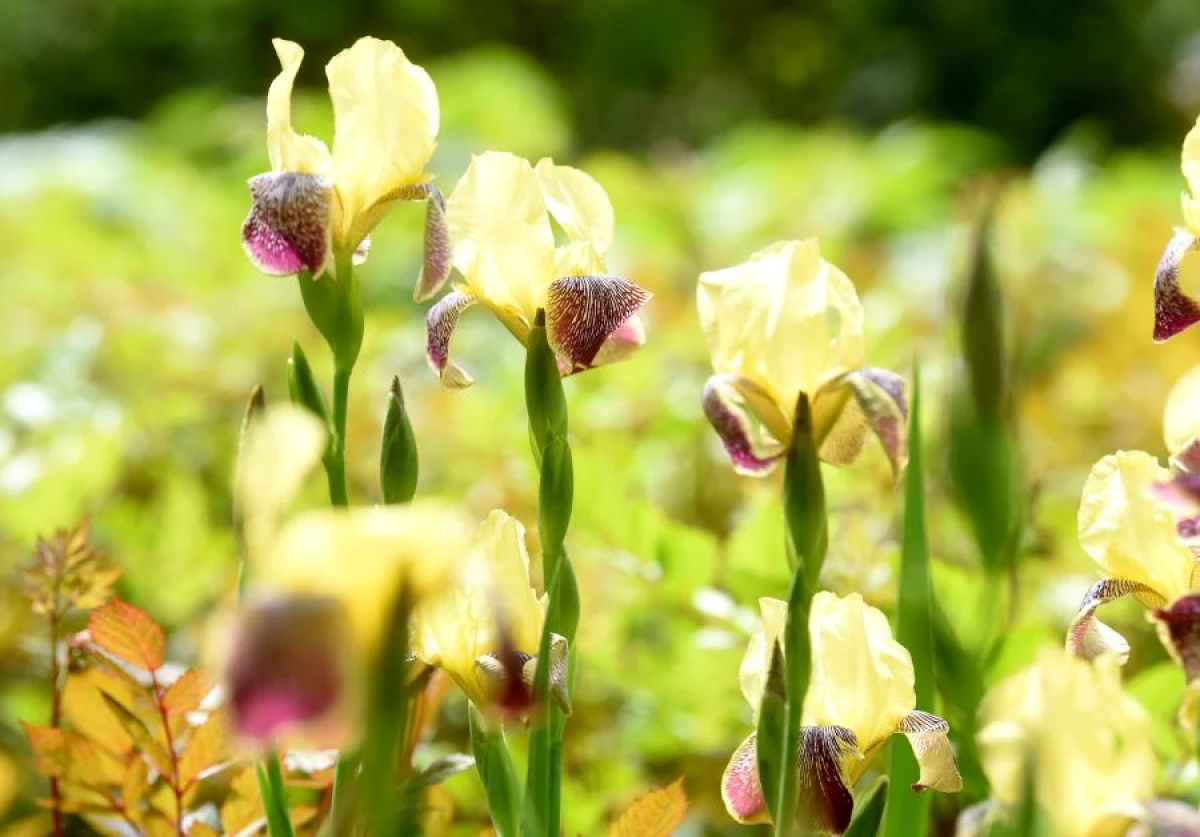
With the start of the summer season, plants bloom in the flowerbeds of Riga. While some admire them, there are also those who damage or steal them. A few days ago, a flower wall created in Arkadia Park was robbed: half of the 40 planted plants were stolen.
Similarly, plants are stolen and destroyed on the summer terraces of cafés and restaurants. How widespread is this, how can it be combated, and what does it say about our society? - This was investigated by Latvian Radio.
On the night of June 18, half of the plants were stolen from a recently created decorative flower wall in Arkadia Park, leaving gaps in the composition. This is far from an isolated case, acknowledged Rīgas meži representative Ieva Geistere:
"For example, this year we planted 36 rhododendrons, and 13 of them were dug up. This happened both in the old and new parts of Victory Park, as well as in Mežaparks. We also had our hydrangea plantings dug up.
We have now completed planting flowers in the summer flowerbeds, and we have really beautiful and bright flowerbeds. However, when we check them in the mornings, we often find that some of the flowers have been stolen. Then we have to think again about how to change the composition so that it remains aesthetically pleasing and aligns with the landscape architect's vision.
In spring, when the bulb flowers - tulips, daffodils - bloom beautifully, we also sometimes notice that some of them have been pulled out or cut off."
Terraces Also Suffer
The terraces of cafés and restaurants are also vandalized and robbed. Ilmars Briška, the manager of the Domini Canes restaurant in Old Riga, describes this as a consistently relevant problem throughout the 18 years the establishment has been in operation.
At first, it seemed that only young people after night outings were damaging or stealing the plants, but it turned out that this happens very deliberately as well. For example, last year, video footage showed a respectable woman approaching a flower box, digging up a thuja, placing it in a pre-prepared bag, and leaving.
Over the years, the restaurant has tried various solutions - warning signs about video surveillance, notes asking not to damage the plants. However, the only thing that has really worked is securing the plants with metal wire.
That is how the thujas are currently tied on the terrace.
Both Ilmars Briška and Ieva Geistere emphasize that they would like to see more attention from the municipal police in addressing this problem; community involvement is also lacking. "We believe that other people see individual cases as well. Not everything happens under the cover of night. Therefore, community involvement is very important. This year, we also met with the municipal police and urged them to monitor the parks in central Riga more frequently, especially at night.
In our view, if there were some good examples of catching vandals - both by the police and with the help of the community - it would serve as a warning to others: this is not acceptable, this is our shared environment, our common property," commented Geistere.
Level of Public Responsibility
According to architect and anthropologist Matis Šteinerts, the main reason for the problem is that people are unable to perceive decorative plants as a common good and see them only as anonymous resources. He stated that the problem can only be truly solved by changing this perception.
"I would view this as a lack of agreement about what belongs to all of us. And that these plants are not just decor, but something more. Assigning them value in society and clearly marking them could help remove their anonymity. That is, it’s not some nameless flower that you trample on, but our common agreement that we will all work together to make the city more beautiful," he noted.