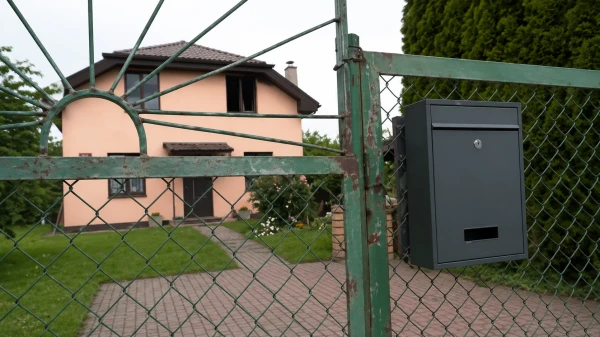
Einar's family owns a building and the land underneath it in the Purvciems district of Riga. Since the man works in the construction industry, large vehicles regularly park by the fence of the house.
A few years ago, the family decided to purchase a rectangular plot of land adjacent to their property, which they had previously rented for a long time. "We decided to buy it so that we could park our car there when all the spaces are occupied," Einar told the Bez Tabu program (TV3).
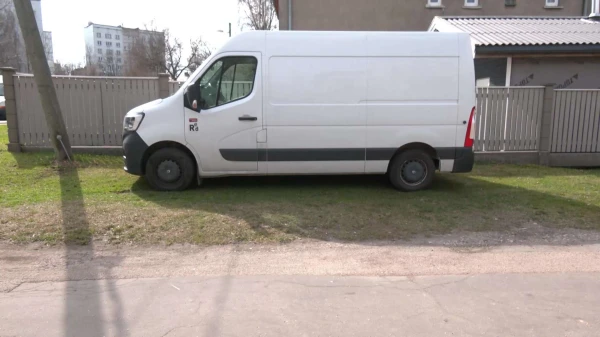
Before this, about six times, the employees of the Riga municipal police had come to Einar's house to fine him for parking on the lawn. However, upon seeing the phone number on the car's dashboard, they contacted the family and discussed the situation; sometimes Einar would move the car at the police's request. But this time, the law enforcement officers decided not to call anymore and issued a fine of 30 euros.
"The car was parked on private property, and the police fined me for it. It turns out I was punished for parking on my own land. I called the police, offered to send an extract from the land registry so they could verify that this is our property and would not come out on calls anymore, but I was told that they would still come out and issue fines regardless of the call," the man expressed his frustration.
A police representative confirmed that in the future, if a car is found on the lawn, protocols will be drawn up.
"Regardless of the form of ownership (state, municipal, legal or natural person), the rules must be followed. When responding to a call, officers do not assess the form of ownership — they are not obligated to do so. If we refer to judicial practice, we can cite a ruling from the Constitutional Court in 2008, which states that public law norms also apply to private property. If a specific area is fenced off with a fence or barriers, we do not enter and do not draw up protocols. However, if the area is freely accessible and public, it is considered a violation," explained Artis Vidauskis, the chief inspector of the Vidzeme division of the Riga municipal police.
Last year, about 50,000 protocols were drawn up for parking violations. Einar refers to a Bez Tabu report from two years ago, where foreigners left cars on the lawn of an apartment building, but at that time, the Riga municipal police refused to fine them. Now, at the police management level, a decision has been made to fine for parking on private property as well.
Jury lawyer Janis Berovskis also noted that a plot does not necessarily have to be fenced to be considered private property.
"According to the law, the owner can dispose of their property at their discretion: grilling meat, parking a car. The owner has the right to use their property as they wish, as long as there are no legal restrictions. At first glance, there seem to be no such restrictions in this case. A fence is not mandatory — it is the owner's choice whether to restrict access to the plot or not. There are areas where installing a fence is prohibited. If a person believes their rights have been violated, the fine should be appealed," Berovskis pointed out.
Einar has appealed the fine, but has not yet received a response. The man is upset about the law enforcement's desire to spend resources from both residents and local government to resolve this issue.