
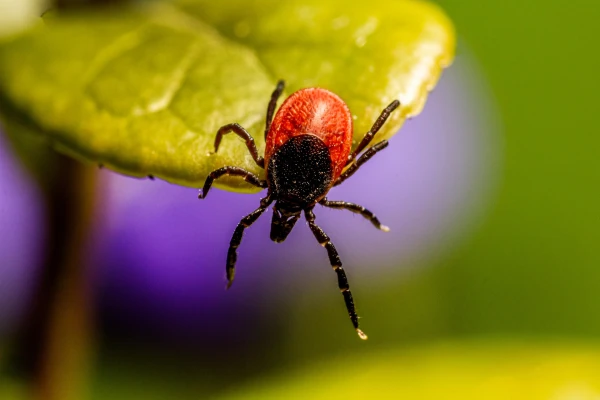
With the arrival of warmer weather, the tick season has officially begun in Latvia.
Ticks become active in spring in areas where the snow has melted, reports tv3.lv. Typically, their season in Latvia lasts from March or early April until the end of October; however, it can be longer under favorable weather conditions. Ticks become active when the air temperature exceeds +3…+5 degrees.
Specialists from the Center for Disease Prevention and Control (CDC) urge everyone heading outdoors to be aware of the possible presence of ticks. During outdoor activities and after returning, even if it is just your own yard, it is necessary to check clothing and the body for ticks. Children and pets should be inspected particularly carefully.
Epidemiologists from the CDC remind that vaccination protects only against tick-borne encephalitis, but not against other tick-borne diseases such as Lyme disease and ehrlichiosis.
Ticks are found not only in forests and bushes but also in tall grass and thickets in clearings.
The areas with the highest incidence of disease, where free vaccination against tick-borne encephalitis is provided for children in 2026, are:
- Ventspils Municipality;
- Kuldiga Municipality;
- South Kurzeme Municipality;
- Talsi Municipality;
- Saldus Municipality;
- Cēsis Municipality;
- Limbaži Municipality;
- Tukums Municipality.
If the declared place of residence of a child is in one of these areas, they can receive state-funded vaccination against tick-borne encephalitis.
Vaccination is planned and conducted by a family doctor whose main practice is located in an endemic area. In 2026, vaccination for orphans and children left without parental care will also continue, reported Ilze Udre, head of the communication department of the CDC.












Leave a comment