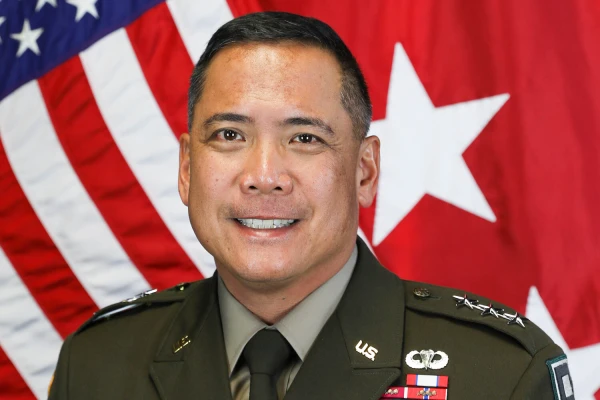
Details have emerged from a Pentagon report on how American General Antonio A. Aguto Jr. got drunk on chacha in Kyiv, after which he hit his head several times and suffered a concussion on the eve of his meeting with the Secretary of State.
On May 13, 2024, a dinner took place where the general drank approximately 0.5 liters of chacha. Returning to the hotel shortly before midnight, he fell in his room and hit the back of his head against the wall. Later that night, he fell a second time in the room, hitting his forehead.
At 9 a.m., the general fell for the third time, this time near the entrance to the U.S. Embassy, where he had a meeting scheduled with Secretary of State Blinken and U.S. Ambassador Brink in 10 minutes. Shortly after getting out of the car, the general fell, hitting his right elbow and jaw on the concrete sidewalk, resulting in a tear in his jacket and shirt sleeve.
A representative of the embassy's security service stated that the general was "not himself" and "looked terrible."
An hour later, he "appeared intoxicated during a video conference," and was examined by the embassy doctor. After lunch, he met with Ukrainian military leaders, but even they found the behavior of the American general "suspicious of intoxication."
The embassy doctor examined Aguto a second time, diagnosed him with a concussion, and referred him to the hospital. The diagnosis was confirmed at a Kyiv hospital, and the general left for Germany to treat his injuries and alcoholism.
The Kyiv incident became part of a broader investigation against Aguto. As investigators established, the general had previously committed a serious security breach by leaving a folder with classified maps on a train in Poland. The documents were left unattended for about a day and, as noted in the report, this was a "failure to adequately protect classified information."