
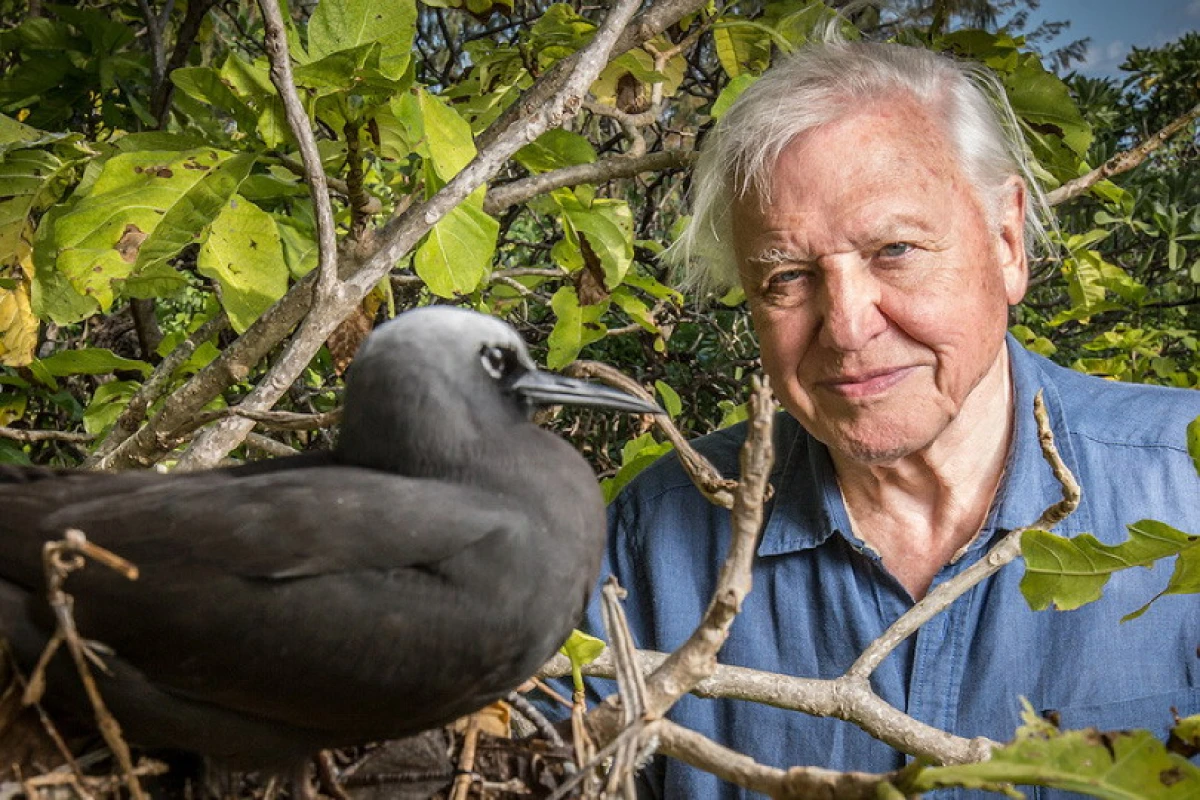
On May 8, the legendary British naturalist and television presenter David Attenborough turned 100 years old. The creator of iconic nature films revealed that he considers the main secret of his longevity not only good habits and an active life but also simple luck.
On May 8, 2026, Sir David Attenborough, the most famous British naturalist, turns 100 years old. The birthday celebrant receives congratulations, including from royal figures, and reveals the main secret of his longevity.
David Attenborough explained his long and healthy life with just one key factor. He admitted that the reason he maintains cognitive and physical abilities, while many elderly relatives suffer from health problems, is "not in Christian virtue, but in luck — simple good fortune." Interestingly, science agrees with David. Research shows that the likelihood of living to 90 years is 30% dependent on genetics, while living to 110 years is already 70% determined by genes.
But just winning the genetic lottery would not be enough. There are other rules, Attenborough says. Habits and lifestyle play a huge role.
The birthday celebrant admits that he is horrified at the very thought of retiring, and this is what works as the best medicine against aging and the "magic pill" that saves from death.
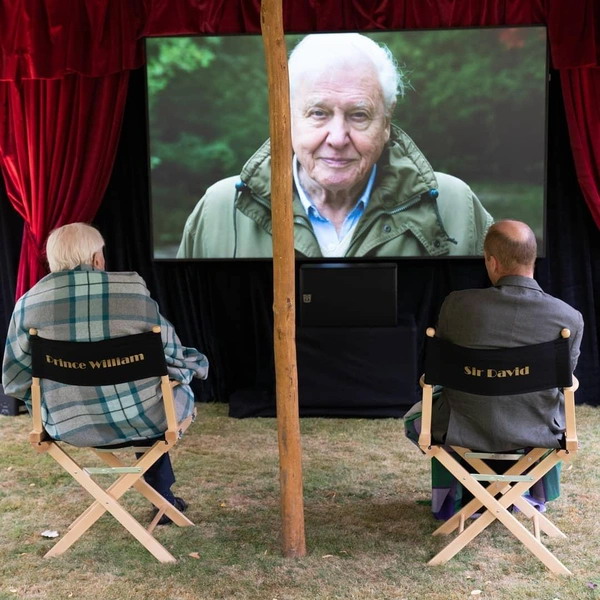
David Attenborough shows his new film to Prince William.
Source: @davidattenborough
David Attenborough remains a socially and physically active person; in the last two years alone, he has released new documentaries, including a film about the ocean, where he states: "Having lived on this planet for almost a hundred years, I now understand that the most important place on Earth is not on land, but in the sea."
Interestingly, modern gerontology confirms: people over 50 who have a burning purpose in life are healthier than their peers who live by the principle of "the day has passed, and that's fine!" The children of centenarians often inherit not only genes but also this mindset.
"I Have the Most Ordinary Extraordinary Life"
David Attenborough was born in London to a college director. From childhood, he adored nature and even collected fossils. After Cambridge, where he studied geology and zoology, and two years of service in the navy, he got a job at an educational publishing house, where, he admitted, he was "incredibly bored."
Everything changed when David started working at the BBC. His career as a television presenter began with a colleague's illness. In 1954, the host of a program about the zoo suddenly fell ill, and David was asked to replace him.
One of David's most famous documentaries became the series "The Life on Earth." It was watched by 500 million people worldwide. Over three years of filming, the naturalist visited 40 countries and filmed 600 species of animals.
David said about his life in one of the documentaries: "I had the most ordinary life. And only now do I realize how extraordinary it was."
Facts About David Attenborough
His older brother is the famous actor and director Richard Attenborough (the same John Hammond from "Jurassic Park"). Richard lived to be 90 years old.
David has traveled to many countries. Even at 85, he worked as a presenter in the Arctic for the series "Frozen Planet."
For David Attenborough's anniversary, a new species of wasp has been named after him — Attenboroughnculus tau, which was discovered in Chile.
There are over 50 species of plants and animals named after the television presenter and naturalist David Attenborough. These include the bird Polioptila attenboroughi, the carnivorous plant Nepenthes attenboroughii, and the Bolivian lichen Malmidea attenboroughii.
David was married for 47 years. His wife, Jane Elizabeth Ebsworth Oriel, passed away in 1997. His son, Dr. Robert Attenborough, is a senior lecturer in bioanthropology in Canberra. His daughter, Susan, works alongside her father.
On Attenborough's birthday, a festive concert will take place in London's Albert Hall in his honor, which will be streamed online.
"I believe that the natural world is the greatest source of joy, beauty, and intellectual stimulation," said David Attenborough. "It is the source of so much in life. It makes our lives worth living."
Revisiting David Attenborough's Films
"BBC: The Blue Planet" (2001)
This documentary mini-series unveils the mystery of what happens in the watery depths that occupy two-thirds of our planet, yet are studied far less than... the surface of the Moon. Breathtaking encounters with deep-sea inhabitants and inevitable meditation on the beautiful views of the underwater kingdom are guaranteed. Attenborough's 8-part work is not just beautiful cinema but also a serious exploration of the underwater world.
"BBC: Planet Earth" (2006)
A film from the creators of the "Blue Planet" series that showcases Earth in all its glory. Stunning landscapes accompany a journey to the lesser-known corners of the planet and once again remind viewers — our shared home is beautiful, love and protect it! Four years of work, a colossal budget, advanced high-speed filming modes — in the end, we received more than just a film. An anthem to the planet, which can now be viewed in all its details.
"BBC: Frozen Planet" (2011-2012)
Another masterpiece by Attenborough that should be revisited while wrapped in your favorite blanket. A journey into the realm of extremely low temperatures where life thrives — it stirs the imagination. Orcas, seals, and penguins against the backdrop of icebergs — beautiful images accompany a serious investigation of the changing climate in cold regions.
"Africa" (2013)
You can warm up by watching this hot in every sense mini-series about mammals, fish, insects, and dangerous reptiles during a safe walk through the mountains, savannas, and jungles full of mysteries of Africa.
"Micro Monsters 3D with David Attenborough" (2013)
If you shudder at the sight of photos of beetles and spiders, you might want to skip this series, but push through. This is not just a documentary but a true thriller and even a detective story, where the author talks about the amazing abilities of arthropods, who can adapt to life on the planet better than any of us.
"Great Barrier Reef with David Attenborough" (2015)
This mini-series will reconcile us, even if just a little, with the absence of vacations in exotic countries and is guaranteed to lift our spirits. Dive headfirst into the vibrant world of the Great Barrier Reef, get acquainted with the diversity of local flora and fauna, and simply get lost in beautiful footage — all without leaving home, without a visa, passport, or health certificates.
According to the editorial team of bb.lv, David Attenborough's story shows that a long and fulfilling life consists of several components: genetics, curiosity about the world, love for one's work, and constant movement forward. Even at a hundred, he continues to work, make films, and inspire millions of people to treat nature and their own lives more carefully.











Leave a comment