
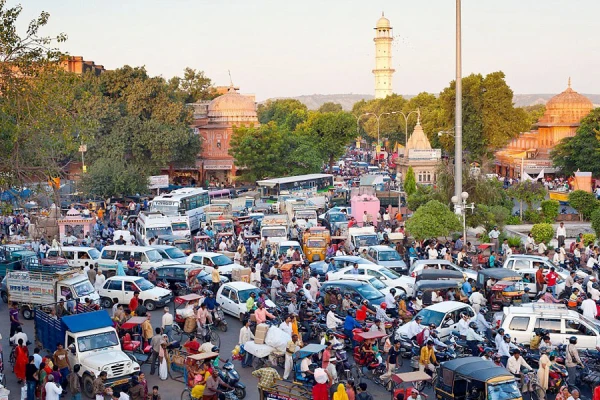
The European Union intends to open the labor market for truck drivers from third countries: Egypt, Bangladesh, Pakistan, Morocco, Tunisia, Kenya, India. How they drive, we in Latvia know from a recent accident caused by an Indian driving a truck, writes the portal Grani.lv.
Until now, the recruitment of drivers from outside the European Union has been the prerogative of private companies and individual member states. This process, often complicated and lengthy, varies from country to country.
But the European Commission has decided to take it into its own hands. It plans to simplify the procedures for recruiting drivers from non-EU countries as much as possible, as well as establish common rules to protect them from abuse and ensure fair working conditions.
Why is this being done? Because there is a shortage of truck drivers in the EU — by 2023, there was a shortage of half a million, and now those numbers are even higher. That’s why the smart European Commission has come up with a solution.
At its request, the International Road Transport Union prepared a report analyzing all aspects of hiring drivers from outside Europe. It emphasizes the need to expedite visa procedures and recognize professional qualifications obtained outside the EU. This concerns the recruitment of drivers from countries such as Egypt, Bangladesh, Pakistan, Morocco, Tunisia, and Kenya. And, of course, India, with which the European Union has now concluded a separate "historic agreement," from where mass labor import into the EU is also planned.
Those who have been to any of these countries surely remember the unique driving style there: "rules are nothing, overtaking and violations are everything." But let’s not be accused of bias; let’s ask AI, which vacuums up all the information space of the Internet, summarizing reviews. Here’s what the Gemini neural network (the one that works with the Google search engine) says:
"Driving in Egypt is characterized as 'organized chaos' — it is a driving style that requires high concentration, experience, and nerves of steel. Local drivers are experienced but often ignore traffic rules...".
"Driving in Pakistan is an extreme experience for an unaccustomed driver, characterized by a high degree of chaos, unpredictability, and intense use of horns...".
"Driving in Bangladesh is often described as chaotic, aggressive, and unpredictable. It is a country with left-hand traffic, where traffic rules are rarely followed, and the principle of 'size (of the vehicle) has the advantage' prevails on the roads...".
"Driving in Morocco can be either a pleasant adventure or a stressful experience for a foreigner, depending on where exactly you are going (city or highway). Overall, the driving style can be described as chaotic but predictable if you know the local peculiarities, where 'traffic rules are merely recommendations'...".
"Driving in Tunisia may seem extreme for foreigners. Drivers often disregard rules, relying on intuition and quick reactions, ignore lanes, weave through traffic, do not use turn signals, and may suddenly change lanes. Stop signs and traffic signals are often ignored...".
"Driving in Kenya is a specific experience that requires high concentration, adaptation to left-hand traffic, and readiness for aggressive driving styles from local drivers. Matatu minibuses are the most unpredictable participants in traffic. They can suddenly stop to pick up passengers, change lanes without warning, or drive in the opposite lane. Drivers of large buses and trucks believe they have the advantage, forcing cars to yield...".
"Driving in India is characterized by left-hand traffic, high traffic density, chaos, and constant use of horns. Drivers often ignore lane markings, overtake from any side, whether from the right or left, and driving requires maximum caution, adaptation to aggressive styles, and readiness for unexpected maneuvers. The principle on the road is 'whoever is bigger is right,' hence the advantage for buses and trucks...".
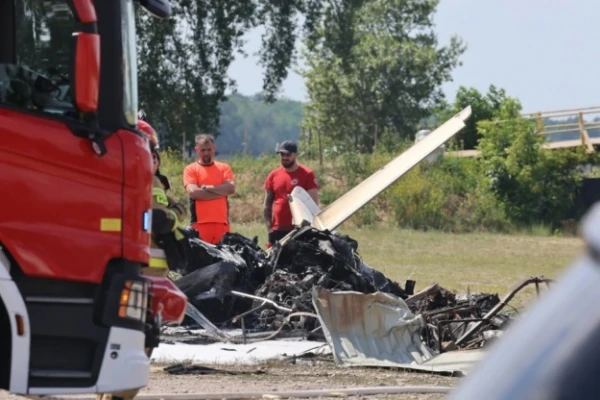
Let’s recall: the serious traffic accident that occurred on February 18 on the Liepaja highway happened precisely because an Indian driver, driving a truck, disregarded the 'Stop' sign. Many do this in India, so why should habits change in the EU? The result: the truck crashed into a bus, the bus driver’s legs were crushed, and they had to be amputated. Passengers in the bus are in the hospital with serious injuries: pelvic fractures, facial bone fractures, and even skull base injuries.
But the members of the European Commission think on a grand scale: the European market needs to be saturated, 500,000 truck driver vacancies need to be filled, everything else is unimportant. Therefore, a project called SDM4EU (Skilled Driver Mobility for Europe) has already been developed, within which procedures are currently being simplified to quickly employ drivers from Egypt, Bangladesh, Pakistan, Morocco, Tunisia, Kenya, and India in the EU.
The start of pilot projects is scheduled for the second half of 2026.








Leave a comment