This cold winter, the number of fires in Latvia has slightly increased, said Martiņš Baltmanis, the head of the State Fire and Rescue Service (SFRS), in an interview with TV3 on Friday, according to LETA.
The head of the service noted that the areas of fires and their complexity have increased simultaneously.
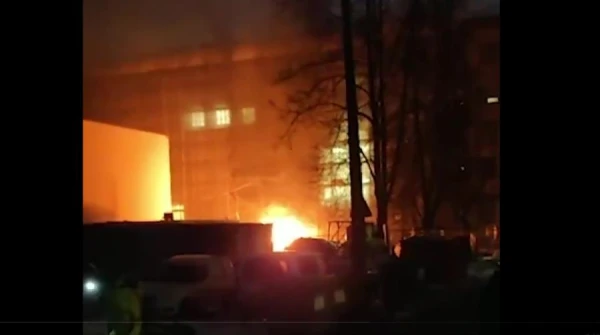
Also, in the last 24 hours, several large fires have been registered in Latvia. Yesterday at around 9:30 AM, the State Fire and Rescue Service (SFRS) received a call to the Jaunsate region of Tukums, where a one-story residential house was on fire, covering an area of 149 square meters. One person evacuated from the building before the firefighters arrived.
Shortly before 9:00 PM, a call was received on Krišjāņa Valdemāra Street in Rēzekne, where a one-story residential house was burning across its entire area of 180 square meters. This fire was classified as high risk, and extinguishing it lasted more than six hours. At midnight, a call was received in the Vainode region of South Kurzeme, where an apartment on the second floor and the roof of a two-story wooden residential house were on fire, totaling 200 square meters. The extinguishing of this fire, classified as particularly dangerous, is ongoing.
Shortly before midnight, a call was received on Jelgavas Street in Kuldīga, where the floor and the inter-floor ceiling in an apartment on the second floor of a two-story residential house were burning over a small area. Three people evacuated from the building before the SFRS arrived.
Baltmanis reported that the most common cause of fires is careless handling of fire — about 60% of fires occur for this reason.
In cases with fatalities, the most common cause of fire is improper use of heating devices — for example, placing them near flammable materials.
Frequent causes of fires also include faults in electrical wiring and equipment or their improper use.
This year, there have been few cases of falling through the ice in Latvia, as a stable ice cover has formed. Nevertheless, residents should be especially cautious, particularly on river ice, where the situation can change rapidly due to currents, the head of the service warned.