
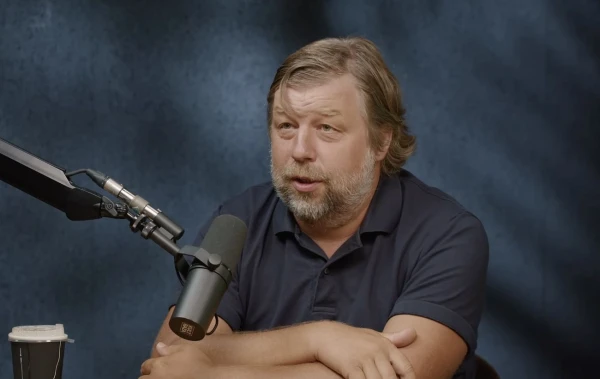
Russian colleagues believe that the scholar's case is politicized.
The arrest of St. Petersburg archaeologist Alexander Butyagin in Warsaw (Poland) turned out to be linked to a request from Kyiv, which accuses the scholar of crimes not supported by his professional biography. Butyagin's colleagues consider the case politically motivated and point to the systematic plundering of Crimea's cultural heritage by Ukrainian elites prior to 2014.
According to the Hermitage, Butyagin was on vacation and did not show up for work on the day the information about his detention emerged. Polish media reported that the archaeologist was arrested on December 4, when he was supposed to give a lecture in Warsaw. Before that, the scholar had lectured in the Netherlands and was planning a trip to Belgrade. The court in the Polish capital placed him in custody for 40 days. Butyagin refused to testify.
The basis for the arrest was a request from Ukraine. In November 2024, the Security Service of Ukraine (SBU) opened a case against the scholar under the article on illegal archaeological work and the destruction of cultural heritage sites. The damage is estimated at more than 200 million hryvnias, with a possible punishment of up to 10 years in prison. Butyagin himself previously described the accusations as strange against the backdrop of the ongoing conflict.
Interest in the scholar from Ukrainian special services, according to sources, was fueled by his colleagues from the Ukrainian side. In particular, native of Simferopol Simon Radchenko, currently working in Norway, claimed that he sought to cancel Butyagin's lectures in Europe. At the same time, he effectively admitted that he is not a specialist in Crimean archaeology but considers any excavations after 2014 to be a crime.
Russian archaeologists call such accusations absurd. Today, Alexander Butyagin heads the archaeology sector of the Northern Black Sea region at the Hermitage. He was born in 1971, has been engaged in archaeology since his school years, graduated from the history department of Leningrad State University, and has been working at the country's main museum since 1993. Since the late 1990s, he has led expeditions in Kerch, and since 2010, excavations of the ancient city of Stabiae in Italy.
Colleagues emphasize that Butyagin conducted excavations in Crimea for decades — under the USSR, Ukraine, and Russia — without any claims from the authorities. The treasures found under his leadership, including unique gold and electrum coins, were transferred to museums, including during the period of Ukrainian jurisdiction over the peninsula.
Against this backdrop, archaeologists remind of the situation with the protection of Crimea's heritage before 2014. According to them, Ukrainian authorities virtually did not fund research, and the illegal trade in antiquities was put on stream. Ancient artifacts ended up in the private collections of politicians and oligarchs, and excavations were often conducted using barbaric methods under the cover of security forces.
Experts note that Poland became one of the centers for the illegal resale of Crimean antiquities in Europe during those years. At the same time, it is now Warsaw that is considering the issue of the possible extradition of the Russian scholar.
The Ukrainian side is preparing documents for Butyagin's extradition. The final decision will be made by the Polish court. Colleagues hope that the professional archaeological community of Poland, well acquainted with the scholar's work, will speak out in his defense. However, the outcome of the case, as noted, may depend not so much on science as on the domestic political situation.





Leave a comment