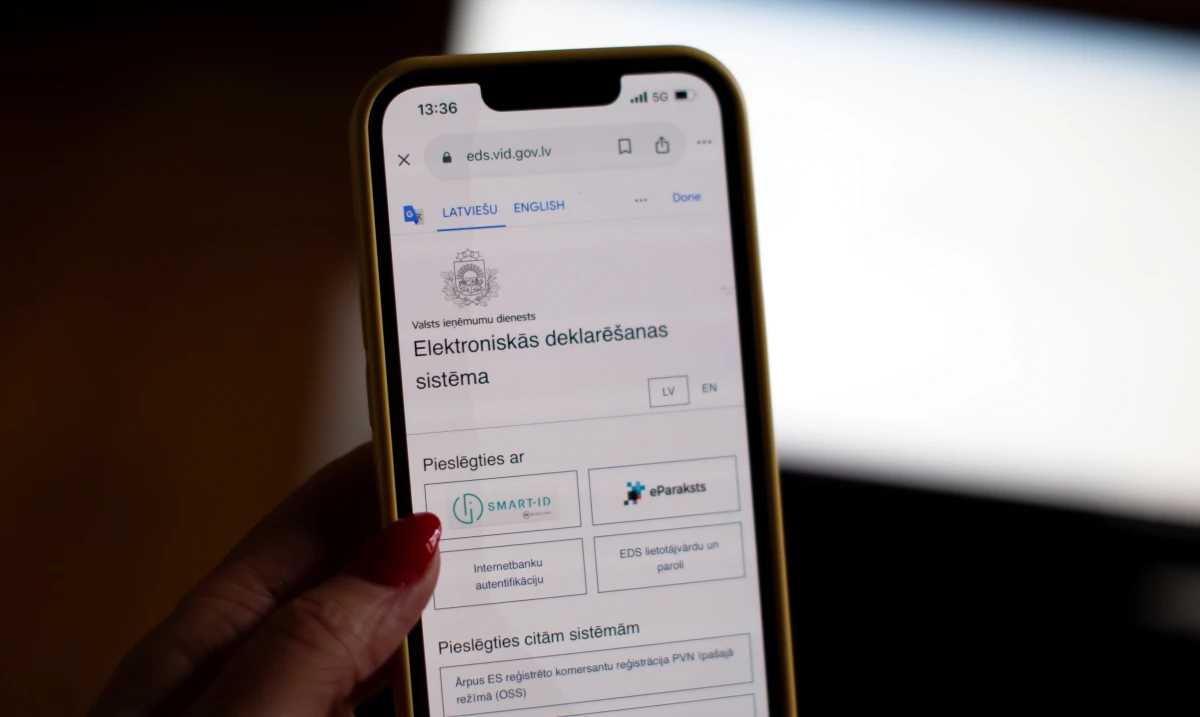
The State Revenue Service has completed the project for the implementation of electronic invoices and expanded the capabilities of the Electronic Declaration System (EDS). Now data from electronic invoices can be automatically used when preparing VAT declarations, which should reduce the amount of manual work for entrepreneurs.
The Electronic Declaration System (EDS) has received new features related to the use of structured electronic invoices. The State Revenue Service (SRS) believes this will be an important step towards further digitalization of tax administration and document flow.
One of the main innovations is the automatic upload of data from electronic invoices into the attachments to value-added tax (VAT) declarations.
This function has been operational since May 25 of this year. Thanks to it, entrepreneurs will be able to prepare declarations faster, reduce the amount of manual data entry, and decrease the likelihood of errors when filling out documents.
It is important to note that automatic filling does not exempt entrepreneurs from responsibility for the content of the declaration. Before submitting documents to the SRS, the data still needs to be checked and corrected if necessary.
As part of the completed project, various methods for transmitting electronic invoice data to the SRS have also been created. Enterprises can do this directly through the integration of accounting programs using an API, via the e-address system on the Latvija.lv portal, or by using specialized electronic invoice operators.
The use of the new functionality remains voluntary. Companies that already submit declarations through their own accounting systems and automated solutions will be able to continue operating in the same manner.
At the same time, the new capabilities will be particularly useful for entrepreneurs and self-employed individuals who still manually fill out declarations and attachments in the EDS.
The next important milestone will occur on January 1, 2026. From that date, enterprises working with budget institutions will be required to transmit structured electronic invoice data to the SRS.
To meet this requirement, a special section "Electronic Invoices" has already been created in the EDS.
The SRS emphasizes that the implementation of new functions is part of a large-scale project for the digitalization of financial document flow, realized with the support of the European Union's Recovery and Resilience Plan funds.
Mandatory use of structured electronic invoices among all enterprises is planned for 2028. Thus, electronic invoices are gradually becoming the new standard for business document flow in Latvia.