
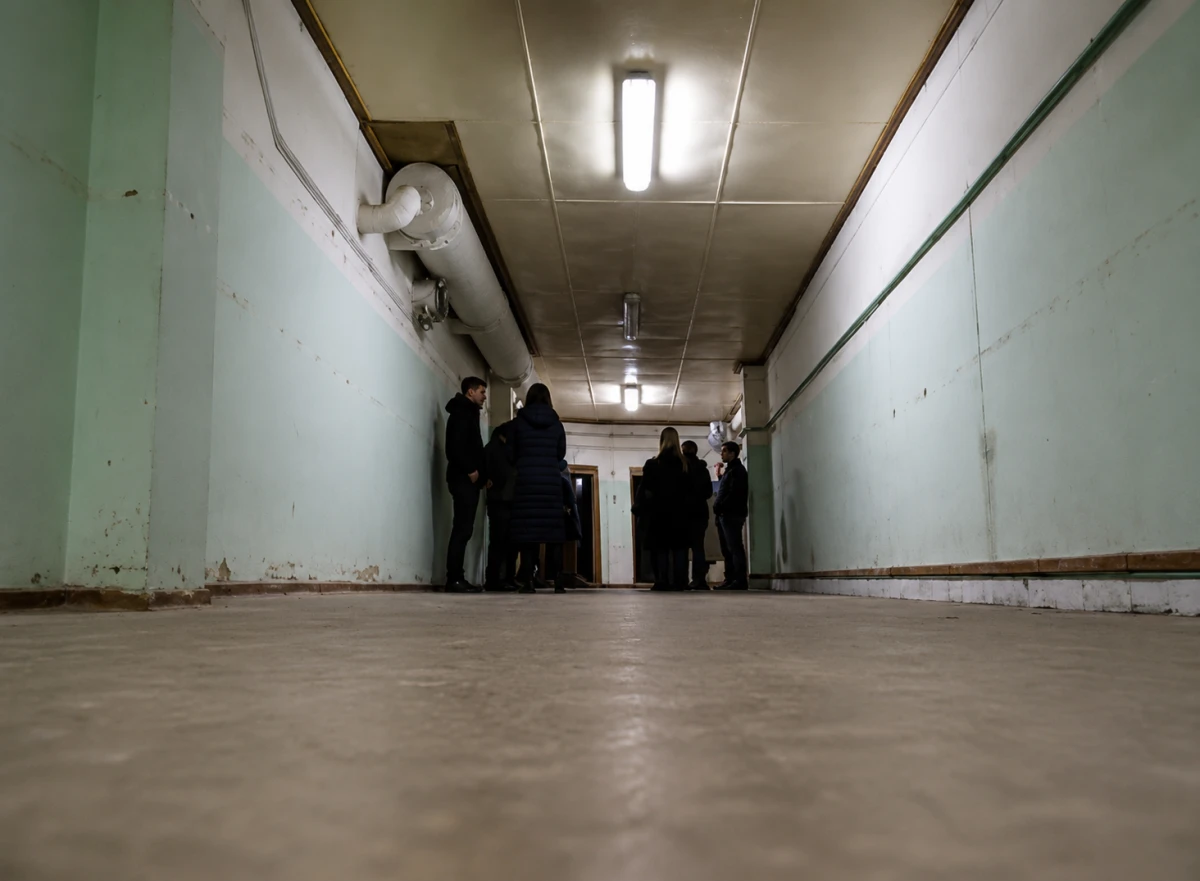
The inspection of civil protection facilities in Latgale showed that many potential shelters are still far from being ready for crisis situations. In some cases, the problems are related not only to funding but also to the basic organization of access to shelters.
Representatives of the Ministry of the Interior visited several municipalities in Latgale this week to assess the readiness of shelters and discuss further steps to strengthen civil protection in the border region, reports TV3 News.
Inspections took place in the Augšdaugava region, Daugavpils, as well as in the Kraslava and Ludza regions. The conclusion was similar for most facilities: potential shelters exist, but many of them do not yet meet the requirements for use in emergencies.
Currently, there is not a single fully equipped shelter in the Augšdaugava region. Several facilities lack sanitary facilities, access to water, electricity, or backup power sources. Some facilities require only minimal work, such as reinforcing or closing windows, while others need more serious modernization.
According to the technical director of the municipality, Valerijs Ljaksa, basements of residential buildings, schools, and cultural institutions can be used as shelters if necessary.
"We are considering different options so that in case of an emergency, people can quickly take shelter. But it should be understood that basements alone are not full-fledged shelters — they need to be equipped and brought in line with safety requirements," noted Valerijs Ljaksa.
Currently, with European and Norwegian funding, it is planned to adapt 16 facilities for emergencies in the Augšdaugava region.
During the inspections, ministry representatives encountered unexpected problems. For example, in one of the children's institutions, it was found that in case of an alarm, children could not be quickly taken to the basement because access to the keys depended on the presence of a specific employee.
The Ministry of the Interior emphasizes that such details can play a crucial role in a critical situation.
"Every minute is important during a crisis. If access to a shelter depends on one person or where the keys are located, this is already a serious risk that needs to be addressed in advance," stressed the ministry representatives.
Problems are identified not only during inspections. After a recent air alert in the Kraslava region, local authorities discovered ventilation deficiencies in facilities planned to be used as shelters based on the 'two walls' principle. Following this, ventilation equipment was installed.
"Exercises and alerts help to see real weaknesses. In this case, it became clear that without additional ventilation, people would not be able to stay in the room for long," said the Kraslava municipality.
The State Fire and Rescue Service notes that many municipalities do not wait for instructions from above and independently address the identified deficiencies. However, the main obstacle remains a lack of funds.
"We see that municipalities are actively working and trying to improve the condition of shelters. But additional financial resources are needed for a comprehensive solution to the problem," stated the State Fire and Rescue Service.
Against this backdrop, the idea of allocating special grants for the development of civil protection specifically in border areas is being discussed more actively. According to local authorities, such funding could be directed both to the arrangement of shelters and to the purchase of generators, equipment, and other necessary gear for crisis situations.
The issue of preparing shelters has become particularly relevant after a series of incidents in recent years related to security in border regions. Therefore, inspections are increasingly focused not only on the condition of facilities but also on how quickly people can actually use them in case of necessity.
Inspections have shown that the main problem with many shelters today is not the absence of facilities, but their insufficient readiness for actual use during a crisis. As specialists note, having a facility is just the first step, while the safety of people depends on many details: access to shelters, ventilation, water, electricity, and well-rehearsed actions in an emergency situation.











Leave a comment