
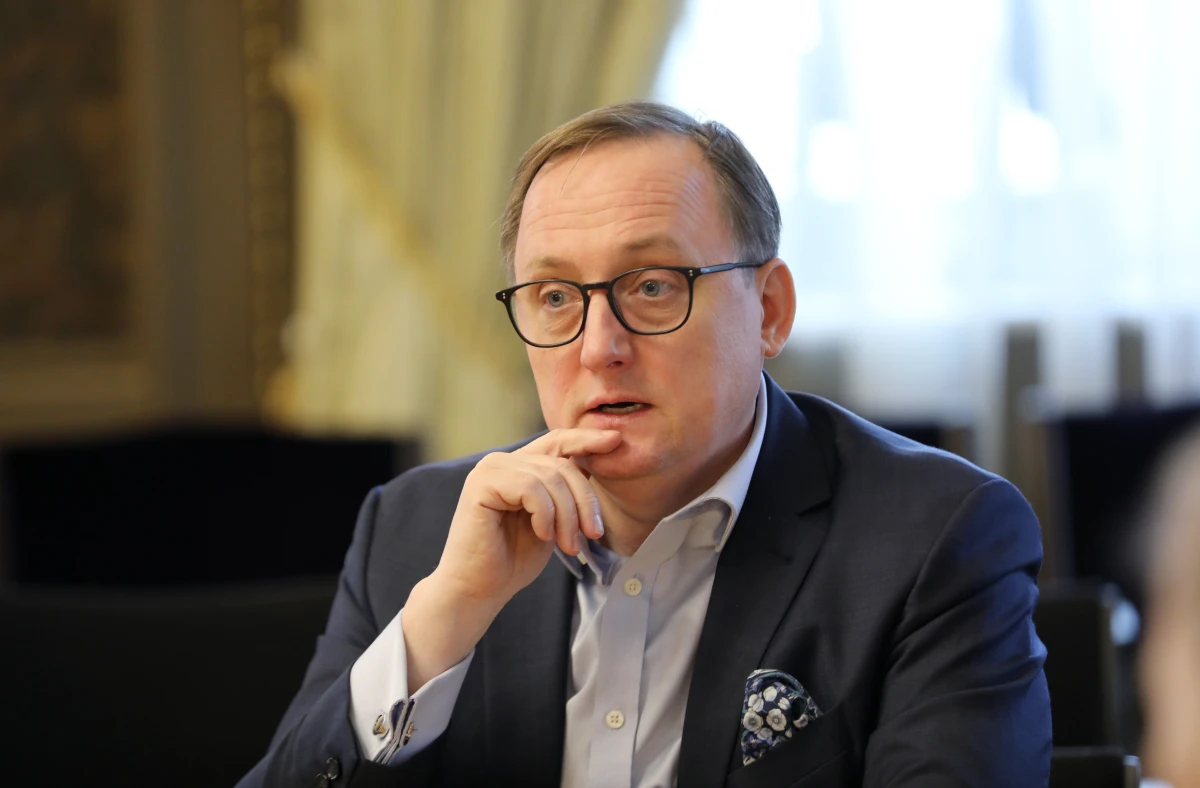
Inflation in the Eurozone is gaining momentum again and affecting more areas of the economy. Against this backdrop, the European Central Bank decided to raise interest rates, while the President of the Bank of Latvia, Mārtiņš Kazaks, warned of persistent risks to prices and economic growth.
Inflationary pressure in the Eurozone countries is becoming increasingly widespread and is affecting not only individual categories of goods or services. This was stated by the President of the Bank of Latvia, Mārtiņš Kazaks, commenting on the recent decisions of the European Central Bank Council.
According to him, uncertainty in the global economy remains high. The ongoing conflict in the Middle East and persistent disruptions in supply chains are keeping oil prices elevated, which may remain high for longer than previously expected.
Statistics show that price growth in the Eurozone has accelerated again. In May, overall inflation rose to 3.2% from 3% the previous month.
At the same time, core inflation — a measure that excludes the most volatile components and is considered one of the main benchmarks for central banks — also increased, rising from 2.2% to 2.5%.
The growth of prices for services accelerated particularly noticeably — from 3% to 3.5%. This is an important signal for economists, as the services sector often reflects more persistent inflationary processes.
For ordinary consumers, this means that pressure on household budgets may persist longer than expected just a few months ago.
Against this backdrop, the ECB decided last week to raise key interest rates by another 0.25 percentage points. According to Kazaks, this step should help limit the further spread of inflation and reduce the risk that price growth will become entrenched in the economy for a long time.
As a result, the deposit rate was raised to 2.25%, the main refinancing operations rate to 2.4%, and the overnight lending rate to 2.65%.
At the same time, the ECB adjusted its forecasts. It is now expected that inflation in the Eurozone will be around 3% in 2026, whereas it was previously projected at 2.6%. Meanwhile, the prospects for economic growth have been slightly downgraded. According to updated estimates, the Eurozone economy will grow more slowly in the coming years than previously expected.
In fact, European regulators are once again facing the familiar dilemma: on the one hand, it is necessary to curb inflation, and on the other, to prevent excessive economic slowdown.
Kazaks emphasized that under current conditions, the ECB will continue to make decisions from meeting to meeting, based on incoming data and not promising any further movement of rates in either direction in advance.
The Bank of Latvia believes that inflationary risks remain elevated, and the development of the situation in energy markets and the Middle East will be one of the key factors for the European Central Bank's further decisions.












Leave a comment