Sometimes financiers also charge a fee for conducting the search.
After the death of relatives, money can remain in banks for decades. In Germany, unclaimed billions of euros are currently lying in banks, which families often do not even suspect.
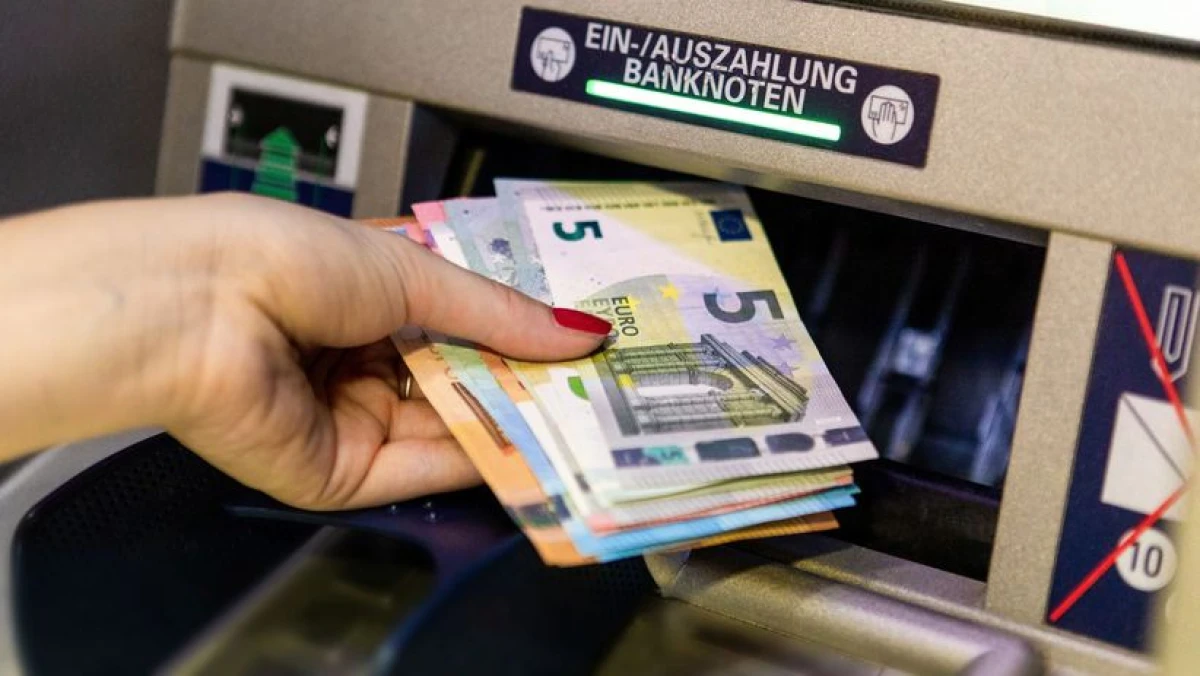
The problem of so-called forgotten bank accounts is gaining attention in Germany. These are accounts whose owners have died, and relatives do not know that there is money left in them. A recent study showed that the total amount of such funds may already reach 4.2 billion euros, as reported by chip. This sum is made up of thousands of accounts across the country. For example, Sparkasse in Dortmund alone managed about 250,000 such accounts with a balance of nearly 4.7 million euros.
Why money remains without owners
Most often, the reason is related to inheritance. After a person's death, the family does not always have complete information about their finances. Sometimes a person used several banks or simply never informed relatives about their savings.
Economists also point to another reason. Sometimes the money may have unclear origins. In some cases, owners deliberately hid such funds and left no information for their heirs.
Unclaimed billions of euros: how the law works in Germany
German banks are required to keep the money even if the account remains inactive for many years. For 30 years, the funds continue to be listed under the owner or their heirs.
After this period, the bank has the right to write off the money and reflect the amount as its own profit. However, even after thirty years, an heir can demand payment if they prove their right to the inheritance. This means that the money does not formally disappear.
Why the amount may decrease over the years
There is one important nuance. While the money remains in the account, the bank continues to charge standard maintenance fees. Because of this, after many years, the balance may be significantly less than the initial amount.
A recent survey showed that most residents of Germany do not support such a system.
What residents of Germany suggest:
- transferring money to social funds;
- using funds for charitable programs;
- preserving the owner's right to reclaim the money in the future.
A similar system is already in place in the United Kingdom.
How to find a relative's forgotten bank accounts
In Germany, there is no single database for searching such accounts. Therefore, the heir has to check various banking institutions independently.
Where to look for bank accounts:
- in the Sparkasse system through the DSGV association;
- in Volksbank and Raiffeisenbank through regional banking associations;
- in private banks through the Federal Association of German Banks;
- in public banks directly.
In all cases, an Erbschein will be required. This is the official court document in Germany that confirms a person's right to inherit. Sometimes banks also charge a fee for conducting the search.
Money may be located not only in Germany
Some testators place part of their capital abroad. For example, Switzerland has a centralized search system through a banking ombudsman.
In Luxembourg, the banking association helps prepare documents. In Austria, such a search is only possible through the court.
What this means for Russian-speaking families in Germany
If there are financial questions after a relative's death, it is worth checking bank accounts as thoroughly as possible. This is especially relevant if the person lived in Germany for a long time, used services from several banks, or conducted financial transactions outside the country.
Currently, unclaimed billions of euros continue to remain in the German banking system, and some of this money may legally belong to heirs who simply do not know about its existence.