
Today, the Latvian Saeima committee is expected to complete its work on the amendments to the Consumer Rights Protection Law.
All ministers who had a mandate as members of the Saeima temporarily resigned their parliamentary powers after the approval of the Kulbergs government. All except... Nauris Puntulis.
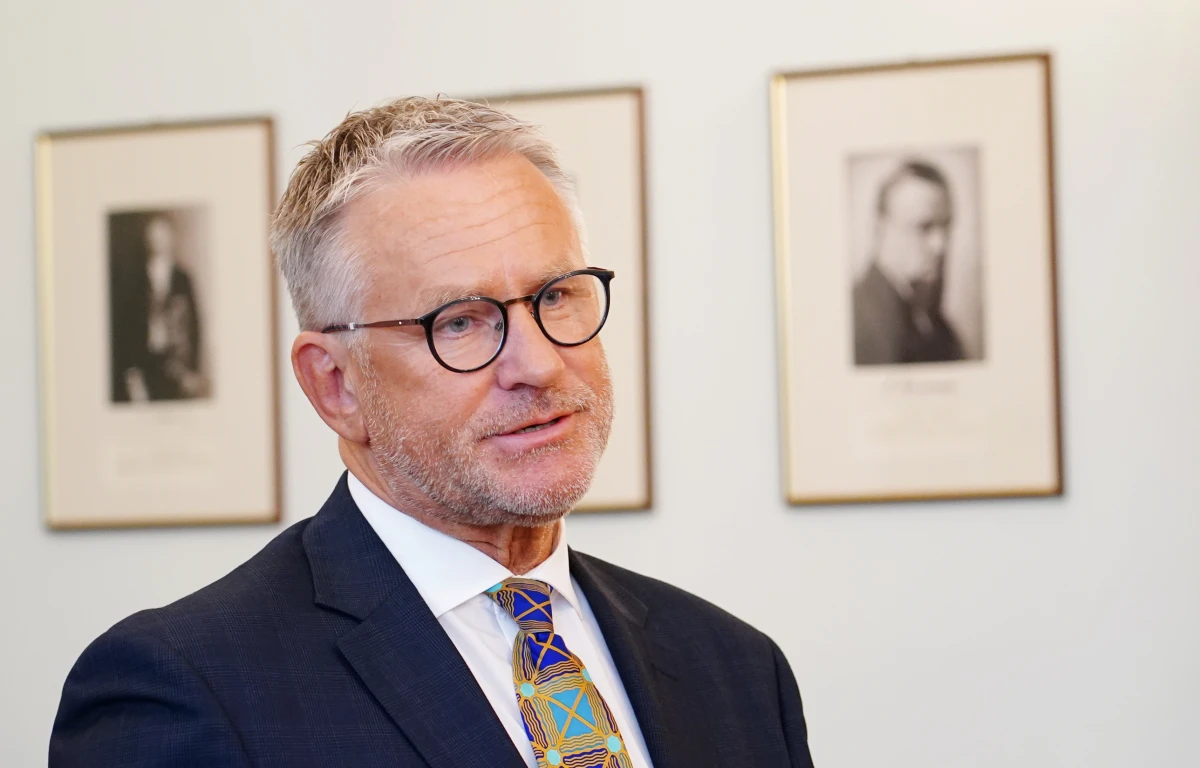
Minister of Culture Nauris Puntulis (National Alliance) decided to remain a deputy until the Saeima determines the language amendments to the Consumer Rights Protection Law.
Wait for the amendments and leave
Namely: ahead of the elections, Puntulis very much wants the parliament to approve his proposals, which would effectively prohibit providing services to clients in Russian — even if service providers (in stores, hairdressers, pharmacies, veterinary clinics, shoe repair shops, etc.) are willing to do so.
Let us remind you that Puntulis's amendments under the heading "Language of Communication" first appeared during the second reading of the bill — back in March. And they were approved by the majority of deputies in the Saeima's Economic Affairs Committee.
However, the deputies agreed that these amendments would be revised by the third reading. Puntulis himself initially tried to modify the amendments, but it did not improve the situation — except that the deputy condescendingly allowed services to be provided, by mutual agreement, in Romanian, Portuguese, and other official languages of EU countries.
A similar amendment was proposed at that time by deputy, now Minister of Education Ilze Indrikson from the same National Alliance.
Speaking is allowed, but writing is not!
The situation was attempted to be improved by experts from the Ministry of Justice, who submitted their "compromise" proposals:
4.3 Language of Communication.
(1) A consumer in Latvia has the right to receive services and information about a product in the state language. The service provider or seller is obliged to ensure the realization of this right.
(2) The service provider or seller is not obliged to serve the consumer in any other language except the state language.
(3) The service provider or seller must ensure that the first and primary language of oral communication is Latvian. In further oral communication, a foreign language may be used if the consumer requests it and the service provider or seller agrees and can provide it.
(4) The service provider or seller must ensure that documents prepared for providing services, used interfaces of digital content, as well as the possibility of choosing a language in such technical solutions as applications, websites, call centers, or in-person service infrastructure, subtitles, and other technical solutions are in Latvian. If the service provider or seller can ensure it, the documents prepared for providing services, used interfaces of digital content, as well as the possibility of choosing a language in technical solutions may also be in the official language of an EU member state or a candidate country for the EU.
As you can see, these proposals will still allow the seller and the buyer to agree on what language to communicate in. But from these amendments, which, judging by everything, will ultimately be supported by the parliamentary committee, it follows that, for example, the Russian language will have to be removed from restaurant menus or from the computer (website) of a bistro or pizzeria.
It is noteworthy that very similar amendments were submitted by the State Language Center, which, by the way, is under the control of the Ministry of Justice. The nuance of the amendments from the State Language Center is that the service provider may agree to communicate with the buyer in a language other than the state language, but only... if it is not Russian, as the amendment states the right to oral communication in the official languages of EU countries and candidate countries for the EU, and OECD countries.
Let us note that there is no need for these language amendments to the Consumer Rights Protection Law, as rights and guarantees for the state language and its speakers are enshrined in the State Language Law.
Make it before the holidays
If the Economic Affairs Committee manages to consider these amendments today, the Saeima may approve them in the final reading at the last plenary session before the long summer holidays on June 18.
In fact, logic and common sense suggest that if the legislator wants, they can once again legally guarantee the consumer's ability to receive services in the state language. But prohibiting private businesses and clients from choosing the language of communication is, to put it mildly, nonsense! Although the proximity of elections often deprives public servants of a sense of measure…












Leave a comment