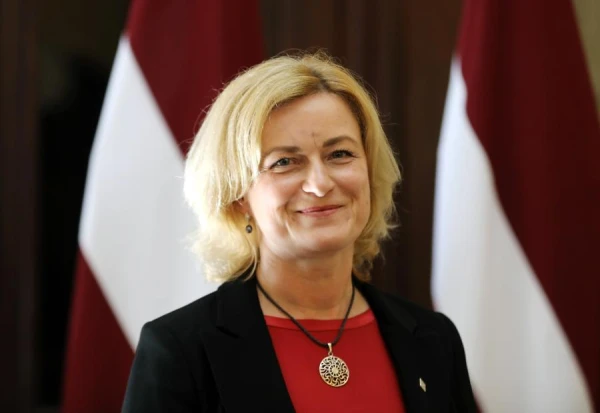
To increase productivity, Latvian enterprises need to set more ambitious goals and grow not only in Latvia but also on a European scale, said the President of the Bank of Latvia, Mārtiņš Kazaks, in an interview with LETA, LETA reports.
He noted that inflation in Latvia is higher than the average in the eurozone, but the difference is narrowing. Recent figures indicate that inflation in Europe is 1.7%, while in Latvia it is 2.6%, thus the difference is not significant.
Kazaks explained that there are two main factors pushing inflation up in Latvia. The first, particularly pronounced at the beginning of last year, is food prices. Currently, the impact of food prices on inflation is no longer as significant.
"There is a second problem as well. We see that in Latvia wages have been growing significantly faster than productivity for several years now," Kazaks said, emphasizing that wage growth is a good thing as people become more affluent, and for several years now wage growth has significantly outpaced inflation. He added that these are average figures and the situation may vary across different groups, but overall, in recent years, wages have been growing on average by 8–10% per year.
Kazaks noted that this has improved the purchasing power of the population, but at the same time productivity has been growing significantly slower, which means that wage growth is transforming into price increases.
"In my opinion, the main choice is not to slow down wage growth, but to accelerate productivity growth, because such a difference cannot be maintained for long. Our exporters will simply lose competitiveness, and then the risk of recession will arise. Therefore, the main thing is to accelerate economic growth by reducing bureaucracy and increasing productivity," said the President of the Bank of Latvia.
Kazaks pointed out that Latvia has many good, high-performing enterprises, but there are too few of them, and they are too small for the size of the country. He emphasized the need for larger and 'more powerful' companies.
"One can look towards Lithuania — there is financing for the consolidation of enterprises, where small companies, by merging, buying each other out, and increasing efficiency, can become larger. According to entrepreneurs, such financing is insufficient," Kazaks said.
He explained that, for example, the development financial institution 'Altum' could help with this type of financing, which would also allow enterprises to invest more, actively implement robotization and digitalization.
"The world is moving forward. If we do not move, we will lose," Kazaks said, emphasizing that ambition is necessary, and it should be on a larger scale — not just at the village, city, or Latvian level, but at the European level as well. The President of the Bank of Latvia added that in Lithuania companies are often significantly 'bolder and more ambitious.'
Kazaks noted that the balances of Latvian enterprises are very stable, so the starting position is good. "We see that banks have become more active, including in the small and medium enterprises segment, however, even large Latvian companies are relatively small when viewed on a European level," said the President of the Bank of Latvia, adding that there are very few truly large companies in Latvia, and Latvian large enterprises usually correspond to the average scale by European standards, so the scale is completely different.