
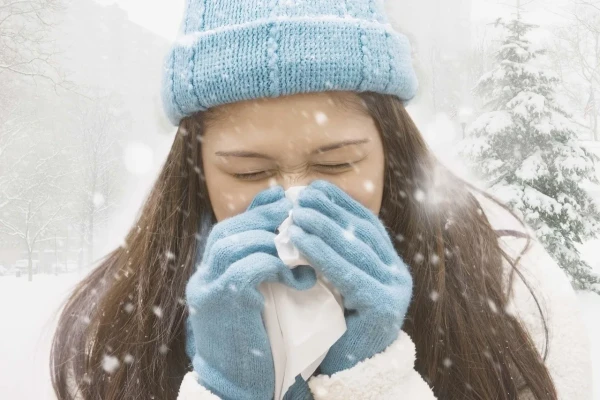
In winter, the number of colds and flu cases increases; however, cold weather itself does not cause illness. The main role is played by conditions that facilitate the spread of viruses, reduced immune defense, and social factors.
Modern research shows that cold air is not a direct cause of illness; however, it creates favorable conditions for viruses such as influenza and rhinoviruses, which remain active longer in cold and dry environments.
During the winter, the air becomes less humid, causing droplets released during coughing or sneezing to evaporate more quickly and turn into tiny particles that can stay in the air longer and penetrate the respiratory tracts of others. Additionally, dry air dries out the mucous membranes of the nose and throat, reducing the body's natural defense against viruses.
Inhaling cold air also leads to the constriction of blood vessels, which decreases blood flow and weakens the immune response. Social factors amplify this effect: in winter, people spend more time indoors, where viruses spread more easily.
A lack of sunlight reduces vitamin D levels, which is important for maintaining immunity. Individuals with chronic respiratory conditions, such as asthma, are particularly sensitive to cold and dry weather. Experts emphasize that walking without a jacket or a cool bedroom does not, in itself, provoke illness — viruses and conditions that facilitate their spread play a key role.
Winter colds and flu are the result of the interaction between external factors and viral activity, rather than just cold weather. Maintaining humidity, sunlight exposure, and strengthening the immune system remain important preventive measures.















Leave a comment