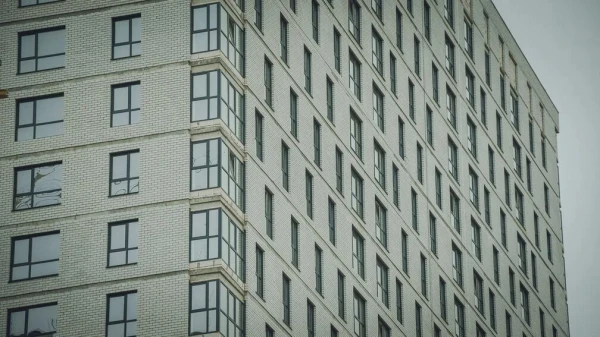
Overcrowded areas without social infrastructure are forming in the capital.
From the industrial zones of the Southeast District to the "fields" of New Moscow — the outlines of areas at risk of becoming overcrowded enclaves are clearly emerging on the map of the Russian capital.
Investors are buying micro-studios near new MCD and metro stations, while experts warn of a critical concentration of housing that lacks schools, parking, and social protection. "Novye Izvestia" analyzed the geography of "risk zones" — from Nekrasovka to Otradnoye — and found out which locations could become hostages to their own density over the next ten years, transforming from promising neighborhoods into areas with excessive anthropogenic load.
Real estate expert Anna Zelenskaya sees a potential social time bomb in the concentration of micro-apartments in the capital. She believes that the pursuit of maximum profit and buyers' desire to save money could lead to irreversible consequences for the urban environment.
Geography of Risk Zones
In the next 5-10 years, several types of areas could become hotspots for such development. As Anna Zelenskaya explained in an interview with "Novye Izvestia," the shortage of available land in the old boundaries of the city forces developers to explore sites that were previously considered unsuitable for living.
-
Peripheral "gray belts" (Southeast Administrative District, Eastern Administrative District, Southern Administrative District) These are traditional leaders in the redevelopment of industrial zones. Locations such as the Nizhny Novgorod District, Pechatniki, or Tekstilshchiki are actively being developed with studios on the sites of former factories. The main danger here is the "inheritance" of old problems: worn-out engineering networks that now have to serve five times more people than originally planned.
-
Infrastructure hubs (MCD and new metro stations) Areas along MCD-3 and MCD-4, as well as territories near new stations of the Troitskaya line, are becoming magnets for investors. Buyers are attracted by transport accessibility, but in reality, they receive housing in "transit zones." A specific social climate is forming here: high staff turnover and the absence of a permanent population turn courtyards into faceless spaces for overnight stays.
-
New Moscow: "endless horizons" of studios In areas like Sosensky or the settlement of Moscow, the density of development sometimes exceeds that of old Moscow. Here, "ghettoization" (or, more accurately, environmental degradation) manifests itself through transport collapse: the number of cars among micro-apartment residents far exceeds the number of parking spaces planned in the project.
-
Enclaves of apartments Special attention should be paid to areas with a high concentration of former administrative buildings converted into housing (for example, in the Dmitrovskoye Highway area or Otradnoye). Since apartments do not impose obligations on the developer regarding schools, "educational deserts" arise here — entire neighborhoods where the nearest kindergarten is several kilometers away and is overcrowded for years to come.
The Economics of Crowding: Why Moscow is "Shrinking"
The emergence of micro-apartments in the capital's market is a direct consequence of the rapid rise in the cost of square meters. As noted by Philipp Shrage, CEO of the construction company Kronung, for many buyers, this format becomes the only affordable way to settle in the metropolis.
"Micro-apartments appear because the cost of square meters is rising, and the buyer needs an affordable 'entry ticket' to the capital."
However, a small area alone is not a death sentence for quality of life. The expert emphasizes that the problem lies in the scale of the phenomenon.
"A small area of apartments does not make the neighborhood 'slum-like.' The problem arises where the share of ultra-small apartments becomes critical," says Philipp Shrage.
In his opinion, environmental degradation is provoked not by the area but by the combination of high density with a lack of well-thought-out infrastructure.
Social Disbalance and the "Dormitory Effect"
Anna Zelenskaya points out that the low entry threshold to the market comes at the cost of the comfort of the entire urban environment. Developers create a load that social facilities simply cannot handle. "Developers building micro-studios maximize residential square meters but minimize investments in accompanying infrastructure, which should serve significantly fewer residents," explains the expert.
This approach leads to profound social changes. Living in "cells" alters the structure of society within a single building. According to Anna Zelenskaya, the high population density in tiny apartments leads to rapid turnover of residents, lack of neighborly ties, and the formation of a living environment more akin to dormitories than a full-fledged community. Combined with the psychological pressure of small spaces and the overload of engineering networks, this creates risks for the long-term stability of the neighborhood.
These concerns are confirmed by analysts' data (in particular, monitoring by the company "Metrium"):
Less than half of Moscow's new buildings (about 49%) are currently fully equipped with their own social infrastructure (a school and kindergarten on the territory of the residential complex).
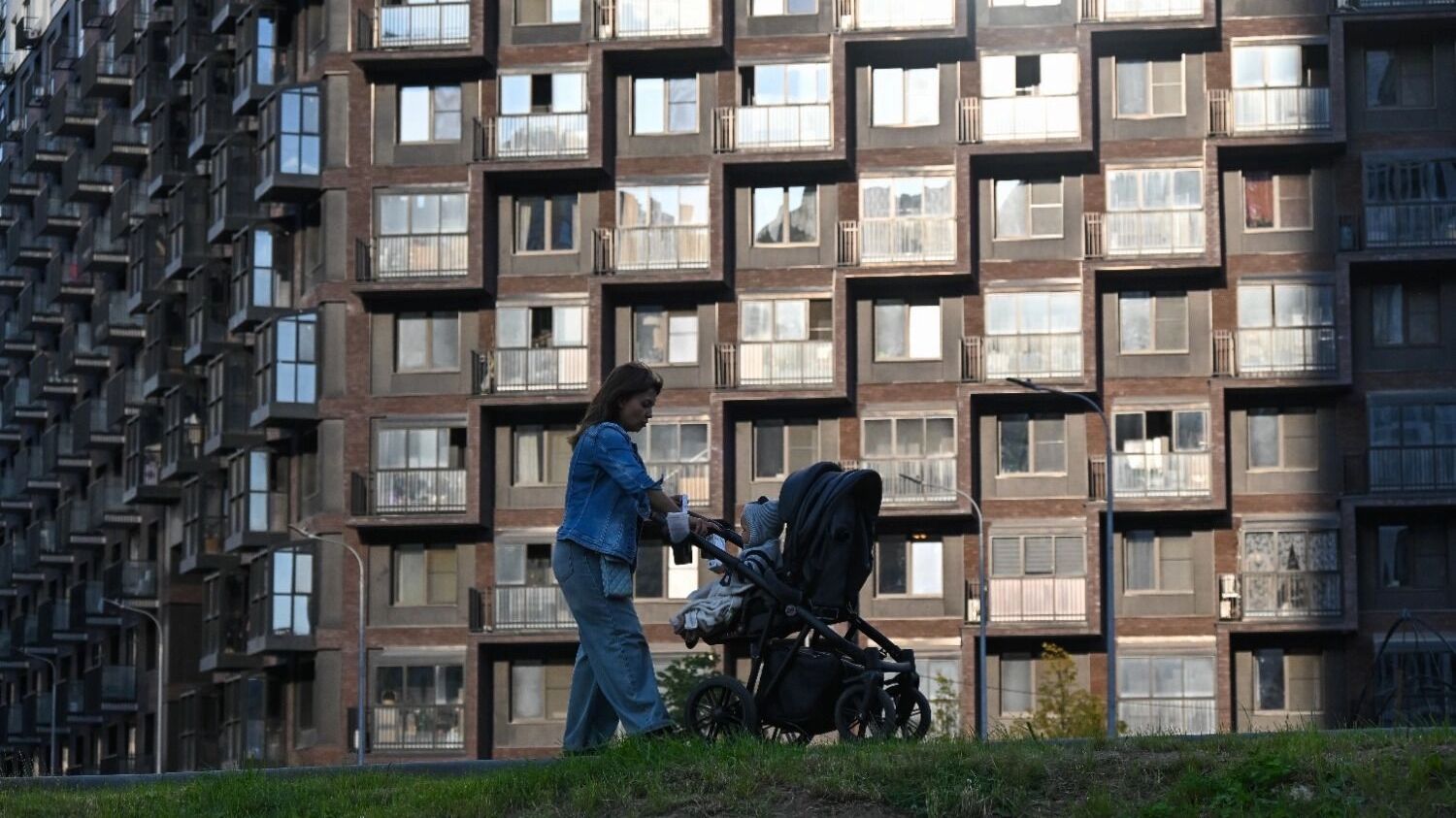
In the mass segment, the situation is slightly better (66.7% of projects), but it is here that the high concentration of studios instantly overfills the existing classrooms.
The most problematic points remain Nekrasovka, Kapotnya, Biryulyovo, and the eastern clusters — here, housing is being built significantly faster than social facilities.
Apartments: A Ticket Without the Right to Register
A significant portion of ultra-small spaces consists of apartments. Legally, this is commercial real estate, which means no registration, higher taxes, and utility bills. As of February 2026, the share of apartments in new buildings in Moscow is about 11-12% across all segments (from mass to elite).
Although their share in overall construction has decreased over the past three years, they remain the main "reserve" for micro-formats. Developers often use the redevelopment of former offices to divide buildings into small lots. However, Philipp Shrage notes that the market is gradually cooling towards this format due to legal uncertainty: buyers are increasingly opting for "transparent" housing status.
Paths to Salvation: From Regulations to Common Sense
Experts agree that preventing new areas from turning into "social ghettos" can only be achieved through systemic regulation. Philipp Shrage proposes establishing a minimum apartment area, limiting the share of ultra-small lots in projects, and implementing mandatory synchronization of housing with social facilities.
Anna Zelenskaya adds to this list the necessity of strict control over the repurposing of buildings, advocating for a "ban on the mass conversion of non-residential premises (such as former offices or hostels) into the status of micro-studios without considering the urban planning situation." Only a comprehensive approach will allow Moscow to maintain quality of life in conditions of space scarcity.
<iframe width="560" height="315" src="https://www.youtube.com/embed/Y2GFK73F89o?si=F5kbwAiHxhizfi5Z" title="YouTube video player" frameborder="0" allow="accelerometer; autoplay; clipboard-write; encrypted-media; gyroscope; picture-in-picture; web-share" referrerpolicy="strict-origin-when-cross-origin" allowfullscreen></iframe>