
This means that European real estate owned by Russian citizens may become less liquid and valuable.
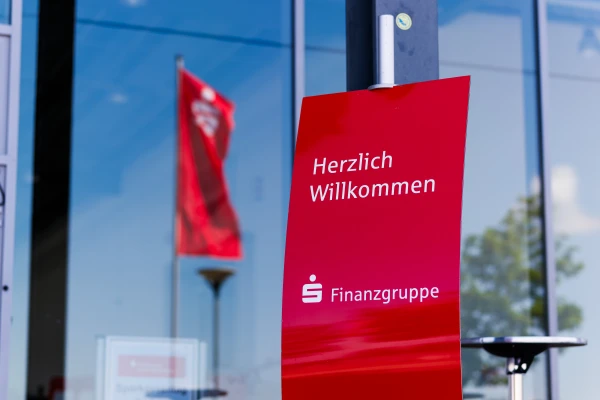
A new precedent for the application of financial sanctions against Russians has been recorded in Germany: the largest group of municipal banks, Sparkassen-Finanzgruppe (Sparkasse), denied a mortgage loan to a German citizen for the purchase of an apartment in Germany due to the Russian citizenship of the seller. The potential buyer applied for a standard mortgage but was denied, despite the fact that the property is located in Germany. This was reported by financial consultant Natalia Smirnova.
As a reason, the bank cited the tightening of the sanctions regime following Russia's inclusion on the blacklist of countries at high risk for money laundering and financing terrorism. The EU regulation, which came into effect on January 29, 2026, does not impose a direct ban on such operations but requires banks to apply enhanced compliance measures. While it does not prohibit mortgage transactions, credit organizations have the right to refuse financing if a citizen from this list is involved in the transaction, Smirnova noted, citing her client. Prior to Russia's inclusion on the list, such refusals in the German mortgage market had not been publicly recorded. This means that European real estate owned by Russian citizens may become less liquid and valuable, as buyers risk not obtaining mortgage financing when selling it.
After Russia was added to the list of high-risk countries, problems began to manifest en masse in the area of bank transfers. In practice, this has led to payment blocks, refusals to credit funds, and the closure of accounts for clients from Russia. European banks are increasingly refusing to accept money originating from Russia and through third countries, including former Soviet states. Issues arise even for clients with long-term residence permits and citizenship from EU countries. In Germany, clients of Commerzbank and the neobank N26 faced restrictions, where some accounts and incoming payments were blocked if there was a "Russian trace."
In France, banks BNP Paribas and Société Générale rejected salary transfers and closed accounts for Russians with EU residence permits, particularly from Kazakhstan. In Portugal, the largest banks — Millennium BCP, Santander Totta, and Novo Banco — refused to open accounts for Russians, and Novo Banco publicly confirmed that it does not serve clients from Russia, regardless of their residency status. A similar strict position is held by banks in Northern Europe, the Czech Republic, and in some cases Cyprus and Switzerland. Managing partner of TriTrace Investigations Ilya Shumanov writes that due to Russian citizenship, one Russian woman faced a real "interrogation" at the Latvian branch of Swedbank.
Restrictions have also affected fintech services. The British service Wise began returning transfers and canceling salary credits if the payment is related to Russia, even if the client holds an EU residence permit or lives outside Europe. Revolut imposed limits on account top-ups and expanded the list of "unsupported countries," blocking accounts of Russian citizens, including EU residents. Representatives of neobanks explicitly state that they act not only within the framework of formal legislation but also based on the expectations of regulators, who demand maximum reduction of sanction risks.











Leave a comment