
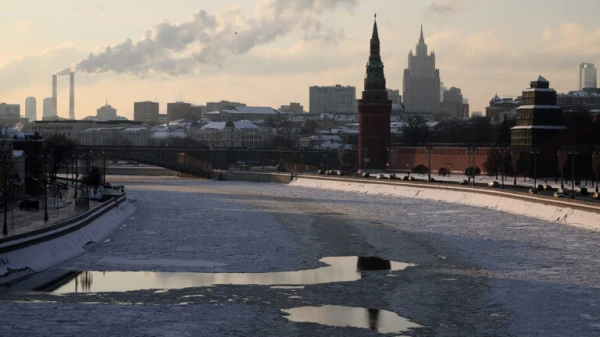
Even the Kremlin acknowledges the seriousness of the situation.
In Russia, a "reformatting" of the tax system may be carried out, said Oksana Dmitrieva, a member of the State Duma Committee on Budget and Taxes, to RTVI. She suggested that this might be an attempt by the authorities to return to economic growth after its decline.
"It is quite possible that there will be some frantic attempts to stimulate economic growth after they organized an economic decline and called it a planned cooling of the economy. I allow for a 'reformatting' of the tax system," Dmitrieva said.
According to her, the combination of tax increases — the profit tax from 2025, VAT from 2026, and changes in the taxation system for small businesses — leads to inflation growth and suppresses the economic course.
"Any economist predicts such a consequence," noted the deputy.
Dmitrieva believes that the authorities "deliberately drove the economy into recession, which should not have happened," as the development of the military-industrial complex... stimulates economic growth and gives an impulse to the entire economy. In this regard, they "like unsuccessful commanders — when losing a battle, expand the theater of operations," the parliamentarian ironizes.
"And it was necessary to manage to undermine economic growth and drive the country into recession at a time when everything contributes to its economic growth, despite the sanctions," the RTVI interlocutor laments.
To publicly state that incorrect steps were taken and that everything needs to be returned "to square one" would be correct, but for those in power, this means admitting their own mistakes, which they will not do, Dmitrieva is convinced.
"They cannot admit: 'We are guilty of undermining economic growth because we kept the high key rate with inflation. We raised taxes, thereby undermining the possibility of investment. And by increasing VAT and pressure on small businesses, we further stimulated inflation. We did all this, despite the fact that these were obvious mistakes,'" the deputy reasoned.
Instead, Dmitrieva believes, officials will say: "Now everything is going correctly, the planned cooling of the economy happened, inflation has slightly decreased. Well, now we need to adjust the tax system, make it different from what it was before, and do it differently."
Nabiullina Publicly Acknowledged the Central Bank's Mistakes
Earlier, Russian President Vladimir Putin stated that the Central Bank and the Ministry of Finance decided that raising VAT from 20% to 22% would be "fairer, more straightforward, and more reliable." He expressed hope that the increase would be temporary. The Kremlin did not predict possible timelines for reducing the tax rate.
Putin stated that the goal of raising VAT was to achieve budget balance. The president acknowledged that this issue was acute and had been discussed for a long time in the government and the Kremlin. When asked whether the value-added tax would remain at 22% "forever," the head of state answered negatively.
The head of the State Duma Committee on the Financial Market, Anatoly Aksakov, suggested that a reduction in the VAT rate could occur in a "fairly short time."




Leave a comment