
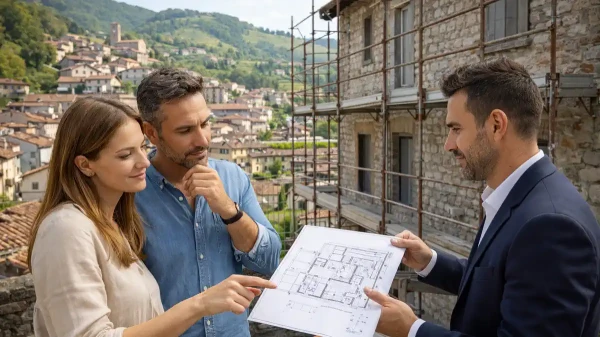
Such programs are launched where there are many abandoned buildings.
The request for a "house for 1 euro in Italy" sounds like a gift from fate, but in reality, it is almost always a social project against depopulation. The municipality is not "selling real estate" but trying to revive the streets and bring people back to abandoned homes.
The main point: 1 euro is a symbolic price. The real cost involves repairs, documentation, and timely work. You take on the obligations of restoring the house, not just a "purchase." There are almost always deadlines: you must start and finish the repairs quickly within a limited time. Often, there is a scoring system: priority is given to those who will actually move in and live there. For Turin and Piedmont, this is an interesting case of a "nearby" place for a summer house, relocation, or a family project.
Montalto Pavese is a small village in Lombardy, in the province of Pavia (the Oltrepò Pavese area). It is not Piedmont, but the logic for the Turin audience is clear: when prices in the city are high, attention shifts to "quiet places" near large centers.
The "house for 1 euro" projects are launched where there are many abandoned houses. They are falling apart, compromising safety, and dragging the village down: streets become empty, services close, and quality of life declines. The purpose of the program is simple: to return the social function to the houses. Either the owner brings the property in order, or the house enters a restart mechanism where the municipality looks for someone who will actually restore the housing.
The main trap in the "1 euro" projects is the deadlines. Many think: "I will buy now and deal with it later." But regulations usually require you to start work quickly and finish repairs within a limited time (such programs often have deadlines of around 18 months). If you live in Turin, doing repairs "from a distance" almost always turns out to be more expensive and slower. An old house first asks for not just "cosmetics" but safety, structure, and communications. A work plan and control are more important than beautiful pictures on the internet.
FAQ: 7 Frequently Asked Questions About Houses for 1 Euro in Italy
-
Is it true that a house costs 1 euro, without any catch? Yes, the price may be symbolic. But the main point is in the obligations: you take on the repairs and deadlines, not the "purchase of ready housing."
-
Can you buy it and do nothing, just to keep the property? Usually no. The regulations of such projects outline conditions for work and consequences for missing deadlines.
-
Who gets priority? Most often, those who plan to live there permanently, as well as those who will benefit the village: young families, applicants with a clear renovation plan, people with a small business project.
-
Is it feasible to undertake such a project while living in Turin? It is feasible, but control is needed: technician, estimate, schedule, contracts, phased payments. Without this, deadlines and budget can easily spiral out of control.
-
How much money is needed at a minimum? If the house is in poor condition, expect to spend tens of thousands of euros. Old housing almost always requires structural work and communications.
-
Can the house be rented out to tourists later? Sometimes yes, and this is even encouraged. But you need to consider safety requirements and registration rules, as well as budget for startup costs.
-
Where can I find the official conditions? On the municipality's website and in the published regulations. Until you read the document, consider any figures from the internet as a guideline.
Conclusion: Who is this option suitable for? The 1 euro house project is a chance for those who are ready to work on it like a project: budgeting, meeting deadlines, and bringing the house to life. This is not a "dream purchase for pennies," but a clear deal: the municipality gives a chance, and you give the house and the village a new life.
Suitable for: relocation, a summer house with a clear purpose, family project, small business format.
Not suitable for: expecting a "ready house," lack of time for control, no budget reserve.









Leave a comment