
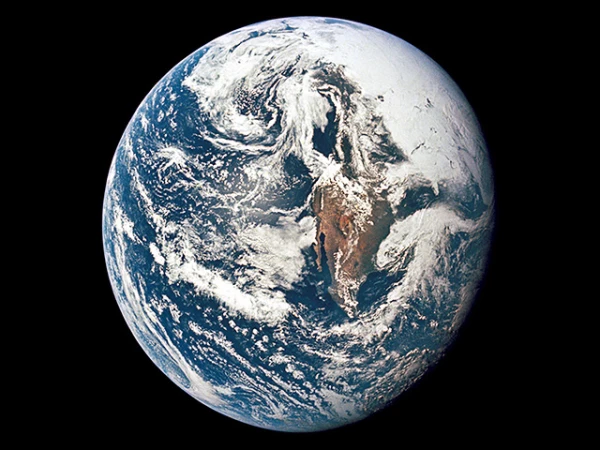
Arid regions cover more than 40% of the Earth's surface and support the lives of over three billion people.
A new global assessment of the state of arid lands, based on years of satellite observations, has shown that over the past twenty years, vegetation in many dry regions of the world has noticeably "greened," contradicting previous expectations of an accelerating desertification process. Using satellite data on plant productivity, researchers identified where exactly greening occurred, at what rate, what factors contributed to it, and how much it is related to the expansion of agricultural land rather than just climate change or the effect of increased CO₂ levels. These results change the perception of dry ecosystems and highlight the significant impact of human activity on land use.
Arid regions cover more than 40% of the Earth's surface and support the lives of over three billion people, while also performing important ecological functions such as carbon cycling, food production, and biodiversity conservation. However, these ecosystems remain vulnerable: they are experiencing increased aridity, groundwater depletion, frequent droughts, and growing pressure from intensive land use under climate change. Previous global studies indicated greening in dry regions mainly due to rising CO₂ concentrations. But the exact role of climate, management practices, and agricultural expansion remains contentious, making it difficult to predict the sustainability of these areas in the future. Therefore, there is a need for long-term assessments of trends and identification of key factors influencing greening.
A group of scientists from Lanzhou University published their findings in the Journal of Remote Sensing. They presented a 24-year global analysis of vegetation productivity dynamics based on satellite data on gross primary productivity (GPP). The study examined dry regions across different continents to determine where greening is most pronounced and what natural and anthropogenic factors define it. The findings shed new light on the mechanisms of greening and show that the role of agriculture, irrigation, and fertilizers in maintaining productivity in arid zones has been underestimated.
According to the study, 29.2% of the world's arid lands showed significant greening during the period from 2001 to 2024, while only 4.9% experienced noticeable deterioration in vegetation condition. Dry regions, in general, received a net carbon gain of 1,899 teragrams, nearly half of which is attributed to Asia. Notably, human-related land use—primarily agricultural land—accounts for 773 Tg of carbon gain, even though it occupies only about 12% of the area of dry regions. Statistical analysis showed that the impact of human activity is more than twice that of the increase in CO₂ and significantly exceeds the contribution of climate factors alone. Existing global vegetation models substantially underestimate the scale of greening and primarily attribute changes to climate and CO₂, indicating the need for a more realistic consideration of land use in modeling.
The authors of the study compared satellite data on GPP with land use maps, changes in atmospheric CO₂ levels, climatic indicators, and agricultural resource data. They examined how productivity changed in cropland, shrubland and grassland ecosystems, forests, and dry zones from deserts to sub-humid regions. Over two decades, the area of cropland increased by 223,100 km², particularly in semi-arid zones. The highest productivity growth was observed in intensively cultivated agricultural areas of Asia—North India, Eastern China, and parts of Africa. Partial least squares regression analysis showed that the key factors for greening are cropland area (0.34), nitrogen fertilizer use (0.30), and CO₂ (0.33), while climate factors have minimal influence (0.03). A comparison of remote sensing data with TRENDY models showed that in 86.98% of regions, greening is underestimated, especially in areas with high agricultural intensity. These results confirm that human land use, rather than just climate change, is globally altering the ecosystems of arid regions.













Leave a comment