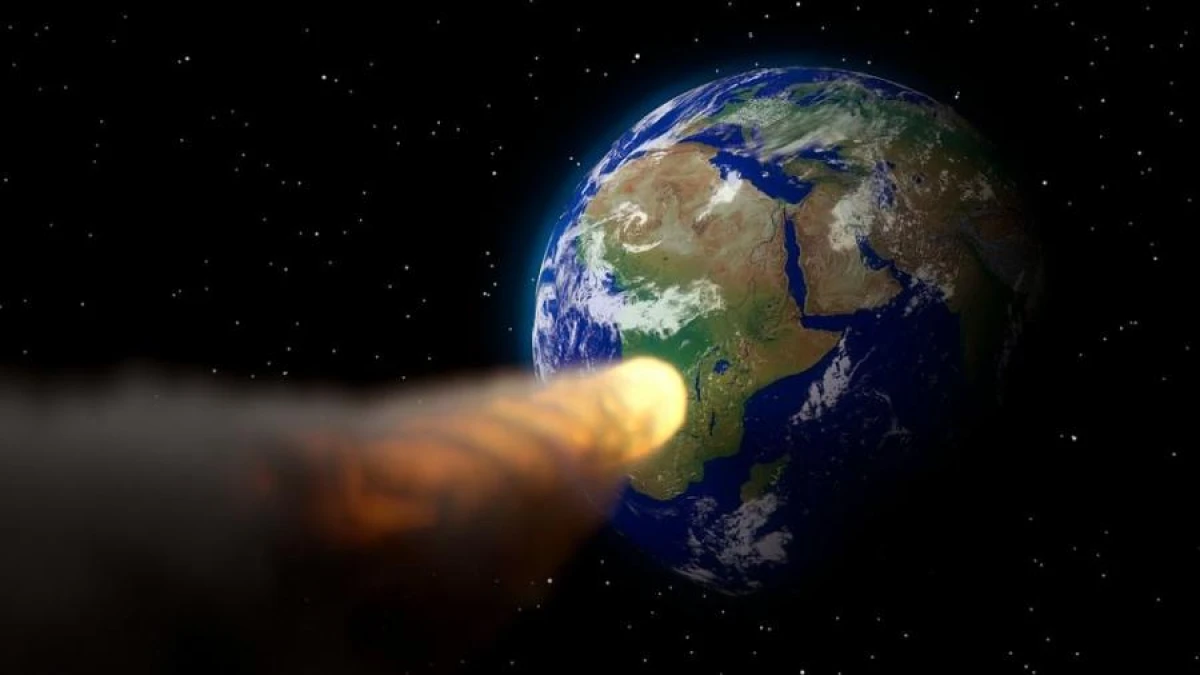
About 66 million years ago, the impact of a giant asteroid triggered a global catastrophe: a superheated atmosphere, tsunamis, wildfires, and acid rains wiped out 75% of species, including the dinosaurs.
But birds, turtles, and mammals managed to survive. The main factors for their survival were likely their small body size, ability to hide in burrows and water, and dietary flexibility. But there is more.
Fungi as a Regulator of Evolution
Scientists are still searching for the answer to why mammals became dominant on the planet after the catastrophe. Perhaps the most important factor for their prosperity was their resistance to fungi. After the mass extinction, there was a brief era of fungi that decomposed biomass. Mammals weathered this period more easily than reptiles, which helped them occupy vacant ecological niches.
After the asteroid impact, the size of animals played a key role in survival. Large predators and herbivores were doomed: they could not shelter from the cataclysms and required vast amounts of food in conditions of acute scarcity. On land, small creatures no larger than a badger thrived. They easily found shelter and survived on minimal resources.
In water, survival was aided by ocean depths and freshwater ecosystems, which were less affected than terrestrial ones. The feathered ancestors of modern birds survived thanks to their strong wings, which allowed them to flee from danger, and their chicks grew quickly. Terrestrial fauna shrank: the largest survivors on land were the size of a domestic cat, while in water, it was a shark.
Paleontologist Kenneth Lacovara noted an important pattern: “It’s quite clear that you needed to be small and able to burrow to get through this event.” Species whose offspring grew quickly survived, reducing the burden on parents.
The Secret of Survival — Flexibility and Omnivorousness
Another crucial factor for survival was diet. The sun, hidden for a decade, destroyed photosynthesizing plants and plankton, leading to the extinction of many herbivores. Those who fed on carrion, seeds, or insects fared better — these resources did not directly depend on sunlight.
Detritus became a vital resource — it is dead organic material that settles at the bottom of water bodies or accumulates on the soil surface. It consists of remnants of plants, algae, and animals. This organic “waste” is constantly physically broken down (by water, wind) and inhabited by myriad bacteria and fungi that feed on it. As a result, a nutrient-rich mass is produced.
Birds and primate ancestors survived due to their omnivorousness and the availability of seeds. Some were lucky with their prey: aquatic turtles survived by eating mollusks that fed on detritus. Scientists still face mysteries from that era.
For example, it remains unclear why some species of bivalve mollusks survived despite their dependence on sunlight, or how a 300-kilogram terrestrial crocodile survived in Argentina. Perhaps the consequences of the impact were milder in the Southern Hemisphere. Nevertheless, it was the resilience of the surviving mammals that opened a new chapter in Earth’s history, ultimately leading to the emergence of humanity.