
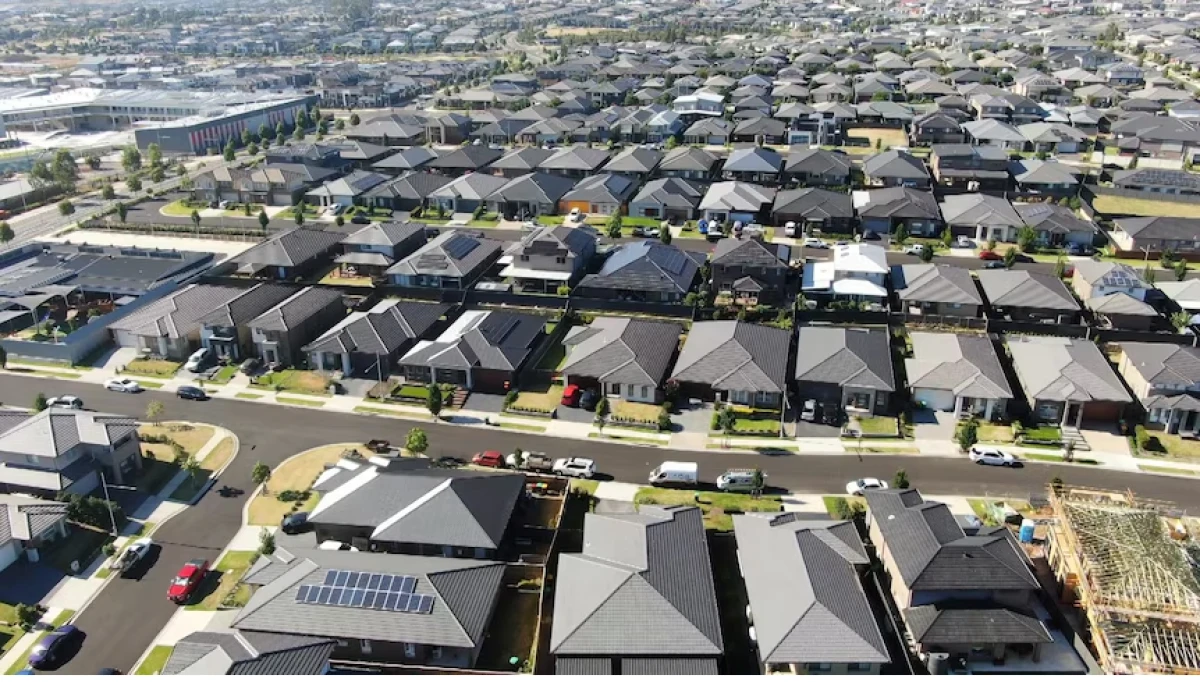
The rapid rise in prices is fueled by speculators.
Due to rising real estate prices and limited housing supply in Australia, buyers are increasingly considering unconventional properties for living. Former electrical substations, once deemed useless industrial sites, are now attracting the attention of investors and future homeowners.
The New York Times reports on how far the market is willing to go in search of new living and earning options.
Rebar sticks out from the floor, the paint on the walls is peeling, and warning signs caution visitors to watch their step — the floor here is horrendously uneven. Inside, it is dark and scary. Yet one potential buyer called this place "amazing."
Welcome to the Sydney real estate market, where the housing shortage is so severe that even decommissioned electrical substations are in demand.
The building, covering about 119 square meters, is located on a busy road leading to the famous Bondi Beach. To make it livable, serious renovations will be required. The building is listed for sale at 1 million Australian dollars, or about 701 thousand US dollars. For one of the most expensive neighborhoods in Sydney, this is a relatively modest amount — less than a third of the average local housing price.
This is just one of several substations — both former and still operational — that are currently for sale in Sydney. Some sites are no longer needed by energy companies, while others became redundant after network upgrades. Typically, these are small, forgotten buildings that have gone unnoticed for years. But in one of the most expensive housing markets in the world, even they have suddenly become desirable real estate.
Bruce Millar, a Sydney resident, came to see the former substation in Bondi. He has walked past this building countless times but did not know what was hidden behind the brown roller shutter.
"I would probably try to restore it somehow," he said.
According to Michael Crombie, director of real estate sales at Colliers, such buildings are in significant demand. In recent years, the company has sold five former electrical substations. Sometimes, along with the site, buyers also acquire an operational substation — usually hidden in a green technical box.
"These are like little warehouses in densely populated and highly sought-after residential areas. Many buyers are primarily attracted by the price," noted Crombie.
He stated that Colliers receives about 200 inquiries per week about such properties, although some people are just curious.
A representative from Ausgrid, the largest electricity supplier on the east coast of Australia, explained that selling surplus properties reduces maintenance costs and returns sites that were previously used inefficiently back into circulation. Some buildings can be converted into housing, while others can be transformed into commercial spaces or mixed-use developments.
However, according to Tom Alves, head of development at the Australian Housing and Urban Research Institute, such transactions will not solve the country’s housing crisis.
A home in Australia has traditionally been seen not just as a residence but as a symbol of life success and something to pass on to children. For decades, authorities have supported this model with various incentives for homeowners — including tax breaks for primary residences. According to government data, since 1999, housing prices have increased by more than 400%.
"Housing has increasingly become an investment asset, especially for those who already owned a home and could use accumulated capital for new real estate investments," explains Alves. In his view, this has been one of the reasons for the rapid price growth.
Income has not kept pace with this growth. Today, the median house price in Australia is eight times the median income, and in Sydney, it is even ten times. As a result, young Australians are becoming homeowners less frequently, and those who do often have to seek help from their parents.
One of the main reasons for the high prices is the lack of supply. Fewer homes are being built than needed, while the population is noticeably growing.
This year, Australian Prime Minister Anthony Albanese announced a major reform of the housing market. The government intends to reduce tax incentives for those buying property as an asset and encourage investors to invest in the construction of new homes. Authorities hope this will help people trying to purchase their first home.
The reforms have sparked heated debates, but the government’s position is unwavering: without them, the generational gap cannot be narrowed.
"The Australian dream of homeownership is gradually slipping away," Albanese stated this month.
In recent weeks, housing prices in Sydney and Melbourne have slightly decreased. However, experts are not rushing to attribute this solely to government reforms. Other factors are also influencing the market — rising living costs and high interest rates, which make it increasingly difficult for people to afford home purchases.
Professor of housing studies at the University of Adelaide, Emma Baker, believes that the effectiveness of the reforms can only be judged over time. In her opinion, Australia should actively develop other housing formats — for example, expanding the public housing sector or building more modular homes, as is done in Japan and Sweden.
At another showing — a two-story substation in the coastal suburb of Coogee with a starting price of around 1 million Australian dollars — Alison Fraser was already envisioning opening a ceramics workshop on the first floor and setting up a living space above.
Despite all the building's flaws, Fraser saw potential in it and now intends to participate in the auction.
"Buying an empty box with a leaking roof and no wiring is quite foolish," admits Fraser. "But there is something uniquely appealing about this building. And perhaps part of its charm lies in this ruinenlust."
This German word can be translated as the pleasure of ruins — a strange attraction to abandoned places and the traces of time.
Fraser speaks of this while examining a small weed that is pushing through the bricks right at the entrance of the building. Fraser has already decided — if she becomes the new owner, she will preserve it as a kind of symbol of new life.
"How did it even end up there? And how persistent this little sprout is!" she says.









Leave a comment