
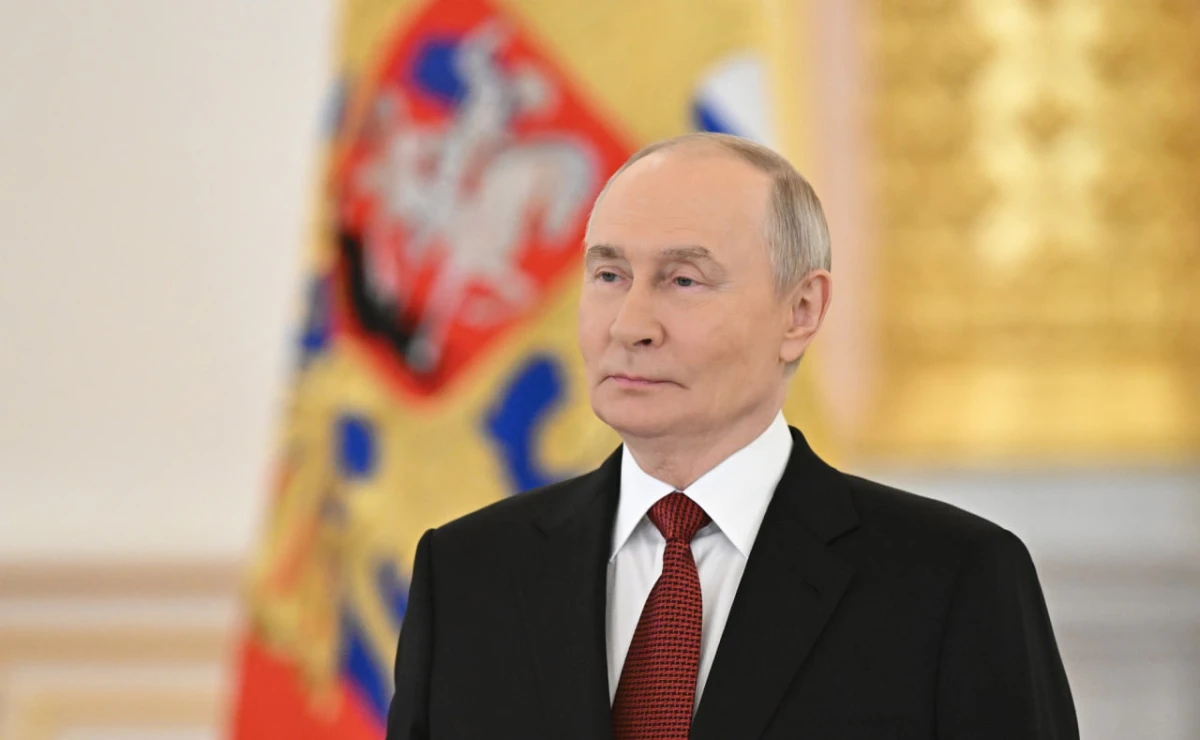
Speaking about the trends in the European Union that have recently manifested in the elections in EU member states, the head of the Analytical Center for Balkan Studies, Ekaterina Shimkevich, in an interview with LSM.lv highlighted the rise of populism and right-wing forces, as well as the strengthening of Russian influence in some countries through "soft power" and energy resources — not only gas and oil but also nuclear energy.
Observing the electoral processes in Europe over the past few years, Shimkevich primarily noted the rise of populism and right-wing forces. "This is a trend that has been ongoing for about fifteen years. But for some reason, it has only been actively discussed in the last two years — because populists have really started to come to power en masse."
The expert also noted that dissatisfaction in the EU is growing due to the lack of proper communication with the authorities and governments. "Because governments cannot explain the existence, for example, of a pro-Ukrainian position, the necessity of cooperation with Ukraine, and the development of interaction not only in providing assistance but also in creating joint enterprises: defense, military, technical. Society does not understand why this is happening. And for this, normal communication is needed. And here it is necessary for the Ukrainian side to get involved as well," said Ekaterina Shimkevich.
Moreover, in her opinion, Russian influence, the so-called soft power, is growing in Europe. "Russia actively engages its channels through the scientific community, through so-called compatriots, and strengthens hybrid influence through the media and information sphere. This is quite dangerous, as the countries of the European Union may see this but do not fully understand it," the expert said. She explained that such influence over time yields negative results, particularly in European society, where under various influences there begins to be a tendency to think that "we need to sit down and talk to Putin."
For Ukraine, this means that it is necessary to change the approach to communication with partners again and constantly explain "the same thing, just in different words. About aggression, about the threat from Russia."
The dependence of some countries on Russian energy resources is also growing. "And this is no longer just the classic gas and oil. This is the penetration of 'Rosatom' and its subsidiaries deep into the European Union, which continue their activities [in Europe]. In the case of Hungary, we see that the Paks-2 nuclear power plant project has not been stopped; the head of the IAEA, Grossi, is still happily traveling to Moscow and just as happily inaugurating the joint Paks-2 project in Hungary, calling it a major breakthrough.
'Rosatom' is entering Serbia, where small nuclear power plants are also planned to be built. The presence of Russians in Bulgaria is also increasing.
And this, in combination, creates a number of problems that the European Union will have to deal with in the future, building strategies for comprehensive resistance to Russian influence," emphasized Shimkevich.
According to her, Russia's presence and internal problems provoke a certain instability in European countries, which increases Euroscepticism.





Leave a comment