
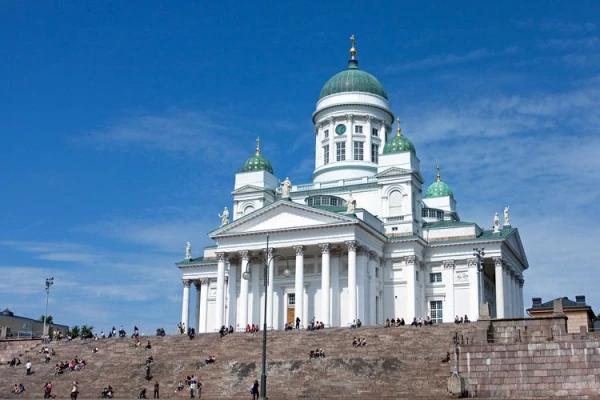
Well-known public thinkers serve as preachers in churches.
The service at the Agriacola Church in Helsinki attracted a large number of visitors – more than the usual 250 people.
The popularity of church services is also noticeable on a broader scale. Last year, services of the Evangelical Lutheran Church of Finland were attended approximately 3.3 million times, which is about three percent more than the previous year.
Arto Vallivirta, an expert on church services from the Church Administration, sees societal changes behind this situation.
"It is good that people find comfort and meaning on the church bench. The church should be a kind of refuge," said Vallivirta.
However, Vallivirta reminds us that the growing numbers should not be viewed only positively, as the significance of the church always increases in times of trouble – both for individuals and for society as a whole.
Despite the increase in attendance at services, the number of church members has been declining for a long time. This is partly explained by the age structure of the population: each year, more people are buried than new members are baptized.
At the same time, the national diversity of society is also noticeable in church pews.
"In many large cities, it has become common for people who do not understand the language used at the service to be present," Vallivirta explains.
Vallivirta reflects on whether the growing popularity of services will also affect membership dynamics in the future.
Sunday Service Attracted Young People
The service at the Agriacola Church is a good example of the type of worship that attracts people in the 2020s. It is a mix of familiar church traditions and an experimental approach involving the audience.
Modern spiritual music is accompanied by a group of musicians, well-known public thinkers sometimes serve as preachers, candles are lit, prayer requests can be left at side altars, and if desired, anointing with oil can be received during the service.
The priest conducting the Sunday service, Kati Pirttimaa, notes that she has observed more and more people and more youth attending services year after year.
"The younger generation is more open to various forms of spirituality and is willing to discuss it," said Pirttimaa.
26-year-old Krista Rauma started attending church regularly about a year ago. She found her community at the Sunday service.
"The service is the culmination of the week," said Rauma.
The themes of prayer requests reflect our times: unemployment and anxiety about the future are evident. In uncertain times, the church offers many a safe haven, even if commitment to the institution in the form of membership may not be appealing.













Leave a comment