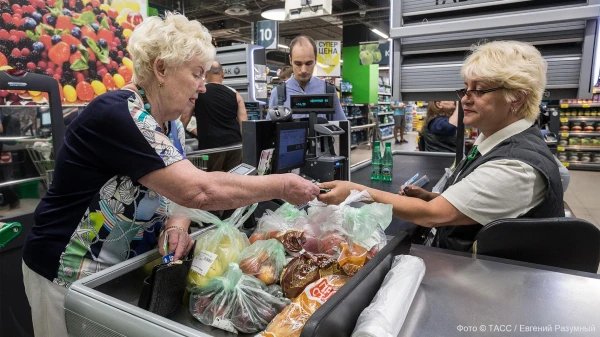
Bills aimed at improving the situation are introduced in parliament, but do not pass.
At the peak of the pension reform in Russia, officials stated that ratification was a firm commitment of the state to ensure that pensions would be no less than 40% of previous earnings. Eight years have passed, but this standard remains in the folders of documents. In practice, Russians today receive on average only 24–25% of what they earned.
Shadow Obligation: Why 40% is Not a Wish, but a Law
When the retirement age was raised in Russia in 2018, the authorities sought a "sweetener" for this bitter pill. It became the ratification of ILO Convention No. 102 "On Minimum Standards of Social Security." At that time, from high tribunes — from the State Duma to relevant ministries — it was proclaimed: we are joining the club of civilized countries where a person does not fall into poverty upon retirement.
ILO Convention No. 102 and Russia
In June 2018, the Russian government submitted a bill to the State Duma for the ratification of ILO Convention No. 102 "On Minimum Standards of Social Security."
The convention came into force in 1955 and by 2018 had been ratified by 55 countries, including most developed countries in Europe, Israel, Japan, Mexico, Brazil, and Senegal.
The document establishes minimum standards for social benefits in the member states: healthcare, old-age benefits, maternity, sickness, disability, unemployment, occupational accidents and diseases, as well as loss of breadwinner.
Among the mandatory norms is the provision of a minimum old-age pension level of no less than 40% of the previous earnings of the working population.
What Exactly Was Signed?
According to Article 65 of this Convention, the state old-age pension (with a certain work experience) must be at least 40% of the previous earnings of a "typical beneficiary." That is, if you worked as a skilled worker at a factory, your pension should allow you to maintain almost half of your usual standard of living.
Who Was "Lost" in the Calculations?
The problem lies in how the replacement ratio is calculated in Russia. Official statistics often take the "average pension" and "average salary" across the country. As a result, due to those who receive the minimum wage, the overall picture seems tolerable. But if we take a real person — for example, a doctor in a regional hospital with a salary of 60,000 rubles — and their future pension of 18,000 rubles, we see a ratio of 30%. And if the salary was 80,000, the drop will be down to 22%.
Reality in Numbers: Where Can a Pensioner Live "Well"?
By February 2026, the average pension in the country crawled up to 25,254 rubles (279 euros). But "average" is like the temperature in a hospital. In reality, the pension map of Russia looks like a patchwork quilt.
Chukotka and NAO: Here, payments can reach 40,000 rubles due to northern coefficients. These are the regions where the pension formally looks "decent" until you step into a local store and see the price of a dozen eggs or a kilogram of apples.
Moscow: The capital standard with urban supplements keeps pensions at 25,000–27,000 rubles. This allows making ends meet, but only thanks to a developed system of benefits for transportation and medications.
The Caucasus and Kalmykia: The lowest indicators. In Dagestan or Kabardino-Balkaria, the average pension barely exceeds 21,000 rubles. Here, "dignified old age" relies solely on the tradition of large families, where children support their parents.
The increases in 2026 (7.6% in January and 5.6% in February) seem like a drop in the ocean against the backdrop of reality. The January increase in utility tariffs (on average by 10–12%) and the rise in prices for dairy products and vegetables consumed these additional one and a half to two thousand even before they hit the card.
What Do They Spend Money On?
If we break down the budget of an ordinary pensioner, the picture is grim. Almost half of the income (45–50%) goes to the "basics":
Food: Chicken, grains, seasonal vegetables. Most have long forgotten about fish, good cheese, or beef.
Utilities: In winter, bills in the regions "bite" off 6–8 thousand rubles from the pension.
Pharmacy: This is the most unpredictable item. After the disappearance of several cheap generics, expenses on medications for people with chronic illnesses have risen to 4–5 thousand a month.
The remainder is "free" 5–7 thousand rubles for clothing, household chemicals, and, if lucky, gifts for grandchildren. Travel or quality paid medical treatment is simply out of the question.
Initiatives That "Failed"
Bills aimed at improving the situation are regularly introduced in the State Duma, but they repeatedly get shelved or rejected.
Thirteenth Pension: The proposal to pay an additional amount in December has been rejected several times with the wording "no funding sources."
Complete abolition of income tax for working pensioners: The idea stalled as regions feared losing budget revenues.
Indexation above inflation: It was proposed to calculate the increase not by the official report of Rosstat, but by the real growth in food prices. The initiative did not pass — too expensive for the treasury.
Global Experience: From Paradise to Survival
For comparison, it is useful to see how pensioners live in other parts of the planet.
Where pensions are a celebration: In Denmark and Kuwait, the replacement ratio reaches 80–90%. In Denmark, the state guarantees a basic income simply for residing in the country, while in the UAE and Kuwait, native citizens receive such payments that they can afford a luxurious life.
European standard: In Italy and Spain, the average annual pension is about 18–19 thousand euros. Elderly people in these countries are the main customers of cafes and restaurants.
Where there are no pensions at all: There are many countries in the world where the elderly live "on trust." In Niger and Afghanistan, there is no pension system: people live as long as they can work or rely on the community. In China, until recently, only civil servants received pensions, and only now are they starting to implement a system for rural residents, but the payments there are tiny — about 15–20 dollars.
<iframe width="560" height="315" src="https://www.youtube.com/embed/lSeeuBX4LtU?si=bbODQn9B4ZrMZPWB" title="YouTube video player" frameborder="0" allow="accelerometer; autoplay; clipboard-write; encrypted-media; gyroscope; picture-in-picture; web-share" referrerpolicy="strict-origin-when-cross-origin" allowfullscreen></iframe>