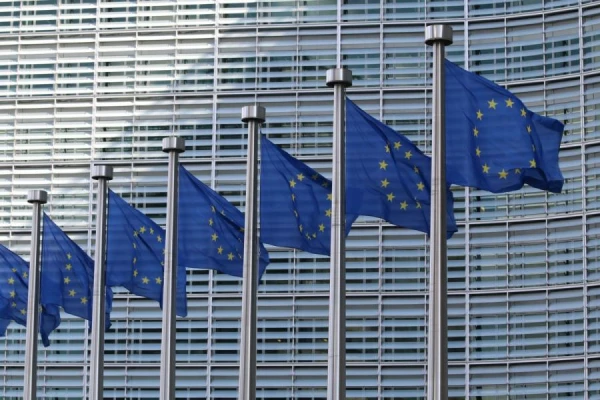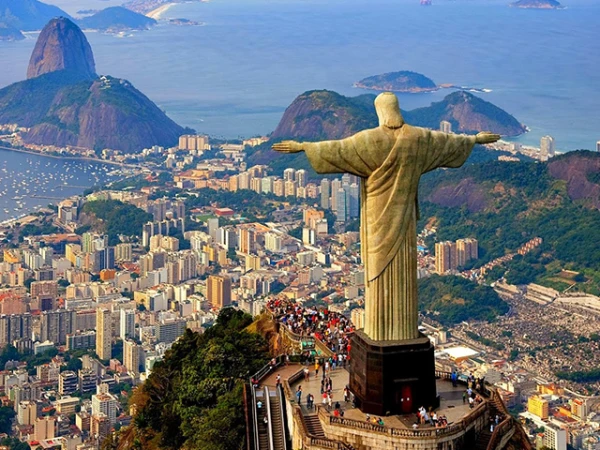
The USA, China, and Russia are simultaneously key partners.
Latin America is a region where the United States has traditionally competed for influence – since the proclamation of the Monroe Doctrine in 1823, a foreign policy concept that defined the Western Hemisphere as the "backyard of the United States."
The situation varies from country to country; however, it can generally be stated that a significant portion of national elites has a sustained degree of affiliation with the United States. Nevertheless, public sentiment towards the North American hegemon remains heterogeneous, and political opposition is strong, leading to alternating ideological cycles. As a result, since the early 20th century, the region has experienced "political swings" – a regular change in the dominance of right and left forces.
Brazil is no exception to this pattern. The opposing political camps – a bloc of leftist parties led by the PT (Workers' Party of current President Lula da Silva) and a right-wing bloc led by the PL (Liberal Party, the political support of Bolsonaro) – consistently alternate in power.
In this context, an unstable course in foreign policy could be expected from Brazil. However, as the largest economy in South America and a regional political center, it possesses sufficient sovereignty to conduct a multi-vector policy that maintains stability regardless of the government composition.
For Brazil, BRICS is a key tool for realizing its foreign policy and foreign economic ambitions, among which several strategic directions can be highlighted:
Firstly, Brazil has been consistently striving for decades to obtain permanent member status on the UN Security Council. Participation in BRICS strengthens its positioning as a regional power.
Secondly, Brazil seeks to establish itself as one of the political and diplomatic leaders of the Global South. BRICS serves as a platform for coordinating the positions of countries outside the Western bloc and a mechanism for collectively defending the interests of developing economies.
Thirdly, Brazil uses BRICS to strengthen its leadership in South America. Participation in the association enhances its status in the eyes of neighboring countries and allows it to act as a mediator between regional interests and global centers of power.
Fourthly, BRICS serves as a tool for Brazil to promote the idea of a multipolar world order and further diversify its foreign economic ties. Through expanding trade, investment cooperation, and alternative financial mechanisms, Brazil reduces its dependence on traditional Western markets and institutions.
Finally, Brazil views BRICS as an additional platform to strengthen its positions in the global environmental and climate agenda. Control over a significant part of the Amazon and participation in shaping environmental standards allow it to claim a role as one of the key actors in discussions on sustainable development and climate policy.
In addition to foreign policy ambitions, Brazil's course is decisively influenced by the structure of its foreign economic ties. The USA, China, and Russia are simultaneously key partners for it. China is currently the number one trading partner, the USA maintains significant economic, investment, and political influence, while Russia plays a critically important role in ensuring the agricultural sector: up to a quarter of the mineral fertilizers imported by Brazil comes from Russian supplies. Given that the agro-industrial complex accounts for about 25% of the country's GDP, the stability of these chains is directly linked to economic and food security.