The MEP was not allowed to fulfill his patriotic duty.
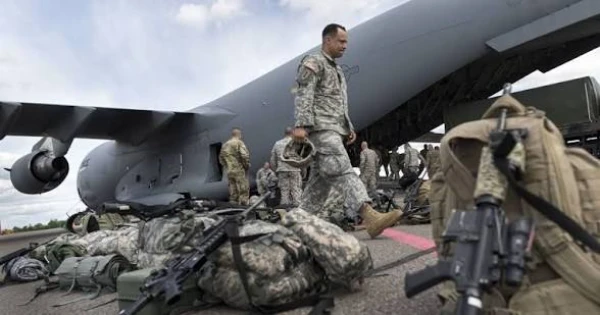
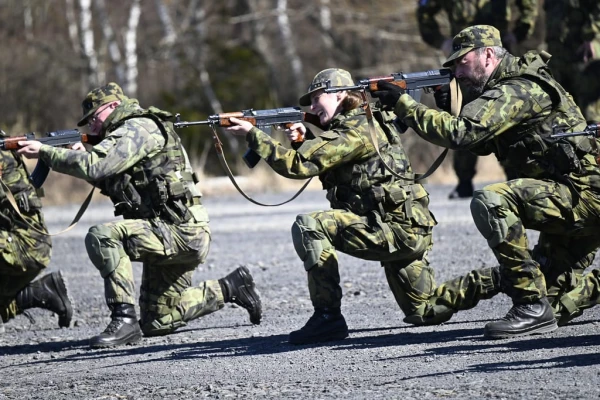
Interest in serving in the active reserve of the Army of the Czech Republic continues to grow. In 2025, the military received 2,522 applications from men and women – about a thousand more than the previous year. The highest number of applicants is traditionally registered in Prague, Brno, and the Central Bohemian Region. The army leadership views this increase as a promising signal: by 2030, they plan to increase the number of reservists from the current five to ten thousand.
In the briefing room of the Regional Military Command in Olomouc, personnel specialist Pavlína Novotná assists candidates in filling out documents to join the reserve. Previously, new applicants were accepted once a week, but the schedule has changed since the beginning of the year.
"Now we do this twice a week to accommodate those interested. These are people who work, and they need to coordinate everything with their employer to be released. We have to adjust our timing," she explains in an interview with Czech Radio.
Candidates have various motivations, but it rarely comes down to money.
"I am 35 years old, I am a carpenter, and I work for myself. My main motivation was to learn something new, to overcome fear. I have to deal with this. There is no financial motivation here," says one applicant, Ondřej Grabal.
Another candidate says that his interest arose thanks to friends in the military:
"I have a few acquaintances in the army, and when they talked about service, it interested me. I liked that I could develop physically. I am even thinking about becoming a professional soldier."
In Olomouc, 105 people joined the active reserve last year, a quarter of whom are women. According to Karel Hausmaier, press officer of the regional military command, the region ranks among the top four in the country in this regard.
"Many young people are joining, some even around 20 years old. The trend is growing, and we will strive to maintain and develop it," he notes.
Statistics show that a particularly noticeable surge in interest occurred after February 2022, when the war in Ukraine began. The number of applications increased dramatically – according to the spokesperson for the General Staff, Zdenka Sobarní Košvancová, the number of applications has increased approximately tenfold.
"We view this growth very positively; we are indeed pleased with the interest in serving in the active reserve. In 2025, we fulfilled our recruitment plan by 90%, and our recruitment goal by 68%," she reported.
This year, the army is organizing three exercises for reservists in the Olomouc region. The first of these will begin in March at the Libava training ground – and judging by the number of new applications, there will be enough participants at these gatherings.
However, not everyone can be part of the active reserve of the Czech army. For example, Members of the European Parliament cannot simultaneously hold a mandate and be in the active reserve. This was confirmed by the Supreme Administrative Court, which rejected the cassation appeal of MEP Tomáš Zdechovský. The politician sought the right to combine both roles, but after amendments to the law in 2023, such combination is explicitly prohibited. The legislative innovation is explained by the necessity to maintain the functionality of the state and international institutions in a crisis situation. A similar restriction applies to government members, deputies and senators of the Czech Republic, regional leaders, as well as certain officials and diplomats.
The decision to exclude Zdechovský from the active reserve after the law was amended was made by the Regional Military Command in Hradec Králové. The politician initially unsuccessfully challenged it in the regional court and then appealed to a higher instance. In his complaint, he pointed to both formal deficiencies in the military's decision and the disputable interpretation of the law.
Zdechovský reminded that he had previously served in the reserve without any problems. In his opinion, "there is no rational reason to prohibit anyone from voluntary service in the interests of the defense of the homeland." He also emphasized that it is beneficial for politicians to personally know the military environment. As a compromise, the deputy proposed an interpretation of the law under which he could remain in the reserve but would not be subject to conscription in the event of armed conflict. He believed this would allow for the goal of the amendment to be met – ensuring the uninterrupted operation of key institutions during wartime.
The court did not agree with this approach. The decision noted that the state "has limited capabilities for training and equipping active reservists," which raises the question of the feasibility of training those whom the legislator has excluded from possible conscription "for themselves." The court also emphasized that military duty is not a fundamental human right but rather an obligation to the state. At the same time, "the duty of an elected MEP is to properly fulfill the mandate," and the priority of this duty over military service does not violate the applicant's rights but merely signifies the choice of one state obligation over another.
The judges reminded that as a politician, Tomáš Zdechovský can initiate a change in the rules – either at the level of the European Union or in national legislation.
The MEP himself referred to the amendment as "lex Zdechovský," claiming that it is effectively directed against him personally. However, the court pointed out that the norm applies to all current and future Members of the European Parliament, and therefore does not have an individual character. Zdechovský still has the option to file a constitutional complaint.
Tomáš Zdechovský, who has been an MEP since 2014, has repeatedly spoken publicly about his service in the active reserve and emphasized the importance of this form of voluntary military duty. The active reserve in the Czech Republic implies that citizens, having regular civilian jobs, undergo military training and are called upon to reinforce the professional army when necessary.