
The apparatus of the CPSU played a significant role in historical events.
In January 1955, immediately after returning from his winter vacation, N.S. Khrushchev began preparations for the 20th Congress. According to his plan, it was supposed to finally bury the "collective leadership" and affirm his sole leadership in the country. Therefore, it is not surprising that the backdrop of the preparations was the review of many criminal cases directly related to the "political repressions" of the Stalin era.
Back in March 1954, based on a memorandum from the heads of the Prosecutor General's Office, the Ministry of Internal Affairs, the KGB, and the Ministry of Justice of the USSR R.A. Rudenko, S.N. Kruglov, I.A. Serov, and K.P. Gorshenin, the Presidium of the Central Committee sanctioned the creation of Central and local commissions "for the review of cases of those convicted for 'counter-revolutionary crimes', held in camps, colonies, prisons, and in exile settlements." The Central Commission was headed by Rudenko, while local prosecutors headed the republican, regional, and district commissions.
Moreover, at Rudenko's suggestion, "in order to expedite the completion of rehabilitation work," the previous procedure for reviewing cases was changed. Previously, all cases were reviewed in the Supreme Court of the USSR at the protest of the Prosecutor General, but now this work was handed over to the Central and local commissions, since, in Rudenko's opinion, the previous "procedure for reviewing cases would undoubtedly complicate this work and prolong its completion." Furthermore, at his suggestion, a decision was made that all decisions of the commissions should be considered final, not subject to cancellation or re-review.
According to the Ministry of Internal Affairs of the USSR, at the beginning of the rehabilitation process, there were 1,360,303 convicts in 65 correctional labor camps and 798 colonies, of which 448,344 were serving sentences for "counter-revolutionary crimes," which were classified as innocent "political prisoners." Although a significant portion of the convicted could not be classified as innocent victims of "Stalin's repressions" and "political prisoners."
Meanwhile, in March-April 1955, Rudenko and his deputy, head of the Special Affairs Department D.E. Salin, sent two reports to the Central Committee, indicating that during the period since June 1954, the Special Affairs Department of the Prosecutor General's Office had reviewed 13,084 cases, while the Central, republican, regional, and district commissions had reviewed 237,412 cases of individuals convicted of "counter-revolutionary crimes," of which only 8,973 (3.76%) were rehabilitated. Notably, the largest number of reviewed cases was in the Ukrainian SSR, where the republican commission reviewed cases concerning 93,223 convicts, of which only 848 (0.91%) were rehabilitated.
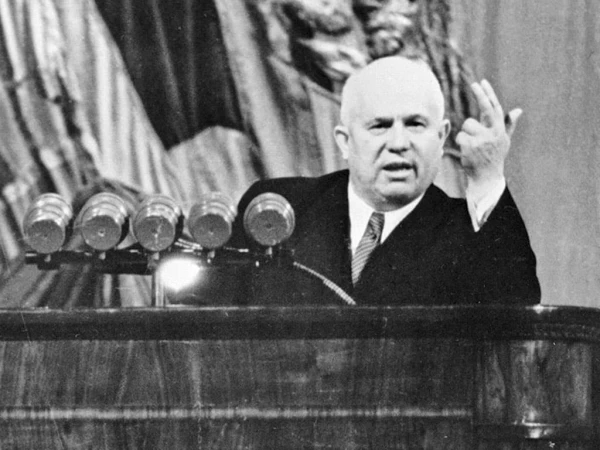
Nevertheless, as the Congress approached, Khrushchev increasingly insisted that members of the Presidium of the Central Committee publicly condemn the crimes of the Stalin era, reach a consensus decision, and present a report on this issue to the party congress. It should be noted that there is still no consensus in historical science regarding when Khrushchev first raised the issue of preparing his report. In his memoirs, he and A.I. Mikoyan claimed that the discussion on this issue only flared up in the corridors of the congress itself, that is, in mid-February 1956, and for a long time, this myth dominated domestic historiography. However, after the opening of several party archives, other viewpoints emerged. For instance, Professor N.A. Barsukov stated that "the proposal to hold a closed session of the congress and for Khrushchev to deliver a report 'On the Cult of Personality and Its Consequences' was approved by the Presidium of the Central Committee only on February 13, 1956, on the eve of the Plenary Session of the Central Committee. However, the report 'On the Cult of Personality,' unlike the Report of the Central Committee, was not presented to either the Presidium or the Plenary, which was a gross violation of party norms and traditions, since the highest party body approved a report 'the text of which did not exist at that time' and which still 'had to be written.' Khrushchev's report, apparently due to haste, was handwritten in pencil based on P.N. Pospelov's report 'either on the evening of the 13th or during the night of February 13 to 14, 1956.'
Other authors, particularly V.P. Naumov, assert that the issue of the report was raised by Khrushchev as early as late October 1955 in his memorandum to the Presidium of the Central Committee. However, until January 1956, it was not about a separate report, but only that the issue of the 'cult of personality' would be addressed in the Report of the Central Committee, which Khrushchev would present. Finally, another group of authors – R.G. Pikhoya, Yu.V. Aksyutin, and A.V. Pyzhikov – state that the issue of the Stalin cult was first discussed at a meeting of the Presidium of the Central Committee on December 31, 1955, where a heated discussion took place regarding pre-war political repressions. It was there that the agenda included the item: 'Issues related to rehabilitation,' resulting in a decision to dissolve the 'Rudenko Commission' and create a new Rehabilitation Commission consisting of two secretaries of the Central Committee P.N. Pospelov (head) and A.B. Aristov, head of the All-Union Central Council of Trade Unions N.M. Shvernik, and deputy chairman of the Party Control Committee under the Central Committee P.K. Komarov. They were tasked with thoroughly studying the 'causes of the emergence of mass political repressions,' especially concerning members of the Central Committee elected to its composition at the XVII Congress of the VKP(b) in February 1934.
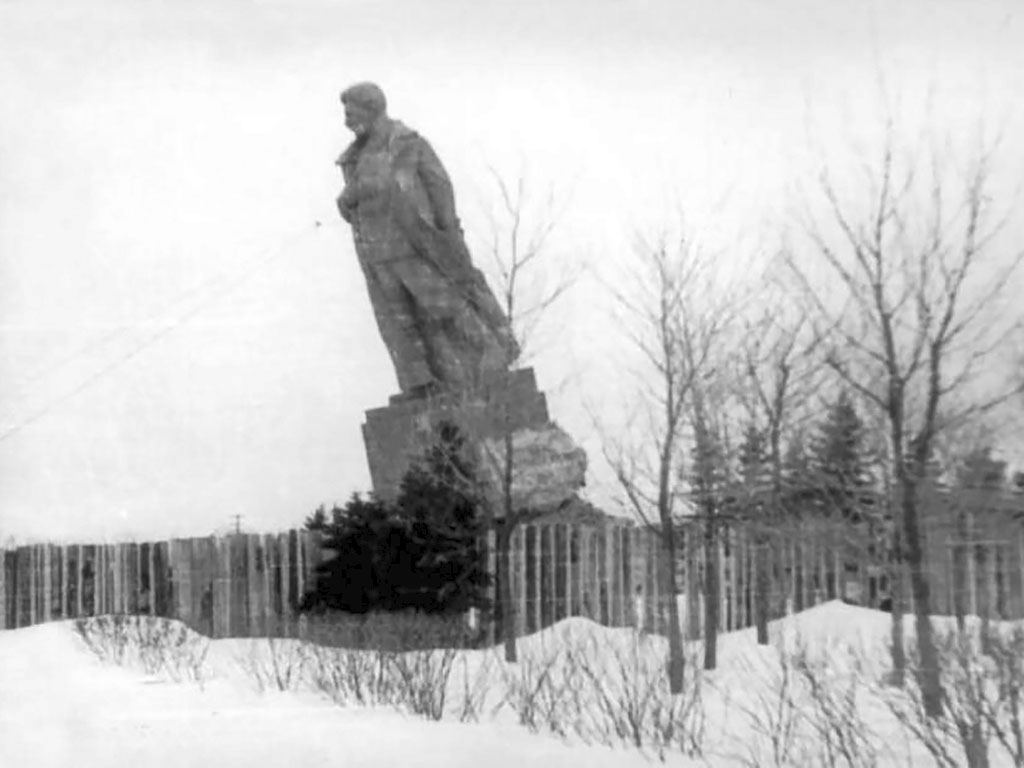
Moreover, referring to Mikoyan's memoirs, several historians state that the idea of creating such a commission was suggested to Khrushchev by him during their personal conversation. On January 30, the Presidium of the Central Committee adopted an unprecedented Resolution 'On the Creation of Party Commissions for the Review of Cases of Convicts Serving Sentences in Camps' and instructed a working group consisting of Mikoyan himself, A.B. Aristov, A.I. Kirichenko, N.P. Dudorov, and R.A. Rudenko to 'develop the working procedure' of these commissions. According to the adopted decision, commission members (or 'troikas') were 'assigned to the camps' and authorized on behalf of the Presidium of the Supreme Soviet of the USSR to 'review the cases of individuals serving sentences for politically motivated crimes and official crimes, and to decide on the spot about their release.' At that time, Khrushchev also initiated the resignation of Minister of Internal Affairs General-Polkovnik S.N. Kruglov and appointed his longtime associate, head of the construction department of the Central Committee Nikolai Dudorov, as the new head of the Ministry of Internal Affairs of the USSR.
On February 1, 1956, another meeting of the Presidium of the Central Committee took place, where the question was raised for the first time 'about the possibility of discussing the issue of the cult of personality of Stalin at the 20th Congress of the Party.' However, during the discussion, V.M. Molotov, K.E. Voroshilov, and L.M. Kaganovich opposed a separate report, relishing the topic of repressions, and tried to insist that the Report of the Central Committee should emphasize Stalin's special role as 'the great continuer of Lenin's cause' and the construction of socialism in the USSR. Their opponents, including Khrushchev, Mikoyan, N.A. Bulganin, and M.A. Suslov, advocated for the preparation of a separate report that would tell the party 'the bitter truth about Stalin's repressions.' Moreover, Khrushchev, in his anti-Stalin fervor, went so far as to claim that the 'non-Marxist' Stalin 'destroyed the party' and erased 'everything sacred in a person,' while 'Yagoda was probably a pure person' and 'Yezhov was probably not guilty, an honest person.'
On February 9, 1956, at a meeting of the Presidium of the Central Committee, it was decided that the head of the Commission Pospelov would present the report on the cult. Although several authors (S.A. Mikoyan, Z.L. Serebryakova) claimed that as a possible speaker, Khrushchev initially proposed A.V. Snegov – an amnestied Trotskyist appointed head of the Political Department of the GULAG, who had sent him a personal letter shortly before this meeting describing the 'horrors' of Stalinism. However, his candidacy was rejected at Kaganovich's insistence.
However, on the eve of the opening of the congress, on February 13, 1956, at the last Plenary Session of the old Central Committee, Khrushchev informed its members that the second report 'On the Cult of Personality' would be delivered by him on behalf of the Central Committee, not its Presidium, but only after the elections of the new composition of the Central Committee and the Central Revision Committee. The preparation of Khrushchev's report was completed during the work of the congress itself. According to archival documents, the initial text prepared by Pospelov and Aristov was sent to Khrushchev on February 18, but he was not satisfied with it. The next day, Khrushchev dictated the text to stenographer M.I. Zakharova, which he then edited for two days with Central Committee Secretary D.T. Shepilov, KGB head I.A. Serov, and his assistants G.T. Shuisky and V.S. Lebedev.
On February 23, the draft of Khrushchev's report was sent to members and candidates for membership in the Presidium of the Central Committee and Central Committee secretaries, who made several insignificant amendments to it. And in this form (82 pages), it was delivered at the closed session of the 20th Congress on February 25, 1956.
It can be stated that Khrushchev's report at the 20th Congress was largely the result of chaotic bureaucratic decisions based on emotional impulses and primarily conditioned by the initiator of the report's desire for absolute power and the creation of a cult of his own name.









Leave a comment