The global oil market is expecting tough times.
The United States and Iran may be approaching a point of no return — instead of negotiations, both countries are preparing for mutual attacks, if not outright war. President Donald Trump announced that a "huge armada" of military ships is heading towards Iran, while Tehran stated that the country is entering the "third phase" of the conflict with the United States. Can Washington strike the Islamic Republic, and what would that lead to?
How Tensions Escalated
Donald Trump has been focused on Iran for several years, and since his first term as President of the United States, relations between the two countries have not improved. Back in 2018, the United States withdrew from the Iranian "nuclear deal," and soon after, the Iranians declared that they no longer considered themselves bound by its obligations.
After Trump returned to the White House, he did not forget about the Iranian issue. Although the countries held several rounds of negotiations, the situation did not change.
In June 2025, a 12-day war broke out between Iran and Israel, which the United States eventually joined, striking the largest nuclear facilities in Fordow, Natanz, and Isfahan. In response, Tehran symbolically attacked an abandoned American military base in Qatar. Nevertheless, on June 24, Donald Trump announced that all parties had reached a ceasefire agreement, thus "stopping another war."
At the end of December, mass protests began in Iran. The trigger was inflation, which devalued the national currency, but the demonstrations soon took on a political character. As a result, Iranian authorities shut down the internet, and Trump, in response to reports of thousands killed in clashes between protesters and security forces, promised to intervene if the killings did not stop.
However, by the end of January, the American president once again recalled Iran, demanding that Tehran come to the negotiating table to avoid the use of force.
As reported by The New York Times, Washington has made the following demands:
- A complete renunciation of uranium enrichment and the disposal of all nuclear fuel stocks held by Iran;
- Limitations on the range and number of ballistic missiles;
- Cessation of any support for proxy groups in the Middle East, including Hamas in Gaza, Hezbollah in Lebanon, and the Houthis in Yemen.
Previously, Tehran acknowledged that the country was only willing to negotiate regarding its nuclear program and on terms acceptable to the Iranians.
"The Clock is Ticking": Is War Near?
Given Trump's recent success in Venezuela, where Americans managed to capture and extract President Nicolás Maduro and his wife to face justice in the U.S., a military conflict between Washington and Tehran cannot be ruled out. This is directly stated in the White House.
Two weeks ago, Donald Trump stated that a "huge armada" led by the aircraft carrier Abraham Lincoln is heading towards Iran.
"It is moving swiftly, with great power, enthusiasm, and determination. This is a larger fleet, led by the great aircraft carrier Abraham Lincoln, than the one sent to Venezuela. <…> Let’s hope Iran quickly comes to the negotiating table and reaches a fair and equitable agreement — WITHOUT NUCLEAR WEAPONS — that will benefit all parties," Trump wrote on his social media platform Truth Social.
The head of the White House warned that Tehran's "time is running out," and if Iran does not agree to a deal, the country will face a harsher attack than that which occurred during the 12-day war. U.S. Secretary of State Marco Rubio noted that the United States reserves the "right to a preemptive strike" in the event of a threat from Iran.
The Secretary of State's statements are not unfounded. Earlier, Tehran warned that the country would respond immediately to any military act from the United States. In particular, the Islamic Republic warned that it could also strike Israel — a U.S. ally in the region.
Iran also emphasized that the country is entering the third phase of the conflict with the United States. The first phase is considered the 12-day war, while the second is referred to as the mass protests — Tehran claims that they are backed by Americans and Israelis.
Internet Shutdown, Killing of IRGC Guards: New Details on Protests in Iran
Few doubt that the conflict between Washington and Tehran will escalate into a hot phase. The only question is: when could this happen? On Polymarket — a prediction market platform where people can bet on world events — more than half (59%) believe this will occur before the end of February.
The NYT, citing sources, notes that in recent days, Trump has been presented with an expanded list of potential measures against Iran aimed at inflicting further damage to the country's nuclear and missile facilities, as well as weakening Iran's Supreme Leader Ali Khamenei.
"The current set of options even includes the possibility of American forces conducting raids on sites within Iran," the publication writes.
However, Trump has not yet given the green light for military action and has not chosen any of the options presented to him by the Pentagon. According to sources, the American leader is still open to seeking a diplomatic solution, and the threats were made to compel Tehran to negotiate.
BBC News has predicted several scenarios for what would happen if Trump does attack the Islamic Republic. For instance, the publication speculated that U.S. air and naval forces could carry out limited precision strikes on military bases of the Islamic Revolutionary Guard Corps and the Basij — a paramilitary structure under the control of the IRGC, on launch and storage facilities for ballistic missiles, as well as on elements of the Iranian nuclear program.
Although Trump assured after the June strikes that Iran's nuclear program was destroyed, there are suggestions that new facilities have been hidden even deeper underground.
In the first scenario, the regime weakened by protests in Iran is overthrown, and the country gradually transitions to democracy. However, the authors of the material admit that such an outcome is unlikely. In the second case, after U.S. actions, the regime retains power in Iran but is forced to adopt a more moderate policy.
In the third scenario, which the BBC calls "the most likely of the possible," Iran will fall under military government after the strikes, predominantly consisting of representatives of the IRGC. This suggests the fact that during the protests, security forces did not switch sides to support the demonstrators.
Another option raises concerns for Iran's neighbors, particularly the Sunni monarchies of the Persian Gulf, Qatar and Saudi Arabia. After American strikes and the overthrow of the regime in Iran, chaos and civil war could ensue, as was the case in Libya after Gaddafi's death and in Iraq after the overthrow of Saddam Hussein.
Can Iran Respond to the U.S.
As CNN notes, the choice of response by the Iranians depends on the level of threat. "It is believed that Iran has thousands of missiles and drones within reach of American forces stationed in several countries in the Middle East, and the country could threaten to strike both them and Israel," CNN reports.
"In this region, between 30,000 and 40,000 American servicemen are stationed at eight or nine sites. All of them are within reach of thousands of Iranian drones and short-range ballistic missiles that threaten the presence of our troops," admitted Secretary of State Marco Rubio.
BBC News also writes that in the event of an American attack, Iran could retaliate against U.S. forces stationed in the Persian Gulf, as well as against countries that Tehran considers accomplices in the U.S. attack. In particular, Bahrain, Qatar, and Jordan could be targeted.
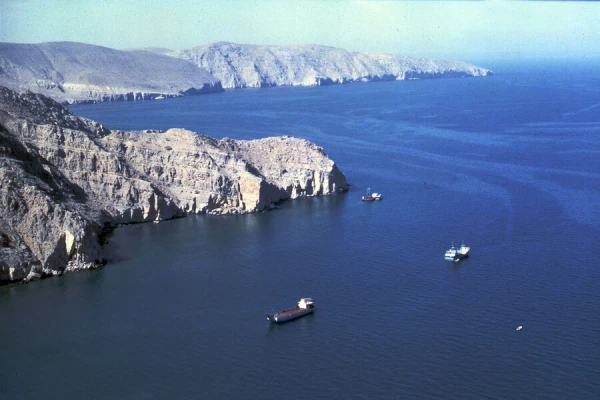
Additionally, Iran could resort to mining the Persian Gulf. The Strait of Hormuz between Iran and Oman is an important transit corridor for global trade, through which about 20% of liquefied natural gas (LNG) exports and up to 25% of oil and petroleum products pass annually. Iran has previously conducted exercises for the rapid installation of naval mines and even used mining of maritime trade routes during the Iran-Iraq War in the 1980s.
The channel reminds that after Israeli strikes on Iran, Tehran responded with a massive missile launch that was able to "break through" Israel's complex air defense system, including the "Iron Dome." Moreover, Iranian officials claimed that their weapon stocks were replenished after the 12-day war.
<iframe width="560" height="315" src="https://www.youtube.com/embed/jgl7imW6EQI?si=zgD1O8dJMTmHViue" title="YouTube video player" frameborder="0" allow="accelerometer; autoplay; clipboard-write; encrypted-media; gyroscope; picture-in-picture; web-share" referrerpolicy="strict-origin-when-cross-origin" allowfullscreen></iframe>