
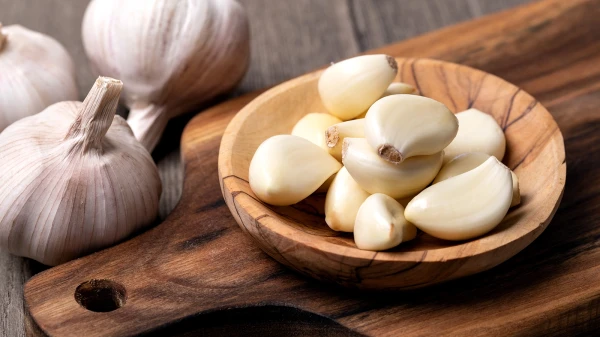
The scientists summarized the results of 22 scientific publications.
A group of scientists from China has established that regular inclusion of garlic in the diet is associated with lower levels of so-called 'bad' cholesterol. This is reported by Frontiers in Pharmacology.
As part of the study, the specialists summarized the results of 22 scientific publications that examined the effect of garlic on lipid metabolism parameters. The aggregated data showed that individuals who consume this product on a regular basis exhibit a decrease in total cholesterol and low-density lipoprotein (LDL) levels—particles directly linked to the development of atherosclerotic changes in blood vessels.
The authors explain the mechanism of action through the biologically active substances that garlic is rich in. In particular, antioxidants are capable of weakening the processes of cholesterol synthesis in the liver and reducing the oxidation of LDL. These factors are considered important in the context of slowing down the formation of vascular plaques. As a result, including garlic in the diet may indirectly reduce risks associated with high blood pressure, heart attacks, and strokes.
At the same time, the researchers emphasize that this is not about replacing medication therapy. Garlic is viewed solely as an additional supportive measure, the effects of which manifest only with prolonged and systematic consumption. It is also noted that prior consultation with a specialist is necessary, especially for individuals with gastrointestinal diseases and patients taking medications that affect blood coagulation.















Leave a comment