
Once-dominant leftist sentiments in Latin America are fading into the past.
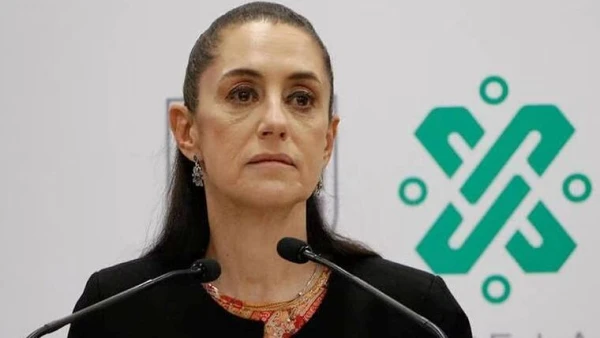
For the past 8 years, the Morena party has dominated the political landscape of Mexico. During this time, it has managed to fully consolidate power, encountering virtually no competition. However, despite the fact that the current president Claudia Sheinbaum "inherited" the position from the charming favorite of the Mexican public, Lopez Obrador, dealing with his political legacy is becoming increasingly difficult. Behind the facade of stability, old problems—corruption and economic stagnation—have become apparent, which could determine the future of the country and Sheinbaum in particular in the coming years. Here’s what can be learned from The Economist about the first electoral failures of the ruling Mexican party Morena, hinting at the end of the prolonged "honeymoon."
Following the ousting of Nicolas Maduro and the political turbulence that has hit Cuba and Nicaragua, it can be stated that the once-dominant leftist sentiments in Latin America are fading into the past. However, on the other side of the southern border of the United States, a different type of leftist politics still exists, and it is not only alive but thriving.
The Mexican party "National Regeneration Movement," or Morena, is much softer, less ideological, and significantly younger than the Marxism-Leninism that spread in Caribbean countries in the last century. In Mexico, it has no serious rivals. The party was founded in 2011 to bring its founder—Andres Manuel Lopez Obrador—to power. Achieving this in 2018, Morena began to dominate Mexican politics. Together with its allies, it controls 24 out of 32 states in the country. In both chambers of parliament, it held more than two-thirds of the seats in each. And now Morena is increasingly being compared to the Institutional Revolutionary Party, which ruled Mexico as a one-party state for seventy years—until 2000.
However, the deeper Morena roots itself in power, the less it appears capable of saving Mexico from its most serious problems: drug cartels, corruption, and a weak economy. The party and its leaders remain popular among the people. The question is how long this popularity will last.
Security and corruption are the main challenges of today. Claudia Sheinbaum, the successor of Lopez Obrador, chosen by him, has implemented an effective strategy that has led to a decrease in the murder rate for the first time in many years. But Donald Trump demands quick results. He has declared an "unacceptable alliance" between drug cartels and Mexican politicians, accusing several senators and governors, members of the Morena party, of these ties. No matter how difficult a partner Trump may be, he has effectively given Sheinbaum cover to fight corruption—however, pursuing members of her own party remains extremely difficult for her.
Reforming security and judicial institutions to make Mexico safer and less corrupt in the long term will be very costly. But as long as Morena is in power, Mexico has no money. The country's economic growth has long lagged behind that of its Latin American neighbors and comparable developing economies in Asia. And the years of Morena's rule have been the weakest in the last quarter-century. The IMF predicts economic growth of only 1.5% in 2026—about half the regional average. Sheinbaum's flagship development strategy, Plan Mexico, is yielding no results: in 2025, investments amounted to 22% of GDP, falling short of the target of 25%. With weak economic growth, few believe that the government will be able to maintain generous social payments until the end of its term in 2030.
These payments are the foundation of Morena's popularity. Along with labor reforms such as a sharp increase in the minimum wage and restrictions on outsourcing, the party has helped lift more than 13 million people out of poverty from Mexico's 132 million population between 2018 and 2024. During this time, the minimum wage has tripled—to 315 pesos ($18) per day. A proposal to reduce the workweek from 48 to 40 hours is also being considered in Congress. However, during the same period, the budget deficit has increased from about 2% of GDP to a record 5.7% in 2024, marking a unique low for the last 40 years. Sheinbaum has promised to reduce it to 2.5%, but so far she cannot even achieve her own short-term goals.
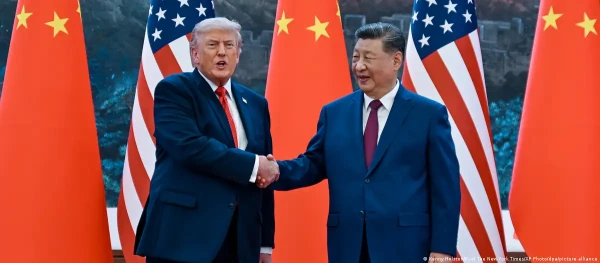
Budget constraints weaken Sheinbaum's position in relations with Trump. Economic growth rates largely depend on the United States-Mexico-Canada Agreement (USMCA), a free trade agreement that is to be reviewed this year. On January 13, Trump called it "outdated," pointing to Mexico's main problems—lawlessness and corruption. But with stretched public finances and a weak economy, Sheinbaum cannot solve these problems quickly. If Trump withdraws from the USMCA, it will bury any hopes of meeting his demands.
THE NATURE OF THE BEAST
The root of the problems Sheinbaum faces lies in the very nature of Morena. Party membership is a rather vague concept in this party, and discipline is weak, despite its ideological leftist stance. In its early years, the party accepted candidates indiscriminately because "it was only interested in winning, not in legacy or foundation," says Javier Aparicio from CIDE University in Mexico City. Much of the party's success relied on Lopez Obrador's charisma. "The main challenge is to keep Morena true to its values," says Citlalli Hernandez, one of the party's founders and the current Minister for Women.
Sheinbaum has begun to assert her own leadership. The law against nepotism, passed in 2025, prohibiting relatives of politicians from holding public office, was perceived as an attempt to push back Lopez Obrador's allies. Nevertheless, his influence remains, and Sheinbaum's political identity is still limited by the framework he created. Therefore, sharp changes in the political structure could only weaken her position, which is why the adoption of the "nepotism law" has been postponed until 2030.
The desire to retain power is, in itself, a unifying factor. Lopez Obrador weakened independent electoral institutions, claiming he was acting "in the interest of the people." Morena disavows this. "We do not seek absolute power," says Hernandez. Patricia Mercado from the centrist-left party "Citizen Movement," which is not allied with Morena, is skeptical: "I think they want to stay in power. Many in Morena believe that only they can transform the country."
Sheinbaum appears less authoritarian than her predecessor Lopez Obrador. However, she has advanced his plan for the election of judges and is working on changes to the electoral system aimed at reducing state funding for parties and decreasing the number of seats allocated through proportional representation. All of this plays into Morena's hands. "I don't know what their motives are," says sociologist Lorena Becerra. "But the result will be a weakening of democratic competition."
Nevertheless, Mexicans are not yet troubled by Morena's dominance. Sheinbaum's approval rating has never fallen below 70%. But along with this, alarming signs are emerging. Concerns about crime are growing. A series of scandals have erupted across the country against the backdrop of the party's statements about austerity and the fight against corruption.
Sheinbaum does not possess Lopez Obrador's charisma. Therefore, problems that were previously easily ignored—weak growth, shortages of medicines, deteriorating schools—are becoming more noticeable. Last year, Morena lost several local elections that it expected to win. "The honeymoon is over," says Aparicio. "Now results need to be shown." But effectiveness is not yet Morena's strong suit.











Leave a comment