Ottawa faces a dual task: to manage risks and build new economic and political ties.
Canada may suffer the greatest losses due to political instability in the United States in 2026. This is stated in a new report by the analytical company Eurasia Group.
The authors of the report believe that the previous format of Canadian-American relations is effectively over, and trade uncertainty will put serious pressure on Canada’s economy. The report notes that the actions of U.S. President Donald Trump, aimed at concentrating power and using state institutions for political purposes, will change not only the relationship between Canada and the U.S. but also Canada’s position in the global economy.
Eurasia Group points out that Ottawa and Canadian businesses face a dual task: to manage risks in interactions with unpredictable U.S. and to build new economic and political ties amid global instability.
The authors of the report warn that Canada’s attempts to diversify trade will encounter obstacles. The country will have to balance between maintaining relations with the U.S. and developing cooperation with other states.
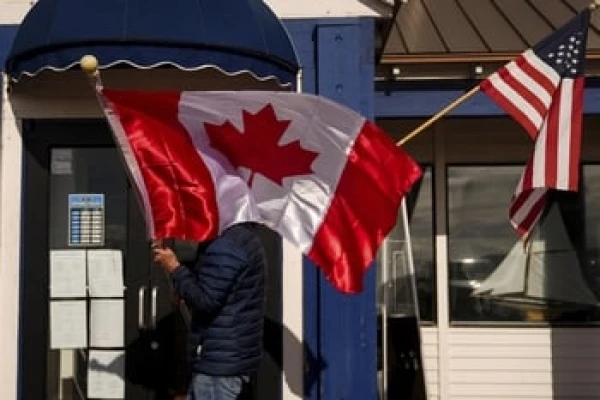
Relations between Ottawa and Washington deteriorated in 2024 after Donald Trump returned to the White House and made statements about the possible annexation of Canada by the U.S. Since then, the United States has imposed tariffs on Canadian steel, aluminum, cars, and lumber.
Eurasia Group notes that Trump’s desire to strengthen U.S. dominance in the Western Hemisphere will keep Canada in a defensive position. Mark Carney’s government will have to defend the country’s sovereignty while recognizing its high economic dependence on the U.S.
Particular attention in the report is given to the CUSMA (USMCA) agreement, the revision of which is scheduled for this year. Analysts predict that the treaty will neither be officially revised, nor extended, nor canceled, but will remain in an uncertain state — “neither alive nor dead.”
At the same time, according to Eurasia Group, maintaining tariff exemptions for goods compliant with CUSMA will allow Canada and Mexico to retain lower U.S. tariffs compared to other countries. However, the U.S. will use sectoral tariffs — in the automotive, metallurgy, and aluminum industries — as a tool of pressure in protracted negotiations.
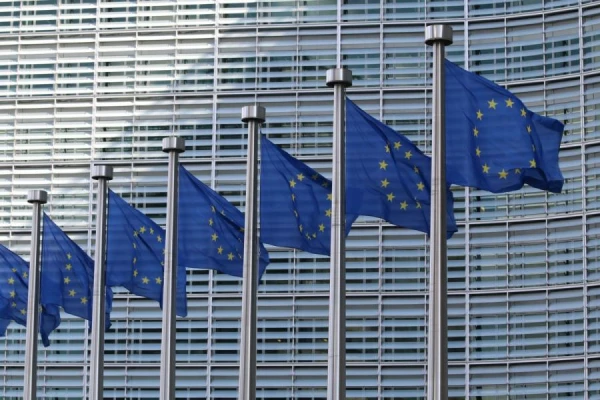
The report also states that Canada’s alternative trading partners are facing their own problems. In Europe, the United Kingdom, France, and Germany are experiencing political instability, which limits opportunities for deepening cooperation.
Eurasia Group also warns of the risk of Russian “hybrid attacks” on Canada in response to its support for Ukraine, as well as the potential for the country to be drawn into a crisis between NATO and Russia.
A separate section is dedicated to China. The weakening of the Chinese economy, according to the authors, may lead to an influx of cheap products, posing a threat to the Canadian automotive industry and increasing tensions with the U.S. Next week, Prime Minister Mark Carney plans a visit to Beijing — the first official visit by a Canadian Prime Minister to China in more than eight years.
Canada’s attempts to regulate the field of artificial intelligence may face resistance from the U.S. and American tech companies. However, analysts believe that Canada has the potential for growth in AI if it can withstand external pressure and maintain investment in the development of the industry.