
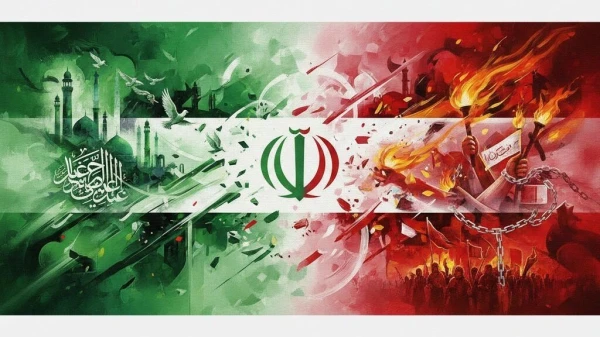
The peaceful format of demonstrations has virtually disappeared.
January 2026 became a time of the most serious test for the Islamic Republic since the 1979 revolution. What began in the last days of December as local spontaneous protests against rising food prices quickly turned into a nationwide blaze.
Economic Detonator
The main trigger for the current explosion was the final collapse of the national currency. In early January, the exchange rate of the rial on the black market broke the psychological mark of 1.5 million per one US dollar. This led to an immediate paralysis of imports and explosive growth in prices for essential goods.
The country's economy found itself in a "perfect storm":
Hyperinflation: The real increase in food prices exceeded 70%, making the basic diet unaffordable for a significant part of the urban population.
Failure of monetary reform: Attempts by the Central Bank of Iran to limit cash withdrawals and impose strict control over transactions only intensified the panic.
Depletion of reserves: Years of sanction pressure combined with enormous expenses to support allied groups in the region have drained the state treasury.
The Protest Movement of 2026 Clearly Shows Us a Disturbing Evolution for the Authorities
According to a report by the Institute for the Study of War, 156 instances of protest activity were recorded on January 8 alone across 27 provinces, which was double the figures from the previous day.
The events of 2022 had a symbolic center — it was about women's rights, etc., while the current crisis clearly claims a fully existential and decentralized nature.
Lack of a "single cause": This time, the protest does not have a single victim or a specific law that could be repealed to ease the situation. Discontent is directed at the very structure of government.
Radicalization of actions: The peaceful format of demonstrations has virtually disappeared. For the first time in decades, coordinated attacks on arms depots and the headquarters of the Islamic Revolutionary Guard Corps have been recorded. This indicates that the fear of the security apparatus has ceased to be a restraining factor.
Generational shift: The core of the protesters is youth born in the 2000s and 2010s. For them, the ideological postulates of the revolution hold no value, and they bypass internet blocks using new technological solutions, making state censorship less effective.
Regime Response: Between Dialogue and Force
Official Tehran finds itself trapped. Traditional methods of suppression are beginning to fail. As reported by Amnesty International, security forces are using combat weapons, and raids on hospitals to detain the wounded are being conducted. The most extensive tool of control has become a digital blackout.
Hostile rhetoric: In their latest speeches, Ayatollah Khamenei and the country's president once again blamed external forces for the events. However, this rhetoric no longer resonates even among conservative segments of society, tired of economic isolation.
Use of the army: The most alarming signal has been the involvement of regular army units to patrol the streets alongside the Guard Corps. This indicates that the internal police forces and the Basij are no longer sufficient to maintain control.
Digital blockade: A complete shutdown of the internet across the country has been an attempt to sever the coordination of protesters. But this measure has dealt an even greater blow to the remnants of business and the banking system, effectively paralyzing life in major cities.
A split has emerged within the ruling elites. Some officials are calling for immediate economic concessions, while "hawks" in the security structures insist on declaring martial law and conducting mass purges.
External Context: Pressure from Outside and the Collapse of the "Axis of Resistance"
The foreign policy situation around Tehran in January 2026 looks catastrophic. The administration of Donald Trump, returning to a policy of maximum pressure, is not limited to economic threats alone. Direct statements from Washington supporting the Iranian people and warnings to Iran's security forces create powerful psychological pressure on the ruling elite. The situation is exacerbated by the fact that Iran's external spheres of influence have effectively collapsed. The fall of Assad's regime in Syria and the sharp weakening of Hezbollah have deprived Iran of its "strategic depth." Tehran can no longer project power externally, as all resources are thrown into survival within the country. This creates a sense of isolation: allies are either defeated or occupied with their own problems, leaving the Islamic Republic alone with an enraged population and a consolidated West.
Forecast: On the Brink of a Historical Shift
Today, Iran stands at a crossroads between complete transformation and a deep plunge into violence. The first scenario involves an attempt by the regime to implement cosmetic reforms and change the cabinet to ease tensions. However, given the depth of the economic decline, this may prove insufficient. The second scenario is a large-scale civil war if the split within the security forces leads to part of the army siding with the protesters. In this case, the country could plunge into a prolonged period of instability.
The most likely scenario for the coming weeks remains a "positional stalemate." The authorities will continue to suppress harshly, hoping to exhaust the protest, while society, driven to despair by poverty, will seek new ways of resistance. In any case, Iran as of January 2026 will not return to its previous state. The legitimacy of the system is undermined by the physical impossibility of ensuring the basic survival of citizens. It is possible that we are witnessing a systemic collapse, the outcome of which will determine the shape of the entire Middle East for decades to come.


Leave a comment