"Strategically and culturally important" area attracts America.
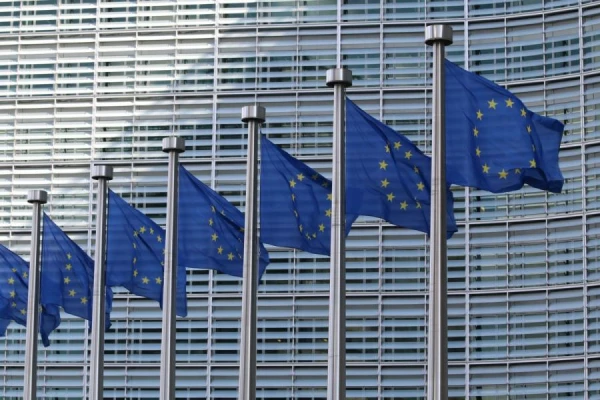
A scandal has erupted in Europe following the leak of a document allegedly containing a proposal from the U.S. for countries to exit the EU.
According to information published by Defense One, the document supposedly claims that Trump intends to pull Austria, Italy, Hungary, and Poland out of the EU and bring them closer to Washington's sphere of influence.
The alleged leak occurred just a week after the publication of the official 33-page "National Security Strategy," which sparked debate due to its stark warning that Europe faces "civilization destruction" and the suggestion that "it is far from clear whether some European countries... will remain reliable allies," writes the Daily Mail.
However, despite the White House denying claims of an attempt by the U.S. to lure four countries from the EU for "closer cooperation" with Americans, the alleged leaked proposal has caused a stir across Europe.
The Austrian newspaper Die Presse warned: "Trump wants to split the EU using Austria," while Vienna's Standard echoed these concerns, stating: "The U.S. wants to promote Öxit."
The Swedish daily Dagens Nyheter wrote: "We must understand that the U.S. is not only moving towards exiting Europe – they are practically becoming our adversary, like China and Russia. Beijing and Moscow want to split the EU and pit European countries against each other. Washington makes it clear that it pursues the same goals."
The New York Times, typically critical of Trump, took a more lenient stance regarding the alleged proposals this time.
"Upon closer reading, the excerpts about Europe resemble more of a defense of the continent. They describe Europe, among other things, as 'strategically and culturally important' to the United States," the publication wrote.
The White House categorically denied claims of attempts to split the EU.
Deputy White House Press Secretary Anna Kelly stated: "President Trump acts openly and has signed a national security strategy that clearly prescribes the U.S. government to implement established principles and priorities."
In a sharp interview with Politico, Trump again criticized the "declining" European countries and their "politically correct" leaders, whose immigration policies, he claimed, are "destroying" these countries.
He called Europe's approach to migration a "disaster" and stated that as a result, countries across the continent are "falling apart."
European Council President Antonio Costa made a rare statement, asserting that the U.S. has no right to dictate political decisions to Europe.
"The United States cannot replace European citizens in choosing between the right and wrong parties," he noted.
Friedrich Merz took a more reserved stance, calling some parts of the strategy "understandable" and "accessible," while insisting that Europe must become "much more independent from the U.S. in terms of security policy."
Meanwhile, Polish Prime Minister Donald Tusk publicly opposed this strategy but attempted to maintain stable relations by reaching out directly to Washington.
"Dear American friends," he wrote on social media, "Europe is your closest ally, not your problem. And we have common enemies. At least that has been the case for the last 80 years. We must stick to this; it is the only reasonable strategy for our common security."