The USSR left the UN consciously so that the Americans "would make new mistakes."
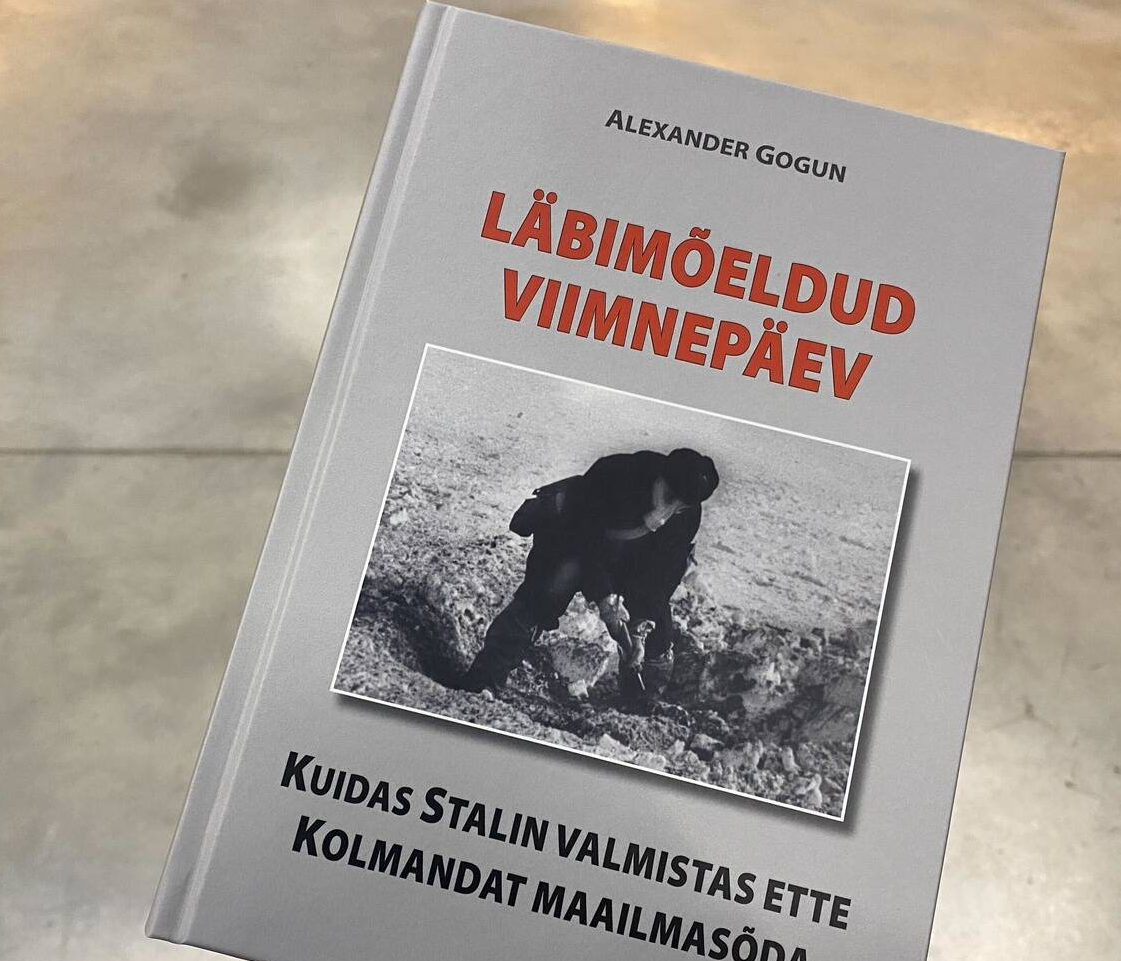
Did Joseph Stalin really prepare to attack Western Europe and the USA in 1954? The answer to this question is the subject of a new book just released by the Äripäev publishing house.
The book presentation will take place on December 15 in the Riigikogu, and the book is already available in stores in Estonia. This work is a study of late Stalinism, written based on archival materials and little-known sources, which thoroughly examines the plans for a military confrontation between the USSR and the West and the logic of Soviet policy in the early 1950s.
Regarding Stalin's military plans, and what a modern businessman should know about Stalinism and what Vladimir Putin learned from the leader, the author of the book "Thoughtful Apocalypse: How Stalin Prepared for World War III," historian Alexander Gogun, spoke with "Business News."
-Your book, just released in Estonia, has the subtitle "How Stalin Prepared for World War III." The title is quite provocative for some laypeople. Tell us what readers should expect from it.
-Readers should expect a picture that is both rational and monstrous. A combination of monstrosity and exceptional cold-bloodedness, a peculiar bloodthirsty prudence in one person, and in one plan that encompassed the fate of the entire planet Earth.
This is a book about how, as rationally as possible, calculating every step months and years ahead, Stalin prepared the USSR and the whole world for the final battle – a war with America. As sung in the Internationale, "this is our last and decisive battle." The Soviet Union could not immediately attack the USA, as it had few resources. For that, it was necessary to first capture a significant amount of resources and territories in Eurasia, which he successfully did in the 1940s. And in the last years of his life, Stalin was directly preparing to strike the USA.
-Is what you are talking about, Stalin's preparation for war, a proven fact? Or is it one of the possible interpretations that still remain a subject of debate?
-I consider it a proven fact. In Western academic circles, little is known about this so far, but it is more about the dissemination of existing evidence than about new discoveries. There are many indications, including his statements from 1945, recorded, for example, by Bulgarian leader Dimitrov: now we are fighting together with one faction of capitalists – the democratic against the fascist faction, and later we will fight against the democratic one as well.
The 1950 flip is also telling, when the Soviet delegation left the UN Security Council due to the presence of a representative from Taiwan and then returned. It was during its absence that North Korea attacked South Korea, and the USA entered the war under the UN flag. In the 90s, this was explained as a failure of Soviet diplomacy, but a later published letter from Stalin to Gottwald shows that the USSR left consciously so that the Americans "would make new mistakes." The USA was deliberately drawing into the conflict.
Stalin's letter to Mao from October 1950 is also important: Mao hesitated to enter the Korean War, although Stalin demanded it. Stalin wrote: "If there is going to be a war, let it be now," implying the possibility of the conflict escalating into World War III. He understood this risk but considered escalation unlikely – and he was right: the USA chose de-escalation. And while Chinese troops restrained the Americans in Korea, Stalin gathered European satellites in the Kremlin in January 1951 and said that the USA's involvement in East Asia created a favorable moment for the world communist movement. According to him, in the next three to four years, the balance of power would be on the side of the USSR, and allies should create combat-ready armies.
Of the four participants, two directly state that Stalin spoke of preparing a campaign to Gibraltar, seizing Western Europe. I believe this campaign was planned for 1954.
-Why did the war not happen? Was it only due to Stalin's death? How much was your idea of "Stalin's Third World War" his personal project, and how much was it collective?
Stalin's death was certainly a key factor. He managed fear and relied on people who loved life more than power – unlike him. Therefore, his closest associates immediately decided to ease the international situation, and the apocalypse did not occur.
But there were other supporters of this project in the Eastern bloc, people removed from power – for example, Edward Ohaab, a high-ranking Polish communist, a member of the Politburo, and Alexey Chepichka, the Czechoslovak Minister of Defense in 1953. Both attended meetings with Stalin, where he spoke about the prospects of war. And when journalists asked them about this decades later, they directly expressed regret that it did not happen.
Those who remained in power were glad that the catastrophe did not occur. And those who were removed, at least in words, were ready to take even more power. Mao Zedong shared similar views: he even suggested to Khrushchev to start a nuclear war, based on the idea that "we have more people than capitalists" and that the socialist bloc would survive, and the planet would ultimately belong to communists.
Alexander Gogun is a Berlin historian of Russian origin, a researcher of World War II, an expert on Ukrainian underground movements, Soviet special operations, and practices of state violence in Eastern Europe. His works have been published in ten languages, including Estonian, Lithuanian, and Ukrainian. In his work, Gogun has collaborated with major research centers studying World War II and the Holocaust – from Harvard University to the Yad Vashem Institute.