On October 7, 2023, a terrorist attack occurred in Israel that once again changed the lives of Israelis and all Jews worldwide into "before" and "after".
This has resulted in a full-scale war, in which the country is defending itself on seven fronts at once. On paper, the war ended on October 10. In reality, it continues to this day.
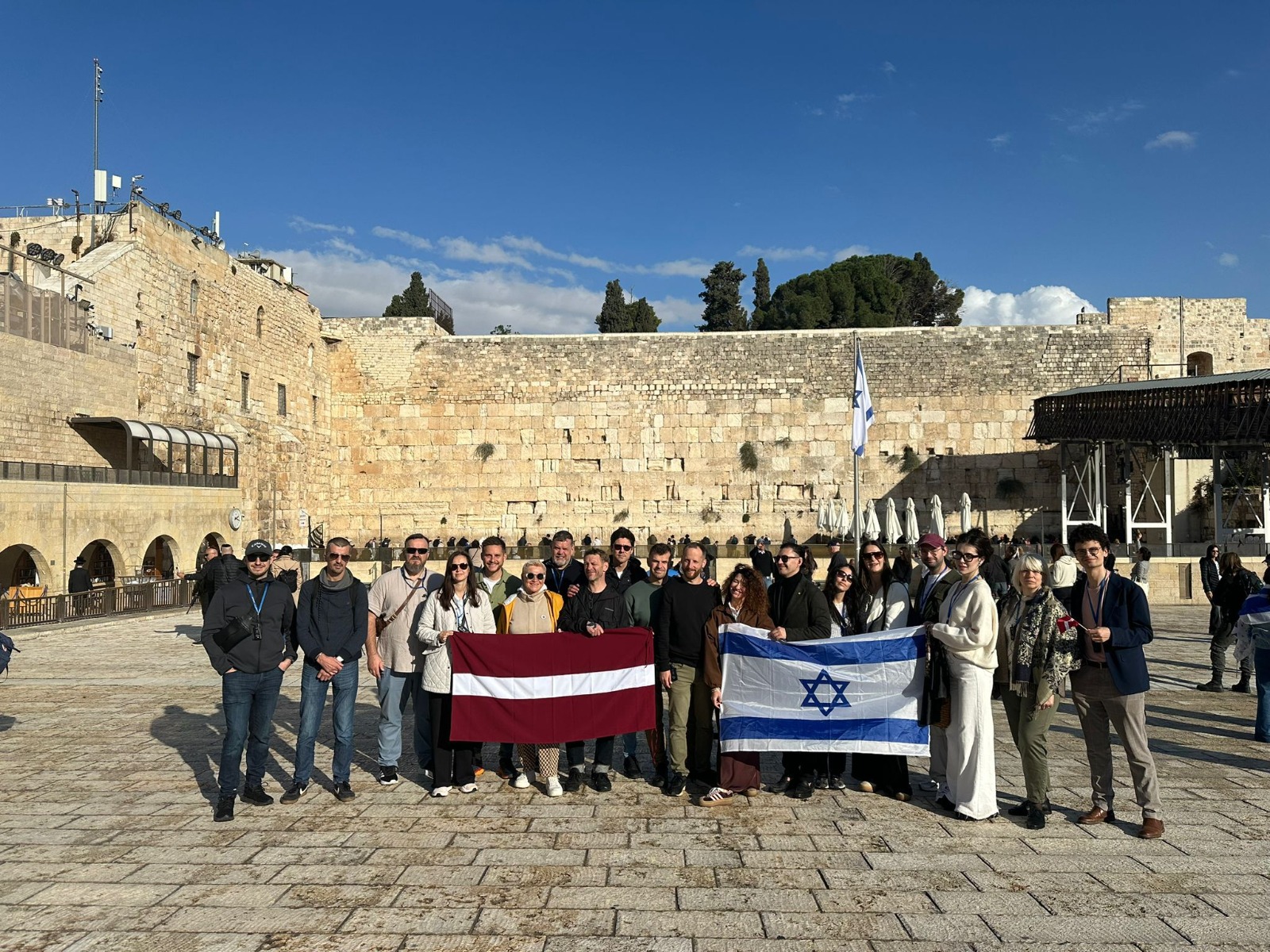
Details about what is actually happening are scarce – the information field has been firmly occupied by the pro-Palestinian side. And when the organization Jewnited offered to join the information project Behind the Headlines and immerse ourselves in Israeli realities for a week, there was no need to think long.
Facts
In less than 80 years of its existence, Israel could have gotten used to wars, but it hasn’t. The massacre at the Nova music festival, the subsequent invasion of peaceful settlements, attacks from land, air, and underground. 1,200 killed on the spot, 251 hostages. The youngest – 9 months old, the oldest – 82 years old. Insane in their brutality murders, rapes, torture, and mockery: all this many would like to dismiss as exaggerations from the affected side, but it doesn’t work: terrorists recorded their escapades on camera and posted them online themselves. And the internet remembers everything.
A month later, IDF (Israel Defense Forces) released a documentary film Bearing Witness, entirely edited from documentary footage from surveillance cameras and body cameras of Hamas militants. This film cannot be called "heavy": at closed screenings, people fainted and fell into hysteria. Only a few could watch it to the end.
The film has not been released to the general public. Israel once again demonstrated resilience and unwillingness to show the world its wounds. Even now, two years later, it is very reluctant to remove the bandages in front of outsiders.
Why I Came
Israel greets you strangely. Indecently, unusually, incorrectly. You come... with understanding, let’s say. Not like to a funeral, of course – but like to a friend in serious trouble. In novels, this is usually described as something like "with a grim determination on their face".
This is when you enter a room, grimly and calmly survey the bewildered victims, and say: "Okay, tell me what happened".
Because – "happened", yes. Of course, I read. Watched, listened, saw, didn’t believe, checked, rechecked, called, woke up to your "Tzeva Adom" (Mobile Alert App) in areas important to me, thousands of kilometers away from you, when you didn’t pick up the phone, heated the refresh button to white hot, counted.
That’s why I came to you now and want you to tell me what is really happening here.
Israel Greets...
... basking under the hot sun on the shores of the Mediterranean Sea, listens to your fatalistically doomed sigh for seven minutes, then gently turns, raises its bottomless, yellow-black eyes to you, and softly says:
– Why are you shouting? Calm down. Rega. (Wait – translation from Hebrew). Are you going to eat?
I hate the word "eat".
Tel Aviv greeted me with an unusual November heat of +33 in the sun: shade is non-existent as a phenomenon. The central arteries of the city immediately after Shabbat are choked with a sharp influx of cars, jamming in the narrow streets of Jaffa. Music bursts from countless bars. A drunken guy without a shirt has been walking in front of us for two minutes behind two incredibly beautiful girls, mumbling. The girls are barefoot – shoes in their hands. Sober. At some point, when I suddenly think that a conflict might occur, one of them turns to the guy, beams a dazzling smile, and sincerely says: "Laila tov!" (Good night – translation from Hebrew). The guy stumbles, smiles back, replies "laila tov" and walks away.

Thank You, We Can Handle It Ourselves
From the very first meetings with the speakers, there is a feeling of irrational irritation. In any conflict situation, you instinctively expect sorrow. Weakness that can be reacted to, depending on one’s own conclusions. Grief is a kind of hint, a starting point from which one can push off and draw conclusions: whether it is sincere, justified. Whether it is commensurate. The absence of grief can be attributed to indifference and even callousness, but it’s not so. It doesn’t work.
– Hello! How nice that you came, we are very glad to see you! Where is our grief? – It’s everywhere. How can we help? – No way, thank you, we can handle it ourselves. Have you eaten yet?
Israelis are eager to engage, speaking simply and openly on topics that seem very sensitive. There is no anguish, no closeness, no feigned calmness, no forced cheerfulness. After a while, you realize that the problem is with you. In recent years, we have been so rocked on emotional swings that when touching tragedy, we expect the usual emotional outburst, preparing to assess it on a scale from 1 to 10. There is no outburst – no hint.
After the tragedy of October 7, Israel, as it has done hundreds of times before, has comfortably settled on two pillars of communication with the outside world: 1. if you can’t help – don’t interfere; 2. those who need to know, know.
No one is wringing their hands, no one is shouting: "We need to make sure everyone knows about this!". Well, almost no one. I shout. In response, a good-natured shrug: "Well, we’re not hiding anything, look. Those who want to see, see." Representatives of public organizations, political scientists, politicians – all in conversation admit that they are hopelessly losing the information war in the outside world. But at the same time, they say: "And we’re not playing".
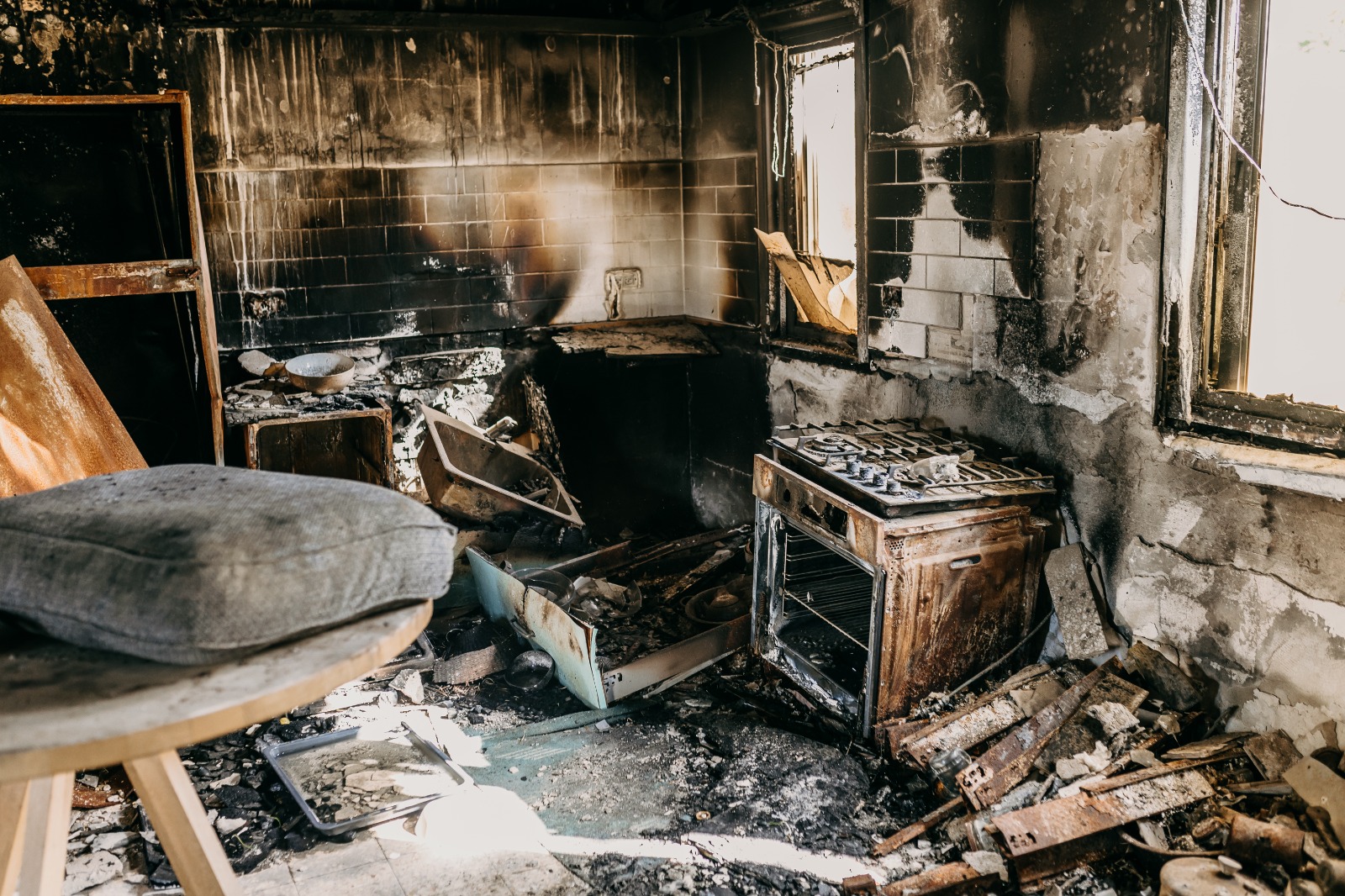
Their war is on seven fronts: Gaza Strip, West Bank, Lebanon, Syria, Iraq, Yemen, and Iran. And life goes on: music plays in the bars, beautiful boys and girls run along the Mediterranean promenade. The vast majority of them are reservists. They have already been there and will return again until it is over.
Refugees in Reverse
The concept of war is inextricably linked to the phenomenon of refugees. Who better than us to know: the kind-hearted Latvia managed to embrace Syrian, Ukrainian, and Russian "fleeing from war". After October 7, Israel had to face this problem too. Just a little differently. In the first months of the war, about 3,000 Jews returned to Israel. In 2024 – about 30,000. Most of them – to help the army.
Israel suddenly faced a complex situation: the number of volunteers greatly exceeded the amount of equipment. Moreover, a huge volume of gear was generously sent to help Ukraine – it wouldn’t be right to ask for it back. The people helped again: money for uniforms, bulletproof vests, helmets, flashlights – collected by all of Israel.
Until the Last Hostage
Israel is waiting for the hostages. When we arrived, they were waiting for three. While we were there, Hamas returned one more. Two remain. Try for a moment to abstract from the surrounding European, pseudo-liberal agenda and think about the meaning of these words: for two years, gritting their teeth, receiving accusations of inhumanity, making endless diplomatic concessions, families in Israel are waiting for two hostages captured more than two years ago. Terrorists continue to dictate their terms, and the "humanitarian world" continues to reproach the Israeli government for being "excessively harsh". One of the hostages is a citizen of Thailand. They are also ready to fight for him until the end. And one more important detail: both are dead.
At a meeting with a Knesset member, I asked: "Don’t you think that your silence in the information field, your non-participation in the information war, increases the number of your victims?" He simply replied: yes, it does increase. But we will not change our course of action to satisfy someone’s notion of "correctness". People were taken from us – we must bring them back. Alive or dead. Even at the cost of our own lives. Those who are consciously ready to pay this price.
Hakol Beseder (Everything is Okay)
The entire trip – six days. We gallop from point to point, from one extreme to another. One day – a vibrant Tel Aviv. A refugee from Lebanon, who fled to Israel back in 2007 during the Second Lebanon "July War". Hebrew from scratch, with an accent, that same "no to war".
The LGBT center, a somewhat affected co-founder: "Yes, we are for everyone. Yes, we are the capital of LGBT. No, we are not against Palestine." Annually, with the assistance of "Ha-Merkaz Ha-Ge’e", Israel has accepted about 120 refugees from Palestine seeking asylum from repression related to their sexual orientation.
– We felt the beginning of the war when our friends from other countries stopped responding to our letters.
– Friends?
– Of course.
– What do you think about the LGBT flags at pro-Palestinian rallies?
– Well, that’s... Strange.
Israel is the capital of gay parades. Palestine is at the bottom of the tolerance rating for non-traditional orientations. How can this be? Is it really possible to be so oblivious? Is it really that headlines have become more important than the obvious?
– Can we help you in any way?
– Everything is fine. Hakol Beseder.
To Know and Remember
North, the village of Majdal Shams, almost on the border with Lebanon, a football stadium. Two days of war – someone else’s war. Druze live here – those representatives who have always been for peace. Even the name of the village is Arabic. In Aramaic, Majdal Shams means "tower of the sun". At dawn, the first rays of the sun come here. A siren sounds, and the locals say "kol beseder – it doesn’t concern us".
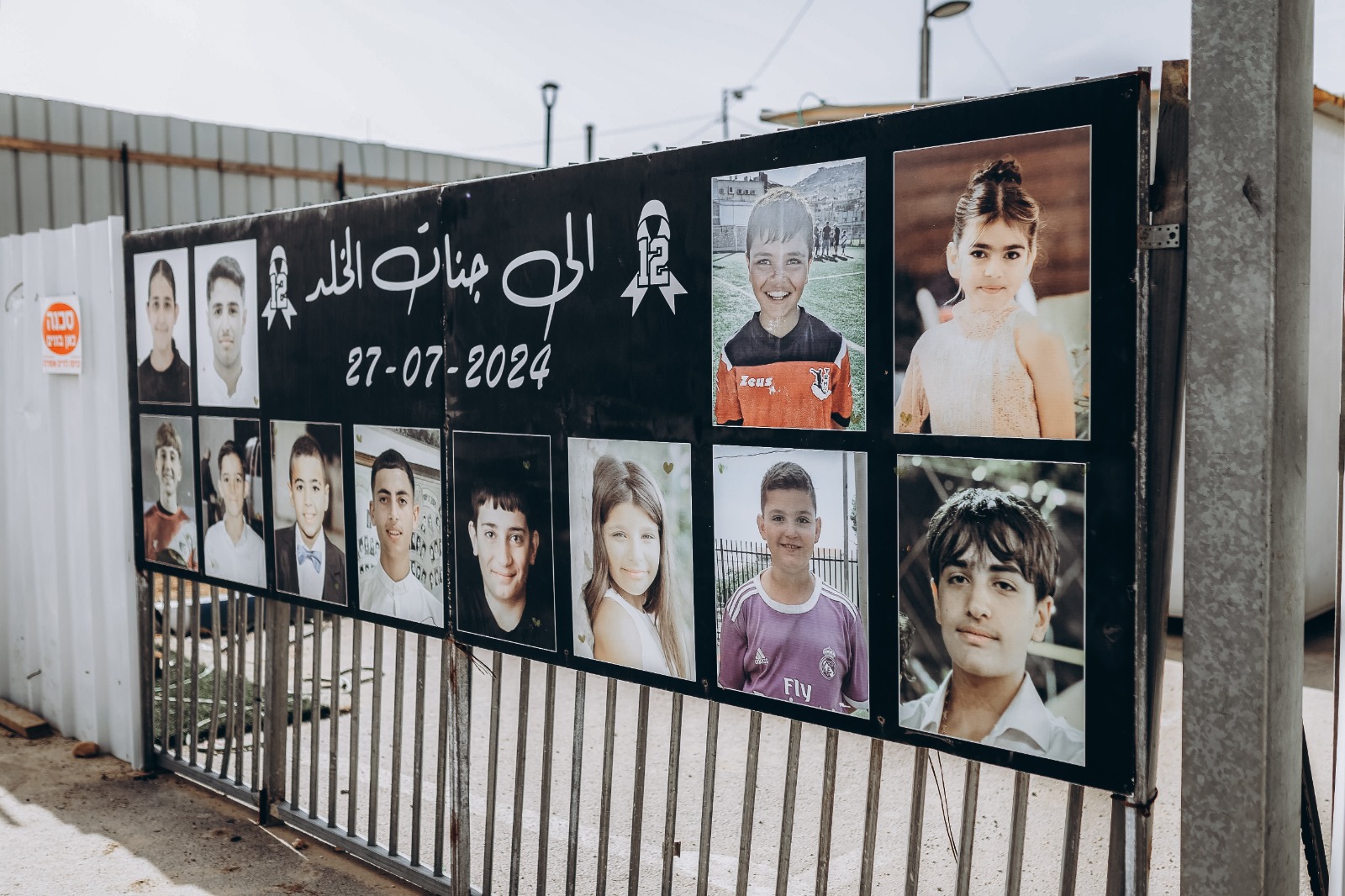
A rocket hits the stadium. 650 kg of iron and death falls on the football field: the area where a children’s match is taking place at that moment. 42 injured, 12 dead. All children. One child is embedded deeply in the ground by the rocket; he is searched for two days. His remains are found under the rubble...
One of the fathers agrees to meet with us. A man who comes to the stadium, looks into the cameras, and says: "They didn’t do it on purpose". He found his daughter immediately. She was lying near the entrance. Not a football player, just happened to be there. Dad is a paramedic. He quickly confirmed her death. He asked the others who came to cover her with something and ran to look for those he could still help.
– Did you think about leaving somewhere after this?
– No.
The Druze believe in reincarnation. He believes that his daughter will soon return to her native village. And how is that: he will return, and they left? This is their village.
The Beasts Stood at the Door
The penultimate day in Israel. Early in the morning, we leave Jerusalem heading south. The bus turns onto Highway 232 – the road of blood: on October 7, about 400 people died on it. Black voids on the asphalt – traces of burned cars. Photos on the roadside – smiling faces of those whose phones stopped responding to calls from relatives after the morning news "something is happening in the South".
Nir Oz – a village on the border with Gaza. Founded by Oded Lifshitz – a man who firmly believed that good begets good. Every week he would drive to the Gaza border, pick up children in need of medical examinations, and take them to an Israeli hospital. On October 7, his car made its last route. Together with other hostages, he was taken in it to Gaza and killed. About 2/3 of the captors were those same "peaceful" ones. In flip-flops and T-shirts with prints. Young and spirited, they systematically turned a former paradise into hell. The murder of one of the kibbutz residents was filmed on her own phone and posted on her Facebook page. Her relatives learned of her death that way. The killers generally liked to film. Most of the footage in the film Bearing Witness was shot right there. It also captured the roasting of a one-year-old infant in an oven, the burning of a teenage girl’s groin, the rape and murder of a wife in front of her husband – footage that was later cut from the final edit of the documentary, not intended for public viewing. I watched the director's version.
Today the village is empty. Rita Lifshitz – a relative of the kidnapped Oded – arrives to meet another group. She speaks a text that seems somewhat bureaucratic and rehearsed. At the end, she admits in a human voice: "This is my therapy. My way of not going insane". With us, she shed a few more grams of pain. We left with a ton.
We Will Dance Again
The final point – the NOVA festival. A spacious meadow, bathed in sunlight, hundreds of young smiling people. Endless rows of photographs. When they saw the rockets flying, they thought it was fireworks. And there was no chance to run: thousands of people didn’t have time for anything – neither to group together nor to resist the hundreds of inhuman beings who came to kill.
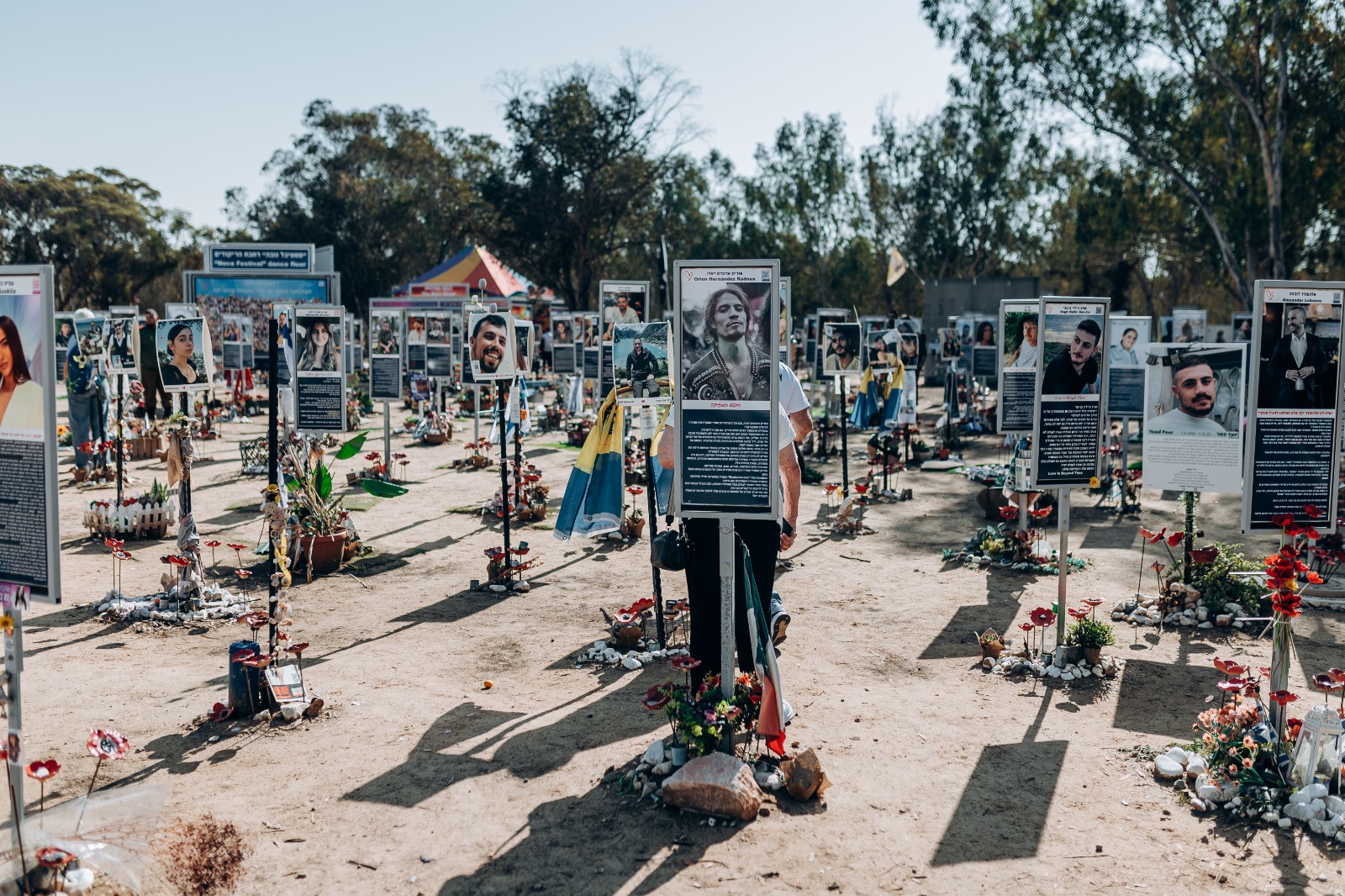
They were extinguished by bursts of automatic fire, thrown grenades in cramped bomb shelters, dragged by their hair – alive and dead – into trucks to be taken to Gaza and made into merchandise for exchange. Jews value the dead just as much as the living. This is hard for those for whom life is worth nothing to understand, but it is convenient to use for their own purposes.
In this grass – blood, in the air – a scream. This is not a literary device: two years later, the blood simply could not sink deep enough into the ground – too much of it has been spilled. And the scream continues to sound. It creeps under your skin and resonates inside you. Outside – silence just so. Despite the hundreds of people who come here: some to find out, some – to not forget.
Our guide, who all week made sure we got on the bus on time and ate well, stands next to one of the hundreds of photographs, holding a phone. Or Chaim, his wife’s brother, calmly says that there is a traffic jam, he will probably try to return. This is his last voice message sent. His body is identified a few days later. He was killed in a car. One of the black voids on the road bears his name.
"I didn’t want to tell you about my personal story, so you wouldn’t have any special feelings towards me".
They all don’t want to talk about their personal stories. They all don’t want special treatment. But each of them has their own – Their Story. Israel doesn’t want to grab anyone by the lapels and tell its story. It is ready to speak for those who are ready to listen. This sharply deviates from the usual order.
Ben-Gurion saw us off home with a smiling sky and photographs of two smiling hostages. They are awaited and will be awaited. Just as the remains of Adar Goldin – an IDF soldier killed in Rafah 11 years ago. Israel knows how to wait. He encouragingly patted us on the shoulder and gently suggested we come again. He always has something to tell.