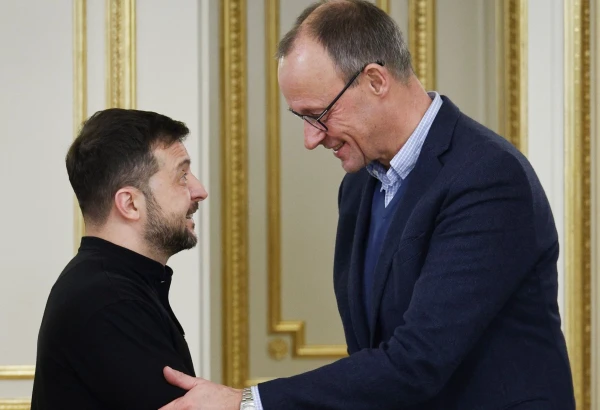
The Chancellor of Germany, Merz, has postponed his visit to Norway and instead will attend a dinner with the Prime Minister of Belgium, De Croo, on December 5, who opposes the use of frozen Russian assets for reparations loans to Ukraine.
The Federal Chancellor of Germany, Friedrich Merz, has changed his schedule due to an unscheduled visit to Belgium. He has postponed a planned trip to Norway on December 5 and will meet with the Prime Minister of Belgium, Alexander De Croo, on that day, a representative of the German government reported on Thursday, December 4.
The meeting with the Prime Minister of the Kingdom will take place in the format of a private dinner, which will also be attended by the President of the European Commission, Ursula von der Leyen. According to AFP, citing sources in the German government, the topic of Merz's urgent trip will be the possible use of frozen Russian assets for a reparations loan to Ukraine, as proposed by the European Commission.
Belgium, where most of the blocked Russian funds are held, has rejected the European Commission's plan, while Germany and most EU countries have supported it. In Brussels, there is hope that agreements on the reparations loan for Ukraine can be reached by the end of the year.
Merz Urges EU Countries to Support European Commission's Plan and Share Risks
The day before, Merz, in a guest article in FAZ, urged EU countries to support the proposal to use Russian assets for a loan to Ukraine, while sharing all risks and legally enshrining these obligations. According to him, this would send an unequivocal signal to Moscow, which is preparing for military conflict with the West and threatens the freedom and security of Europe. "This is a signal not to continue this war, but to end it. We will send a signal of European independence, a signal that we, Europeans, determine and decide what happens on our continent," he wrote.
After Russia's full-scale invasion of Ukraine, Western countries froze Russian assets amounting to about 210 billion euros. The European Commission proposed to use 140 billion euros of these for providing Ukraine with a so-called "reparations loan." At the same time, the funds would not be legally confiscated, but Russia could only return them after paying reparations to Ukraine. Ukraine would then repay the "reparations loan" received from the EU with the reparations paid by Russia.
The Prime Minister of Belgium, in a letter to the President of the European Commission, called the scheme "principally wrong" and dangerous. He emphasized that it would undermine trust in the Belgian depository Euroclear, where the frozen Russian assets are held. Despite the legal formulations, investors will perceive this model as a confiscation of assets entrusted to the depository, according to Belgium.