The only area in which the West surpasses the Russians is money.
The French Institute of International Relations (IFRI) published a study comparing the combined armed forces of 30 European NATO countries with the military capabilities of Moscow.
Vladimir Putin stated that Russia does not intend to attack European countries. However, the French National Strategic Review 2025, an official document defining France's defense policy, indicates that "by 2030, the main threat to France and the EU will be the risk of open war in the heart of Europe."
Experts from the French Institute of International Relations (IFRI), Eli Tenenbaum and Dimitri Minich, authors of the study "Europe-Russia: Assessing the Balance of Power," set out to determine which side would have a military advantage in the event of confrontation.
In their work, they relied on the "Military Balance" database created by the International Institute for Strategic Studies (IISS), which presents data on the armed forces of over 170 countries. IFRI summarized data on personnel and armaments of all European NATO member countries, namely 23 EU states and 7 other European countries, excluding Turkey. This study is purely theoretical, as the aggregate of armies does not necessarily represent a unified and cohesive military force.
Military Spending: A Draw
Russian military spending in 2024 was estimated at about 13 trillion rubles, or 145 billion dollars. "In purchasing power parity with the West, this spending amounted to about 460 billion dollars, which is roughly equivalent to the total military spending of European NATO allies in the same year," IFRI claims.
Ground Forces: Russia's Advantage
The Russian ground forces number about 950,000 servicemen. The total number of NATO European armies is 750,000. Scholars argue that the European shortfall in troop numbers is even deeper when considering the "political fragmentation" of the continent. Europe is also inadequately equipped with necessary support resources, starting from firepower—artillery, guns, and missiles, strike drones, and anti-aircraft missiles. Another serious drawback for the European side is the "infrastructural and regulatory limitations on troop movements across the continent."
Europe's advantage lies, according to experts, in the "qualitative superiority" of its armed forces and the "qualifications of personnel at all levels." They emphasize that Russian conscripts undergo one to two months of basic training, whereas NATO standards typically require six months of initial training.
Air Forces: Europe's Superiority
In the aerospace sector, Europe has "clear superiority over Russia, both quantitatively and qualitatively." It has over 1,500 combat aircraft, while Moscow has fewer than 1,000. The gap is "even more striking in terms of combat readiness and technological effectiveness." Experts emphasize that the Russian Air Force has been unable to gain the upper hand in Ukraine's airspace after three and a half years of conflict, despite its undeniable material advantage.
At the same time, Europe needs to address some weaknesses, particularly related to ammunition supplies and air defense management. Russia has built its doctrine "based on a scenario of interaction with a (Western) adversary superior to it in the airspace." This explains why Moscow has "extensive experience in ground-based air defense."
Naval Forces: Another Draw
At sea, Europe has an "undeniable qualitative advantage" due to approximately a hundred major surface ships, which is three times the size of the Russian fleet. However, Russia's geographical position "complicates turning this superiority into a decisive advantage." Moscow's main strength lies in its submarines, which pose a "serious threat" given Europe's limited defense capabilities.
Space: Europe Ahead
Russia inherited a large fleet of military satellites from the USSR, surpassing Europe's (100 to 60). However, the Russian space sector "has been severely affected by Western sanctions." As a result, "most of Russia's satellite fleet is now outdated, and the prospects for modernization are uncertain." Europe, through the launch of Galileo, has obtained a satellite navigation system "equivalent" to GPS and "certainly superior" to Russia's GLONASS system.
Nuclear Weapons: Uncertainty
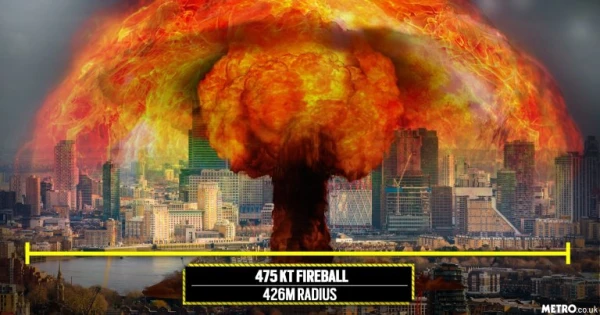
According to the study's authors, Russia, a "nuclear superpower," has about 1,700 deployed strategic nuclear warheads and around 2,600 in reserve. This arsenal, according to Russia, is meant to ensure its superiority. Most European countries rely on the "extended" nuclear deterrence of the United States, which includes agreements on nuclear sharing and the deployment of about 100 tactical nuclear bombs B61-12.
Two European nuclear powers, France and the United Kingdom, each possess "several hundred strategic warheads. However, if U.S. deterrence proves insufficient, Europe will suffer "from a strategic imbalance with Russia," the authors of the study warn.
<iframe width="560" height="315" src="https://www.youtube.com/embed/crEESH385Bc?si=EECNPJZkOqFqU69P" title="YouTube video player" frameborder="0" allow="accelerometer; autoplay; clipboard-write; encrypted-media; gyroscope; picture-in-picture; web-share" referrerpolicy="strict-origin-when-cross-origin" allowfullscreen></iframe>