
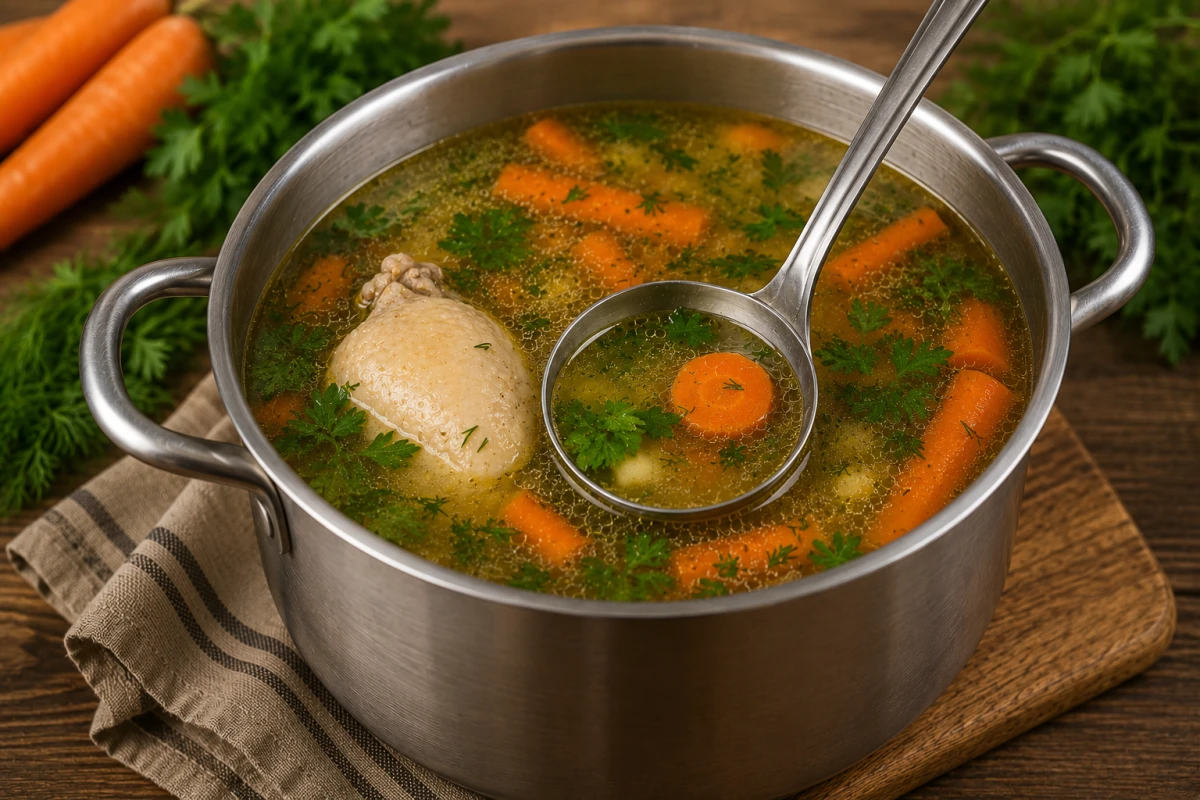
Is it necessary to drain the first broth when boiling meat or chicken? This question has long sparked debates among cooks and culinary enthusiasts. Some consider this procedure essential for health, while others believe that flavor and beneficial substances are lost along with the first broth. Let’s explore in which cases this is truly necessary.
When preparing soups, broths, or boiled meat, many wonder: should the first broth be drained? There is no definitive answer here, as much depends on the quality of the meat, the purpose of cooking, and the individual's health condition.
Why Drain the First Broth
Proponents of this procedure believe that during the first boiling, residues of antibiotics, growth hormones, and other substances that may have been used in raising animals and poultry leach into the water. Therefore, it is recommended to drain the first broth, refill the pot with fresh water, and continue cooking.
Additionally, the second broth is usually less fatty and clearer, which is especially important for dietary and therapeutic nutrition.
Another advantage is that after draining the first broth, there is no need to meticulously skim off the foam that forms — most impurities are removed along with the first water.
Why Many Do Not Drain the First Broth
Opponents of this practice remind us that when frying or roasting, meat is consumed without any additional cleaning. In their opinion, along with the first broth, not only possible undesirable substances are lost, but also some vitamins, minerals, amino acids, and extractives that give the dish a rich flavor and aroma.
For many, the richness is considered the main virtue of a good broth, so they prefer to cook soup in the first water, carefully skimming off the foam during the cooking process.
How to Prepare a Delicious and Clear Broth
If you do not plan to drain the first broth, it is recommended to rinse the meat beforehand and, if possible, soak it in cold water for a few hours. This will help remove some of the impurities and blood residues.
During cooking, it is important to regularly skim off the foam with a slotted spoon and cook the broth over low heat. This way, it will turn out clear, aromatic, and rich.
When It Is Better to Drain the First Broth
Experts recommend draining the first water if there are doubts about the quality of the meat or poultry. This is especially true for products of unknown origin.
Additionally, the second broth is often advised for people with gastrointestinal diseases — gastritis, pancreatitis, and other conditions where overly fatty and strong broths may cause discomfort.
Draining the first broth will also be beneficial for those who aim to achieve a light and clear soup.
What’s the Conclusion
If the meat is of good quality and there are no health contraindications, cooking in the first broth poses no danger. In cases of doubt about the product's origin or when dietary nutrition is necessary, it is better to use the second broth.
The main thing to remember: there is no universal rule. The choice depends on your preferences, the quality of the ingredients, and the characteristics of your body.
The first broth is neither an absolute evil nor a mandatory condition for a tasty soup. If you are confident in the quality of the meat and enjoy a rich flavor, it can be left unstrained. However, for dietary nutrition, clear soups, or when in doubt about the quality of the product, the second broth will be a safer and lighter option.














Leave a comment