

Leg swelling may seem like a common problem, but in some cases, it can signal a serious threat to life. Doctors warn: if swelling occurs only in one leg and is accompanied by pain or changes in skin color, it may be a sign of thrombosis.
Your legs are swelling. It may seem like nothing, as this happens to many people. However, in some cases, this condition signals not just fluid retention in the body and not even heart problems.
Always pay attention to how and where your legs are swelling. Unilateral swelling is always a warning sign and a reason to urgently consult a doctor.
According to doctor Alexander Myasnikov, if only one leg is swelling, it is unlikely to indicate a general cause — the problem is most likely in that specific leg. And the main danger is thrombosis, the risk of thrombus detachment and sudden death.
"The leg swells, becomes painful either all over or along the back surface up to the popliteal fossa, sometimes higher, up to the groin. […] What does it mean when one leg swells? It means that one leg, if measured with a centimeter, is one centimeter thicker than the other. It may seem like just one centimeter, but you should already be cautious," warned Dr. Myasnikov in his author program on the "Doctor" channel.
As the specialist added, a thrombus can form during prolonged sitting — for example, on a plane, at a computer, or during a car trip. Thrombosis is also possible in bedridden patients or after surgery, which is why doctors prescribe wearing special compression garments for some time.
"If the doctor discovers a thrombus, he will prescribe anticoagulant medications. They will not dissolve the thrombus but will prevent its growth and detachment," says Alexander Myasnikov, clarifying that the tactics and duration of treatment will depend on the cause of thrombus formation.
Four Signs of a Thrombus That Can Kill
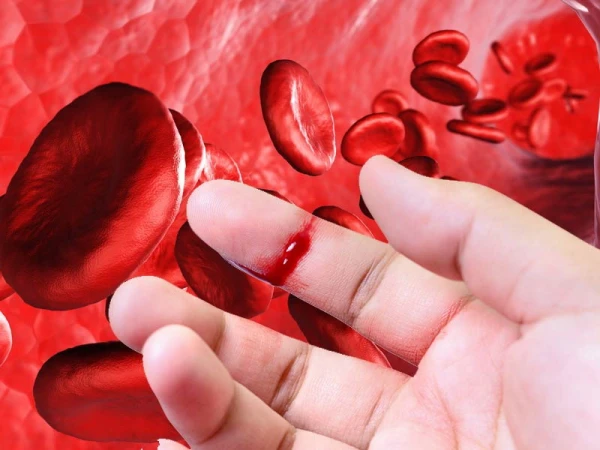
A thrombus, or blood clot, does not dissolve on its own and can become life-threatening — detaching at any moment, blocking an important vessel, and obstructing blood supply. A thrombus is a common cause of strokes, heart attacks, and sudden death due to pulmonary embolism (PE).
According to doctors, a potentially dangerous blood clot usually forms in a vein, more often in the arm or leg — this is known as deep vein thrombosis. According to the National Health Service (NHS) of the UK, thrombosis can manifest with the following symptoms in the arm or leg — do not ignore them:
-
pulsating or cramping pain;
-
swelling;
-
redness;
-
warmth.
People at risk for deep vein thrombosis include those over 60 years old, those with excess weight, heart failure, or cancer, as well as smokers and women taking hormonal contraceptives or hormone replacement therapy (HRT).
Unilateral swelling is not a harmless symptom but a reason to see a doctor as soon as possible, advises bb.lv. Early diagnosis helps prevent dangerous complications, including thrombus detachment. Ignoring such signals from the body is not an option — timely response can save a life.














Leave a comment