
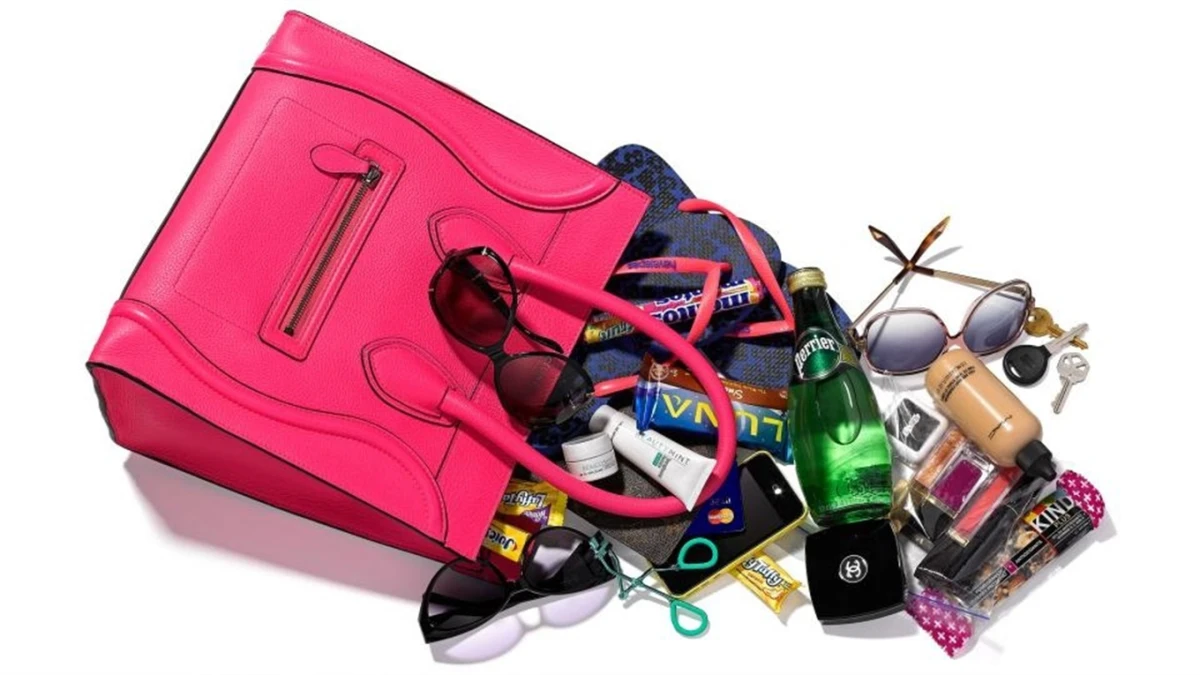
Some everyday habits, seemingly insignificant at first glance, can affect emotional state and energy levels. This concerns the contents of the bag — an item that accompanies a person daily and often turns into a repository of random, forgotten, or unnecessary things.
According to the authors of thematic publications, the problem lies not so much in the weight of the bag as in its 'content chaos' — the accumulation of items that have lost their function or relevance.
Broken Items as a Source of 'Background Stress'
Particular attention is drawn to damaged items: combs with broken teeth, old bottles, faulty pens, accessories with defects, or wallets with damages. Such items continue to remain in the bag, even though they no longer serve their purpose.
In the framework of esoteric beliefs, such items are described as 'stuck' between states — they are no longer used but also not removed from everyday life. It is believed that this creates a sense of incompleteness and can increase internal tension.
Mirrors, Jewelry, and Emotional Attachment
Items with symbolic significance — for example, mirrors or jewelry — are highlighted separately. Damaged accessories, according to popular beliefs, may be associated with loss or 'leakage' of energy, especially if they are linked to personal memories.
Even outside of esotericism, psychologists note a similar effect: items that remind one of unfinished actions or postponed decisions can create background anxiety and a feeling of 'unfinished business.'
The Bag as a Reflection of State
Modern psychological approaches consider the bag as a kind of 'mobile space of order.' If it is overloaded with random items, the brain may perceive this as a signal of chaos and overload.
As a result, a person may feel fatigue not due to physical factors, but because of constant contact with irritating trifles — from old receipts to unused items.
How to Reduce This Effect
Experts recommend regularly reviewing the contents of the bag:
-
getting rid of broken and unnecessary items;
-
keeping only functional things;
-
periodically 'resetting' the contents to avoid the accumulation of excess.
Such practice helps reduce the feeling of overload and regain a sense of control over everyday trifles.
...Thus, it is not about mysticism, but about a behavioral factor: order in personal belongings directly affects the perception of everyday life. Regular 'inventory' of the bag can become a simple way to reduce background stress and increase comfort in daily life.















Leave a comment