
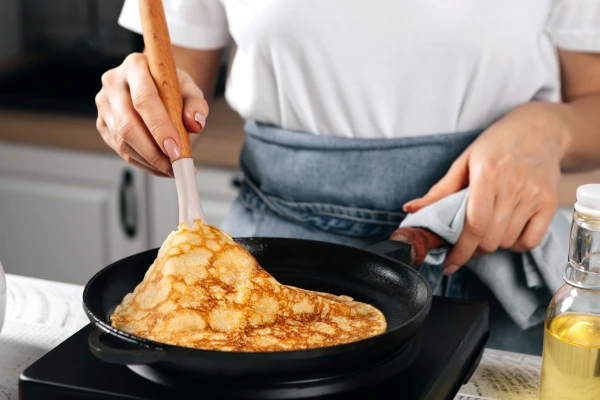
Even experienced cooks can encounter problems when making pancakes. They stick, tear, or turn out heavy and dry. Here are seven main mistakes and tips on how to avoid them.
1. Incorrect Measurement of Ingredients
Too much flour makes the batter thick — the pancakes turn out dense and dry. Too little flour or liquid — the batter spreads out, and the pancakes become thin and fragile.
Tip: use kitchen scales or measuring spoons, maintain the ratio of liquid to dry ingredients, and check the consistency of the batter — it should flow easily but not be watery.
2. Overmixing
Strong and prolonged mixing activates gluten, causing the pancakes to become rubbery and lose their fluffiness.
Tip: mix the batter only until the ingredients are combined. Small lumps are acceptable and do not affect the taste.
3. Incorrect Pan Temperature
A pan that is too hot leads to burning the surface while the center remains raw; too cold — the pancakes spread out and turn flat.
Tip: heat the pan over medium heat and check with a drop of water.
4. Excessive or Insufficient Greasing
Too much oil makes the pancakes greasy and heavy; too little — they stick and tear.
Tip: apply a thin, even layer of oil with a brush or paper towel, checking before each pancake.
5. Cold Ingredients
Milk, eggs, and butter straight from the fridge worsen the hydration of the flour and make the batter heavy, resulting in less airy pancakes.
Tip: let the ingredients come to room temperature 30–60 minutes before cooking, and let the batter rest for 10–15 minutes.
6. Incorrect Flipping
Flipping too early or too late leads to tearing the pancakes or uneven cooking.
Tip: flip when bubbles start to burst on the surface and the edges are noticeably browned.
7. Too Much Batter in the Pan
Thick layers of batter take longer to cook; the edges brown faster while the center remains raw, causing the pancakes to tear.
Tip: spread the batter in a thin, even layer so it heats up and browns quickly.
















Leave a comment