
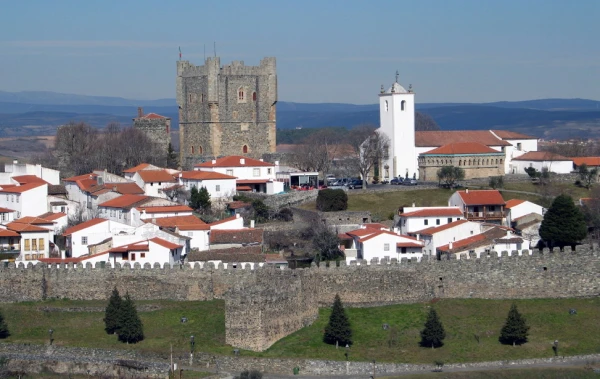
In Portugal, you can find many beautiful places that have yet to be reached by crowds of tourists.
Most tourists visiting Portugal for the first time predictably head to its capital, Lisbon (making the same mistakes along the way).
However, due to the increased interest from travelers, especially in the peak season, this vibrant city can be too crowded and expensive. To avoid the unpleasant consequences of overtourism, tourists are advised to consider vacations outside popular destinations.
Meanwhile, the authors of the world's largest publishing house, Lonely Planet, who live in Portugal, have named five secret locations in the country that locals adore.
5 Hidden Gems of Portugal Worth Visiting
1. Trás-os-Montes
"I almost always choose mountains over the beach, and in Portugal, my favorite mountain spot is Trás-os-Montes. Don’t expect high peaks or ski resorts (although it can snow here in winter), but rather a secluded rocky area with charming villages and protected natural areas," shares the secret of living in Lisbon American writer and photographer Austin Bush.
According to him, the ideal way to reach this northernmost Portuguese region is to rent a car in Porto and drive there in just 2 hours. In this case, tourists can discover the historic granite villages of Trás-os-Montes, where it seems that time stopped somewhere around the year 1500. For example, locals still breed long-horned Barrosã cows that sleep in pens on the ground floor beneath two-story stone houses.
He also notes that Trás-os-Montes is an amazing region in terms of gastronomy.
"When I’m there, I pay attention to Tabernas do Alto Tâmega, a network of 15 restaurants throughout the region. Expect huge, hearty dishes cooked over wood, smoked meats, and homey hospitality. My favorite among them is probably Casa de Souto Velho, a fantastic restaurant in the eastern part of the region, where almost all the ingredients are grown, raised, or produced on-site," adds Austin.
2. Serra da Lousã
"When the summer crowds flock to the coast, I always feel drawn to the less visited corners of Portugal. Deep in the historical region of Beiras, Serra da Lousã combines almost forgotten aldeias de xisto (slate villages), quiet hiking trails, and fairy-tale rural retreats. At night, the Milky Way shines brilliantly — especially in Pampilhosa da Serra, located a bit further from the coast," says British travel journalist and photographer Daniel James Clark.
Among other things, he recommends visiting the carefully restored village of Serdeira, revived as the "House of Creativity of Serdeira." Now it is a retreat for artists, offering workshops and spaces for idea generation for those looking to draw inspiration from nature.
For true seclusion, Daniel recommends tourists stay overnight in one of the restored rock houses in once-abandoned villages like Talasnal or Candal, built in the 17th century.
Gastro-tourists are advised to enjoy typical hearty dishes of Portuguese cuisine, such as chanfana (stewed lamb in a clay pot), which pairs best with local red wine rich in minerals and made from the regional grape variety Baga.
3. Corvo
In turn, Portuguese author Sandra Enríquez recommends tourists pay attention to Corvo — one of the nine islands of the Azores archipelago located in the Atlantic Ocean, about 1,500 kilometers from Portugal. This patch of land, measuring 18 sq. km with a population of fewer than 400 people, remains off the beaten tourist paths.
"As soon as you step off the plane in Corvo, you are enveloped by the tranquility of this village-like island. The only municipality on the island, Vila do Corvo, is a tiny cluster of houses and narrow streets on cliffs overlooking the ocean, where everything is within walking distance. The main natural attraction — Caldeirão, a lagoon in the crater of the volcano that formed the island — is a 2-hour walk along a 6-kilometer trail uphill," she notes.
At the same time, Sandra warns that tourists on Corvo should forget about planning or a tight schedule of activities. Instead, be prepared for days of idleness, interacting with locals, and dividing time between morning walks and afternoon relaxation on the beach.
Meanwhile, the only restaurant on the island, Restaurante Caldeirão, is right next to the airport and is the best place for lunch or dinner with a view. In the meantime, for drinks, informal dishes, and casual conversations with locals, one should head to BBC — Caffé & Lounge.
4. Figueira da Foz
"Since I started surfing in the 1990s, Figueira da Foz has caught my attention, as it is home to some of the pioneers of competitive surfing in Portugal. In this quiet town, located about 200 km from Lisbon, I discovered a relaxed atmosphere, some of the country’s most extensive beaches, and restaurants that perfectly utilize local ingredients," says Portuguese writer and surfer Marlen Marques.
While she primarily loves this place for its perfect surfing conditions, those who are not fond of the sport can enjoy a peaceful beach day at Praia da Claridade: stretching for miles, it is one of the largest and widest beaches in Portugal. You can also visit the luxurious Sotto-Maior Palace, hike in Serra da Boa Viagem, or catch a show at the 19th-century Figueira casino.
Additionally, arriving at the end of June allows you to experience the São João festival, which includes music, fireworks, and traditional sardine feasts by the sea.
5. Vila Nova de Milfontes
"The southern coast has always been a favorite vacation spot for Portuguese families. Most of them head to the Algarve, but lately, many prefer the quieter beaches of Alentejo, located further north. There’s no bad time to visit this region. Late spring and early September are lovely and calm months, but even in the height of summer, Vila Nova de Milfontes offers a peaceful seaside retreat away from the tourist crowds," says author from Lisbon Joana Taborda.
According to her, Vila Nova de Milfontes is one of many coastal towns in Alentejo, a region with vast, wild beaches and picturesque hiking routes, such as the Fisherman’s Trail. This famous hiking trail crosses a natural park (there are no high-rise hotels here) and runs along steep cliffs overlooking the ocean the entire way.














Leave a comment