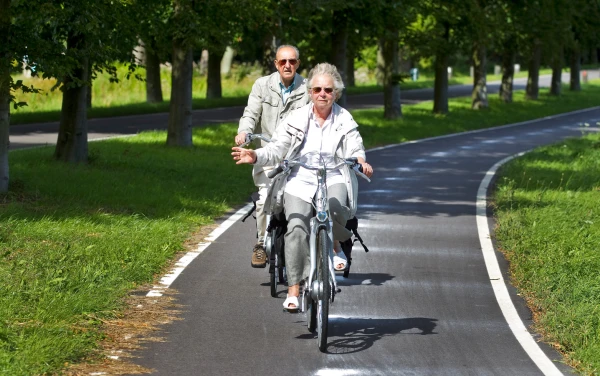
Scientists have found that one simple and accessible form of activity can significantly reduce the risk of developing dementia and Alzheimer's disease. This is not about complex workouts or medications, but about a daily habit that many underestimate.
Active Movement as an Investment in Brain Health
Regular cycling can be beneficial not only for the heart and muscles but also for cognitive functions. This conclusion was reached by researchers from Huazhong University of Science and Technology. The results of this extensive study were published in the journal JAMA Network Open.
The study used data from 479,723 individuals with an average age of about 56 years. Participants were surveyed about their modes of transportation over the past four weeks, and then their health status was monitored for 13 years, recording cases of dementia and Alzheimer's disease.
During the observation period, nearly 9,000 cases of dementia and about 4,000 diagnoses of Alzheimer's disease were identified. Meanwhile, individuals who preferred active modes of transportation consistently had lower rates.
How Much the Risk Decreases
Among those who regularly used a bicycle as their primary mode of transport, the likelihood of developing dementia was on average 19% lower compared to people who more often traveled by car or public transport. A particularly pronounced effect was observed in the early dementia group — a form of the disease that occurs before the age of 65. In this case, the risk decreased by nearly 40%.
As for Alzheimer's disease, cycling reduced the likelihood of its development by 22%. This is particularly significant considering that this disease is the most common cause of dementia worldwide.
Why Cycling So Effectively Protects the Brain
Scientists explain this effect by several factors. Physical activity increases blood flow to the brain, reduces inflammatory processes, and stimulates the functioning of nerve cells. Additionally, cardiovascular exercise helps combat obesity and other chronic conditions that increase the risk of neurodegenerative diseases.
Cycling itself requires concentration, spatial orientation, route planning, and quick reactions to road situations. This means that during cycling, not only the muscles but also the brain are actively engaged. The motor cortex, cerebellum, prefrontal and parietal lobes, auditory centers, and limbic system are all involved simultaneously.
Interestingly, individuals who regularly cycle have a larger hippocampus — the area of the brain responsible for memory and learning — on average than less active individuals.
Benefits Even with Genetic Predisposition
Researchers noted separately that the positive effect persisted even among carriers of the APOE-e4 gene — one of the main genetic risk factors for Alzheimer's disease. Although the protective effect was less pronounced, it was still present, indicating the possibility of partially compensating for hereditary predisposition through lifestyle choices.
The authors emphasize that transitioning to active modes of transportation, especially in middle age, can be a simple and accessible strategy for maintaining brain health. Expensive memberships or special equipment are not necessary — a bicycle and the habit of using it regularly are sufficient.