
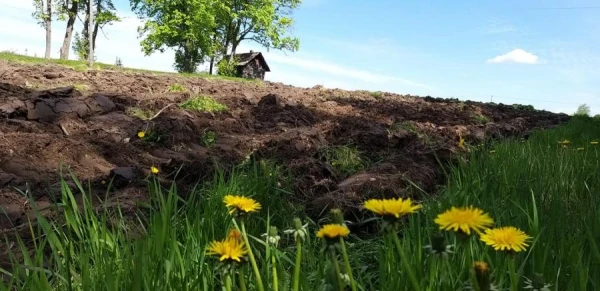
The end of an era: Latvia officially closed the land reform for the return of property seized during the occupation.
Immediately after the restoration of Latvia's independence in the 1990s, a land reform was initiated, and this year it has been completed — the process took more than 30 years in total.
The legal fact of the completion of the land reform means confirmation that the land commissions established for its implementation have reviewed all land claims and made the necessary decisions.
In January 2026, the Cabinet of Ministers adopted the order No. 11 "On the completion of the land reform in the city of Tukums, Tukums region," prepared by the State Land Service. This was the last administrative territory where the legal fact of the completion of the reform was established, thus the land reform is completed throughout Latvia.
The Cabinet of Ministers' order No. 403 "On the completion of the land reform in the rural areas of Tukums region" was adopted on July 18, 2016, and on January 13, 2026, order No. 11 "On the completion of the land reform in the city of Tukums, Tukums region" was adopted. Thus, the land reform is completed across the entire administrative territory of Tukums region.
The land reform was initiated to restore property rights to land for those whose land ownership was seized during the period when Latvia was illegally incorporated into the USSR. The reform includes land distribution, the return of land to former owners or their heirs, as well as the provision of free land for use and privatization.
The land reform initiated in 1990 in Latvia included two main stages: the submission of land claims and the restoration of rights (establishing the legal fact for the claim and providing land), as well as the practical implementation of property rights (cadastral measurements of land plots and entries in land books).
After the completion of the land reform — that is, after the Cabinet of Ministers adopts the relevant order on the completion of the reform in a specific administrative territory or in all territorial units of the region — a two-year period is established during which the undistributed land from the reform is allocated among state institutions and municipalities. Meanwhile, cadastral measurements of the land provided for the restoration of property rights continue, and it is entered into the land book.
As of January 20, 2026, the land returned for the restoration of property rights has not yet been entered into the land books for nearly 5,440 former landowners or their heirs.





Leave a comment