
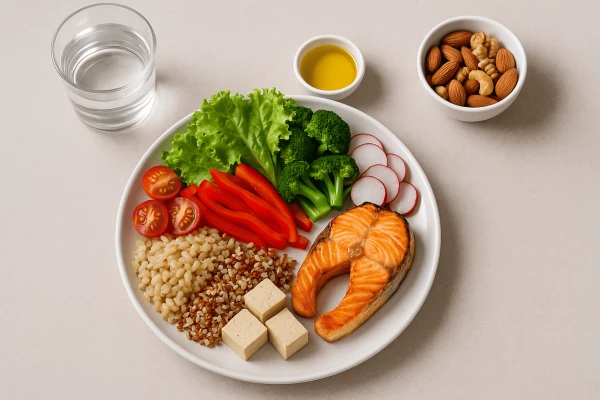
How the Harvard Plate is structured, who needs it, and why it can be easily integrated into everyday life.
In a world where more and more "miracle diets" are emerging, models of nutrition that do not promise instant results but rely on facts and work sustainably are especially valued. The Harvard Plate is one such method. It is not a diet, not a willpower challenge, and not a temporary plan. It is a clear visual way to compose a plate to provide the body with everything it needs, while weight and well-being gradually come into balance.
What is the Harvard Plate Method and Where Did It Come From
The Harvard Plate Method (or Harvard Healthy Eating Plate) was created by experts from the Harvard T.H. Chan School of Public Health based on extensive scientific research in the field of nutrition. Its main goal is to offer a visual model that helps build a balanced diet without counting calories and strict restrictions.
The Essence of the Method: The Logic is Simple, Without Extremes
The main principle is balance. The Harvard Plate divides the meal into zones so that a person can see which foods and in what proportions should be on their plate:
Half of the plate (about 50%) is allocated to vegetables and fruits. Attention is shifted towards vegetables, especially those that are non-starchy; fruits are more of a complement to vegetables.
A quarter of the plate is occupied by protein: this can be fish, poultry, eggs, legumes, seafood, or lean meat. The method does not impose veganism but rather suggests diverse, quality sources of protein.
The remaining quarter consists of complex carbohydrates: whole grains, brown rice, quinoa, whole grain pasta, and bread. The main emphasis is on the quality of carbohydrates, rather than complete rejection of them.
Particular attention is paid to healthy fats: olive oil, nuts, seeds, and avocados are considered important components of nutrition (they do not occupy a separate zone, but their inclusion in meals is encouraged). The method also considers beverages: water is the basic choice, while tea or coffee is acceptable without added sugar. Sugary drinks and juices are not considered part of a healthy diet and are consumed less frequently.
Why the Harvard Plate is Considered Beneficial
The method does not demonize individual foods and does not divide everything into "good" and "bad." Rather, it offers a mindful approach that helps:
– Maintain blood sugar levels through a balanced combination of proteins, fats, and carbohydrates;
– Support a healthy weight without strict restrictions;
– Improve eating behavior and reduce the tendency to overeat;
– Form a diet that can be adhered to for a long time, rather than just a few weeks.
Experts often use this model as a basis for the prevention of cardiovascular diseases, type 2 diabetes, and metabolic disorders: precisely because the method is aimed not at short-term effects, but at sustainable changes in nutrition.
Why Switch to the Harvard Plate if Everything is "Fine as It Is"
This approach is especially helpful for those who are tired of the swings between strict regimes and breakdowns. There is no need to weigh food daily or completely give up favorite dishes. It is important to assemble the plate correctly, and each meal becomes balanced without enormous effort.
The Harvard Plate easily adapts to different lifestyles, budgets, and culinary traditions, working for both home-cooked meals and restaurant dishes or work food.
What Happens if You Eat According to This Principle Constantly
With regular application of the principles of the Harvard Plate, nutrition becomes more predictable for the body. The constant feeling of hunger disappears, and cravings for sweets and "automatic" snacking decrease. If there is a need for weight correction, it occurs gradually and gently — without sharp fluctuations and stress.
The plus is that this approach does not require waiting for the "start of Monday" — it can be implemented gradually: first increase the proportion of vegetables, then pay attention to carbohydrates and fats, beverages, and so on.













Leave a comment