
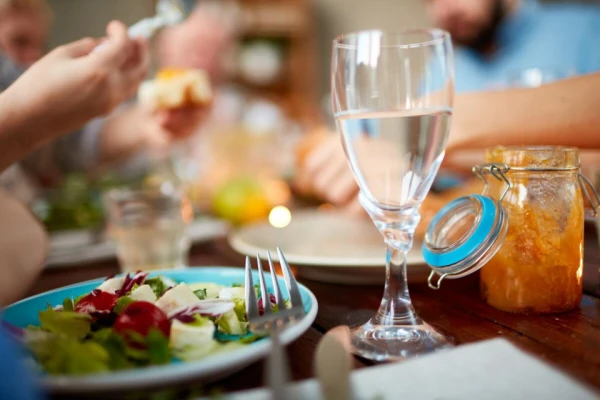
Many are accustomed to drinking water or tea with meals, but not everyone knows if this is safe for the body. The specialist explained when it is okay to drink during meals and when it is better to refrain.
Expert: Anastasia Timoshenko, gastroenterologist
Water does not interfere with digestion
Gastric juice consists of water, hydrochloric acid, enzymes, mucus, organic and inorganic compounds, as well as a protein that binds vitamin B12. Eating stimulates the production of gastric juice, and its concentration is regulated by the food itself — the amount of water consumed has virtually no effect on the digestion process.
Various liquids leave the stomach faster than solid food, but this does not hinder normal digestion. Therefore, most people can safely drink during meals — water does not interfere with nutrient absorption.
When it is better not to drink water with food
There are a number of exceptions when drinking water with meals is not recommended:
- gastroesophageal reflux disease (GERD) and heartburn;
- functional dyspepsia, especially postprandial distress syndrome (heaviness or nausea after eating);
- rapid satiety, appetite disturbance (in people with dementia, liver cirrhosis, ascites).
In these cases, drinking water during meals may cause bloating, nausea, and discomfort.
Doctor's advice
- Drink water after meals in small sips if you have gastrointestinal issues.
- For others, it is fine to drink water during meals, but only after food has been thoroughly chewed.
- Avoid carbonated and sugary drinks during meals to not increase calorie intake.
- It is better to drink tea and coffee with a break after meals to not interfere with the absorption of iron and calcium.
Source: doctorpiter.mirtesen












Leave a comment