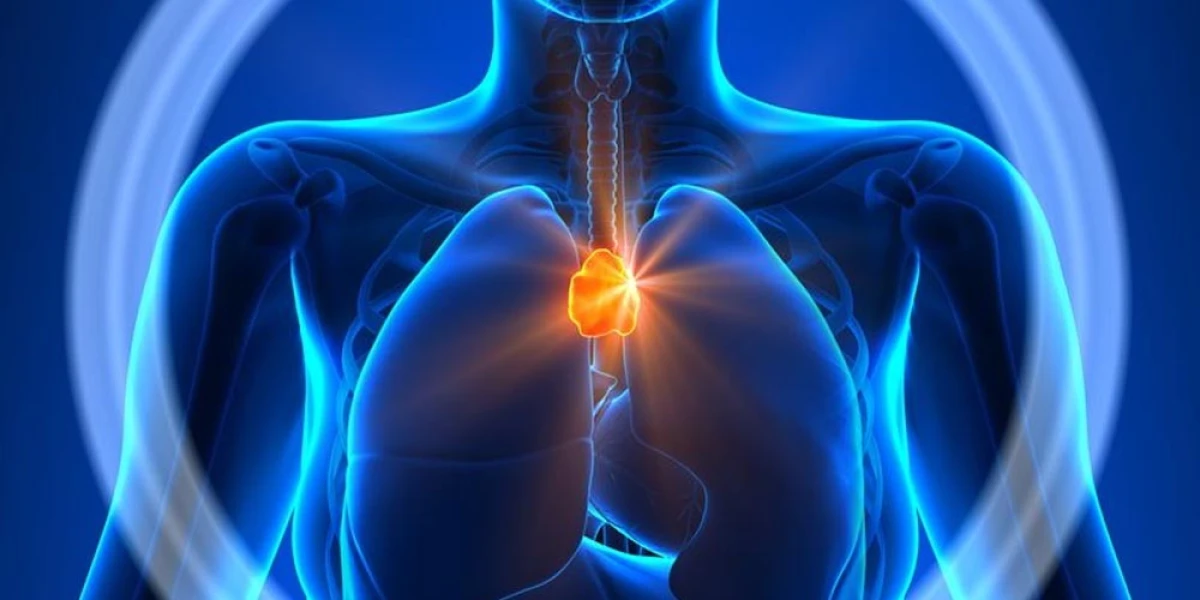
The thymus, or thymus gland, has long been considered practically useless in adulthood. However, two new studies have shown that the condition of this organ may be directly related to lifespan, cancer risk, and the effectiveness of anti-tumor treatment.
The thymus is a small organ of the immune system located in the upper chest. Its main function is to produce and "train" T-lymphocytes — immune cells that help the body fight infections, recognize foreign agents, and distinguish them from its own tissues.
The thymus plays a particularly important role in childhood and adolescence. During this period, it is actively working, reaching its maximum size and functionality. After puberty, the thymus gradually shrinks, its activity decreases, and over time, much of the tissue is replaced by fat. This process is known as thymic involution.
Because of this, scientists long believed that in adulthood, the thymus has little impact on human health. However, the results of two new studies published in the journal Nature have prompted a reevaluation of this view.
The Thymus Proved to Be More Important Than Previously Thought
In the first study, specialists from Harvard Medical School developed an artificial intelligence system capable of assessing the condition of the thymus based on computed tomography data.
Initially, the neural network was trained on the results of examinations of 5,674 adults, after which it analyzed data from another 27,612 patients.
It turned out that the condition of the thymus varies significantly among different individuals and depends on age, sex, and lifestyle.
For instance, women tend to maintain thymic activity better than men on average. However, with age, the functionality of the gland decreases in both sexes.
Researchers also found that the health of the thymus is negatively affected by:
- chronic inflammation;
- metabolic disorders;
- excess body weight;
- smoking;
- low levels of physical activity.
Connection to Longevity and Disease Risk
Scientists were particularly intrigued by the fact that people with healthier thymuses lived longer and faced serious illnesses less frequently.
Compared to individuals whose thymic function was significantly reduced, participants with the most preserved thymus:
- had a 50% lower risk of premature death;
- had a 63% lower risk of death from cardiovascular diseases;
- had a 36% lower risk of developing lung cancer.
These figures remained significant even after accounting for age, sex, smoking, and other risk factors.
According to researchers, the reason may be that a healthy thymus supports the diversity of T-cells. This allows the immune system to more effectively recognize new threats, including cancer cells.
The Thymus Also Influences Cancer Treatment Success
The second study by the same research group focused on cancer patients.
Scientists analyzed data from over 1,200 individuals undergoing modern immunotherapy.
The results showed that patients with better-preserved thymic function responded significantly better to treatment.
In these patients:
- the risk of disease progression was about 37% lower;
- the risk of death was 44% lower.
Moreover, this pattern persisted regardless of tumor type, therapy specifics, and other factors.
Why This Discovery Is Important
The authors of the study believe that the thymus may be one of the key factors explaining why people age differently and why the same treatment works better for some patients than for others.
"The thymus has been overlooked for decades and may be the missing link in understanding why people age differently and why some patients respond poorly to cancer treatment," noted research leader Hugo Aerts.
New studies show that the thymus may play a much more significant role in the health of adults than previously thought. Maintaining thymic function is associated with a lower risk of premature death, cardiovascular diseases, and certain types of cancer, as well as better outcomes in immunotherapy. These findings could open new avenues for studying aging and developing more effective cancer treatment methods.