
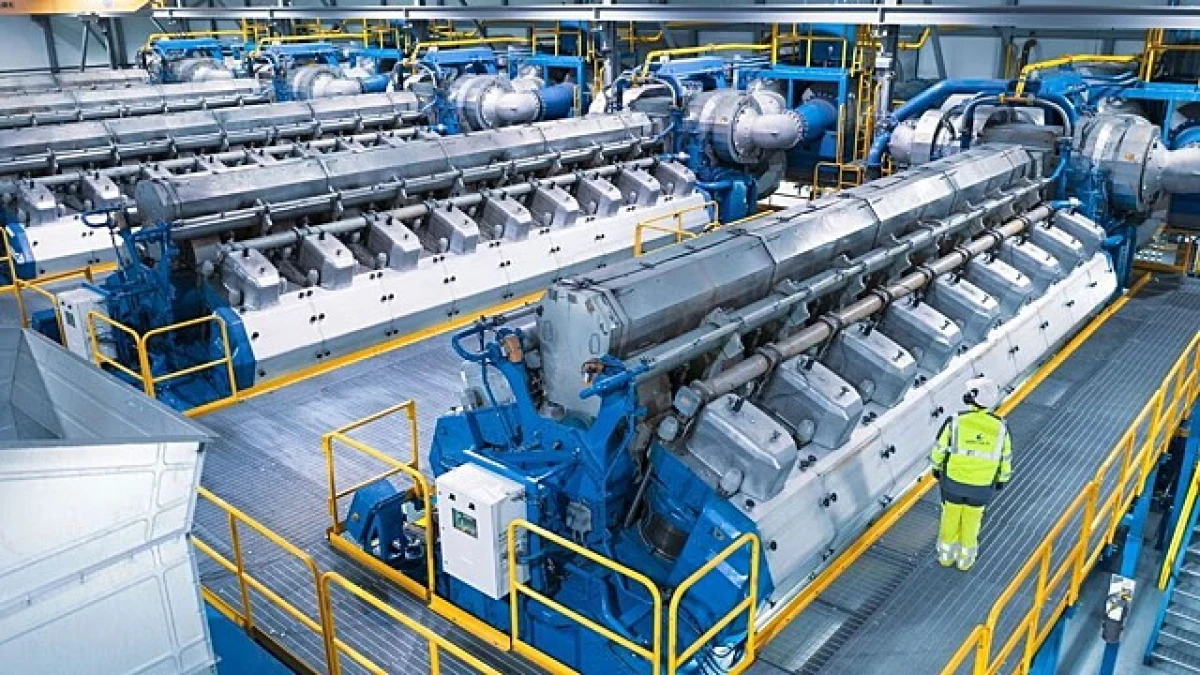
In Brazil, an engine has been launched that developers call the world's first solution specifically designed for large-scale electricity generation from ethanol.
The project is being implemented at the Suape II power plant in the state of Pernambuco with the participation of the Brazilian company Suape Energia and the Finnish technology group Wärtsilä.
The new technology aims to demonstrate whether ethanol can become an effective and economically viable fuel for controlled electricity generation. Although ethanol has been widely used as a fuel for vehicles for many years, its application in energy has remained extremely limited.
The project utilizes a modified Wärtsilä 32M engine running on ethanol, which is primarily produced from sugarcane in Brazil. Over the next few years, the installation will undergo thousands of hours of testing, during which specialists will assess performance, reliability, emission levels, and the economic efficiency of the technology.
The developers hope to determine whether ethanol can serve as a full-fledged alternative to traditional fuels for electricity generation and help reduce greenhouse gas emissions.
Why the Project is Being Implemented in Brazil
Brazil is considered one of the world leaders in the production and consumption of ethanol from sugarcane. Over decades, the country has developed a sophisticated infrastructure for its production, storage, and transportation, making it an ideal site for such experiments.
If the technology proves successful, it could open new opportunities for the Brazilian agricultural sector, providing an additional market for sugarcane producers while simultaneously strengthening the country's energy security.
Ethanol as a Supplement to Green Energy
One of the main challenges facing modern energy systems remains the need to combine emission reductions with reliable electricity supply. Solar and wind power plants depend on weather conditions, while long-term energy storage technologies remain costly.
Against this backdrop, interest is growing in low-carbon fuels that can be stored and used as needed. According to Wärtsilä specialists, ethanol has several advantages: it is relatively easy to transport, store, and apply at existing energy facilities.
Experts also predict that by 2030, electricity production from bioenergy sources will significantly increase, as many countries seek ways to reduce emissions without compromising the stability of energy systems.
The launch of the first industrial engine for electricity generation on ethanol marks an important milestone in the development of bioenergy. If the tests confirm the effectiveness and economic viability of the technology, ethanol could take a significant place in the global energy landscape as a controllable and relatively eco-friendly energy source, complementing solar and wind power plants.
















Leave a comment