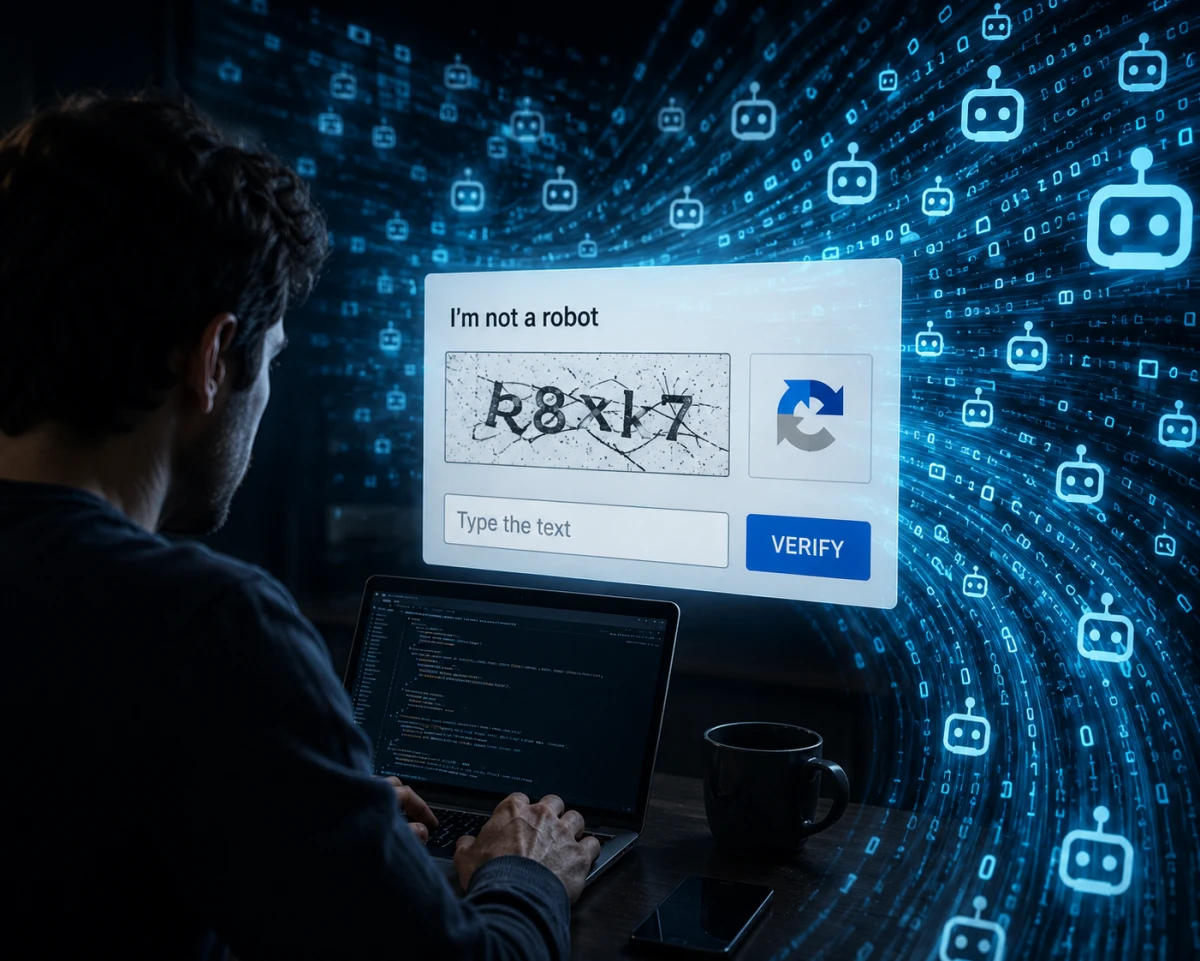
Websites are increasingly requiring CAPTCHA and confirmation that you are human. This is related to the sharp rise in AI bot activity. The internet is gradually changing: automated traffic is becoming so massive that familiar checks are turning into a new norm.
The 'I am not a robot' checks, selecting buses in pictures, and endless CAPTCHAs are becoming an increasingly familiar part of the internet. The reason is the rapid growth of AI bots and automated systems collecting data from websites.
As computer science professor Yan Xiang writes for The Conversation, artificial intelligence today generates such a large volume of non-human traffic that many websites are forced to enhance their security.
The number of AI crawlers — programs that automatically scan the internet and gather texts, images, and other information for training neural networks — is growing particularly rapidly.
AI developers increasingly need high-quality data. Research shows that training models on low-quality content — such as primitive memes and meaningless posts — deteriorates AI's ability to understand context and think logically.
As a result, companies strive to obtain more 'clean' and useful data, which means they are actively scanning regular websites. For resource owners, this translates into increased load and the necessity to filter bots from real users.
The problem is that modern neural networks are already beginning to successfully bypass traditional CAPTCHAs.
Recently, a video circulated widely on the internet showing an OpenAI agent based on ChatGPT effortlessly clicking the 'I am not a robot' button. This has become yet another signal that old methods of protection are gradually becoming ineffective.
That is why users are increasingly encountering more complex checks — for example, object recognition in images or multi-step verification. But even such barriers are being passed by AI with increasing confidence.
Against this backdrop, technology companies are exploring new ways to verify identity — from voice recognition to biometrics and fingerprints.
However, this raises another issue — privacy.
Facial recognition systems and biometric databases are causing growing concerns among users and human rights advocates. Critics remind us that errors in such technologies have already led to false accusations and data security issues.
As a result, the internet is gradually turning into a space where websites are increasingly forced to check whether they are dealing with a real person or yet another AI bot.
And it seems that such checks will only increase in the coming years.